
Demystifying TCM
How Should One Take Tonic Supplements in TCM Health Preservation?
TCM supplementation must follow the core principles of “treat deficiency with supplementation, treat excess with drainage” and “pattern-based supplementation” — it is by no means suitable for everyone, nor does a higher price guarantee better effect. This article details the identification and clinical features of the four major deficiency patterns — qi deficiency, blood deficiency, yang deficiency, and yin deficiency — and introduces representative herbs and patent formulas for each: qi tonics (ginseng, astragalus, Si Jun Zi Wan), blood tonics (dang gui, donkey-hide gelatin, Si Wu Wan), yang tonics (deer antler, Jin Kui Shen Qi Wan), and yin tonics (goji berry, Liu Wei Di Huang Wan). It warns against the dangers of blindly taking supplements and advocates a scientific, individualized approach to herbal health cultivation.
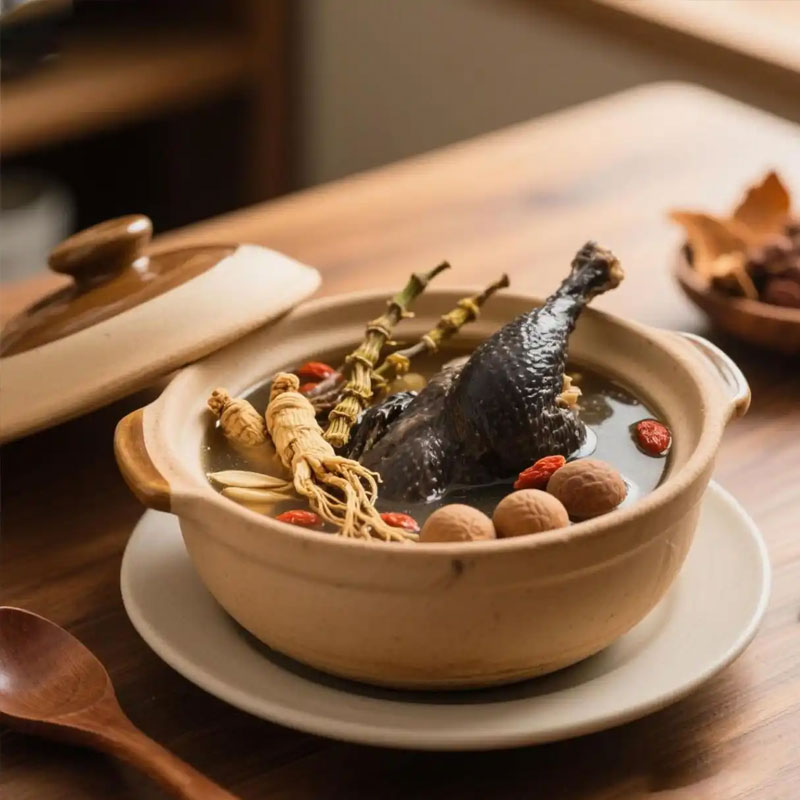
Traditional Chinese Medicine boasts a long history spanning thousands of years, and the health preservation principles it advocates are now highly valued.
TCM health preservation through herbal supplementation involves the use of tonic Chinese medicinals, or those with therapeutic effects, to tonify or treat individuals with weak constitutions or those suffering from chronic diseases. In other words, the rational use of tonic Chinese medicinals is primarily suitable for middle-aged and elderly individuals with constitutional weakness or illness.
From the perspective of TCM health preservation, the price of a health product is not important; what matters is whether the chosen product or tonic medicinal is suitable for one's own condition. TCM theory holds that “in deficiency, tonify; in excess, drain.” This means only those with a weak constitution are suited to taking tonic medicinals, whereas those with a strong constitution or who suffer from excess-type diseases not only should not use tonics, but would actually benefit from the appropriate use of purgative or draining medicinals. TCM also places great emphasis on “pattern differentiation and treatment.” The weak constitutions of the human body are primarily divided into four major categories: qi deficiency, blood deficiency, yang deficiency, and yin deficiency. For qi deficiency, one should use qi-tonifying herbs; for blood deficiency, blood-tonifying herbs; for yin deficiency, yin-nourishing herbs; and for yang deficiency, yang-warming herbs. Only in this way can one effectively promote human health. If a person with yin deficiency takes yang-tonifying herbs, or a person with yang deficiency takes yin-nourishing herbs, it is just like pouring oil on a fire or adding frost to snow. Therefore, when purchasing health products, one must make a scientific and rational choice based on the specific circumstances of one's own body, in order to achieve the purpose of strengthening the constitution and preventing or treating disease. Blindly selecting and consuming health products that are extravagantly promoted in advertisements or that are expensive not only wastes money and fails to promote health, but also frequently causes various adverse reactions. In recent years, there have been frequent reports of side effects such as endocrine disruption, elevated blood pressure, irritability, and insomnia caused by the mistaken consumption of health products.
Some middle-aged and elderly people also believe that regularly taking some tonic herbs, nutritional supplements, or health products can achieve the goal of “treating disease if you are ill, and strengthening the body if you are not.” This view is also mistaken. Not all middle-aged and elderly people can use Chinese medicinals for health preservation; it must be decided according to one's constitutional condition. TCM holds that the constitutions of the elderly can generally be divided into two main categories: normal constitution and diseased constitution. Diseased constitution can be further divided into three types: deficiency pattern constitution, excess pattern constitution, and mixed deficiency-excess constitution. Elderly individuals with a normal constitution are in a state of health and have no need to take tonic herbs. One must never do the foolish thing of “taking medicine without illness — spending money to buy sickness.”
The principles of herbal health preservation are the holistic concept and pattern-based supplementation. The so-called “holistic concept” means that when using Chinese medicinals for health preservation, one must consider the overall condition of the elderly person and adopt different health preservation methods accordingly. Overall condition includes such aspects as mental state, bodily functions, and facial complexion; only after considering these can one then consider specific herbal health methods. At the same time, one must also consider the impact of different seasonal climatic changes on the human body and appropriately adjust the type and dosage of the herbs.
The so-called “pattern-based supplementation” means that, according to the principles of TCM theory, one first identifies the constitutional condition and disease pattern of the elderly person, and then proceeds with herbal tonification based on this. Broadly speaking, deficiency patterns in middle-aged and elderly people are mainly divided into four major categories: qi deficiency pattern, blood deficiency pattern, yang deficiency pattern, and yin deficiency pattern.
Qi Deficiency Pattern refers to a general term for systemic weakness symptoms arising from the decline of the zang-fu organ functions and insufficiency of original qi. In middle-aged and elderly people, qi deficiency often results from congenital insufficiency, postnatal neglect of health, severe or chronic illness, or aging. Clinical manifestations include: mental fatigue, lack of strength, shortness of breath and reluctance to speak, pale complexion, dizziness, palpitations, spontaneous sweating, and poor appetite. It is suitable to use qi-tonifying herbs for nourishment, such as ginseng, American ginseng, codonopsis, pseudostellaria, glossy ganoderma, astragalus, white atractylodes, Chinese yam, lablab bean, licorice, Chinese jujube, and honey, as well as patent formulas such as Si Jun Zi Wan (Four Gentlemen Pill).
Blood Deficiency Pattern refers to a general term for systemic weakness symptoms caused by insufficient blood within the body, resulting in the failure to nourish the limbs, organs, and vessels. In middle-aged and elderly people, blood deficiency often results from fatigue and internal injury, excessive rumination, spleen and stomach weakness, or significant blood loss. Clinical manifestations include: lusterless or sallow complexion, pale lips, dizziness, palpitations and insomnia, numbness of the hands and feet, and a pale tongue. It is suitable to use blood-tonifying herbs for nourishment, such as Chinese angelica, prepared rehmannia, fleeceflower root, donkey-hide gelatin, and longan aril, as well as patent formulas such as Si Wu Wan (Four Substances Pill).
Yang Deficiency Pattern refers to a general term for symptoms caused by insufficient yang qi and declining functional activity, manifesting as reduced bodily responsiveness, diminished metabolic activity, and inadequate heat production. In middle-aged and elderly people, yang deficiency often results from congenital insufficiency, postnatal neglect, fatigue and internal injury, or chronic illness and depletion. Clinical manifestations include: aversion to cold and cold extremities, pale complexion, fatigue and lack of strength, shortness of breath and reluctance to speak, spontaneous sweating, and clear, copious urine. It is suitable to use yang-tonifying herbs, such as deer antler, dog kidney, human placenta, gecko, cordyceps, walnut kernel, desertliving cistanche, cynomorium, morinda root, epimedium, curculigo, eucommia bark, teasel root, chain fern, fortune's drynaria rhizome, psoralea fruit, sharpleaf galangal fruit, flatstem milkvetch seed, dodder seed, leek seed, fenugreek seed, and actinolite, as well as patent formulas such as Jin Kui Shen Qi Wan (Golden Cabinet Kidney Qi Pill) and You Gui Wan (Right-Restoring Pill).
Yin Deficiency Pattern refers to a general term for symptoms caused by the depletion of essence, blood, and body fluids, manifesting as insufficiency of yin fluid and yin failing to restrain yang, leading to a state of vacuity-hyperactivity with relative excess of heat. In middle-aged and elderly people, yin deficiency often results from congenital depletion, prolonged illness consuming yin fluid, or heat diseases damaging yin. Clinical manifestations include: five-center heat and vexation, dry mouth and throat, tidal fever and night sweating, and a red tongue with scant coating. It is suitable to use yin-nourishing herbs, such as glehnia root, ophiopogon, asparagus root, dendrobium, fragrant solomonseal, polygonatum, lily bulb, goji berry, mulberry fruit, eclipta, glossy privet fruit, tortoise plastron, turtle shell, and black sesame, as well as patent formulas such as Liu Wei Di Huang Wan (Six-Ingredient Rehmannia Pill) and Zuo Gui Wan (Left-Restoring Pill).
