
The Four Diagnostic Methods
What is Inspection (Wang)?
Inspection (Wang) is the diagnostic method of observing the patient's body shape, facial complexion, tongue body, and tongue coating, and determining the location and nature of the disease based on changes in form and color.
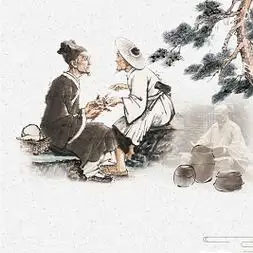
The diagnostic methods of Traditional Chinese Medicine consist of four aspects: inspection (wang), auscultation and olfaction (wen), inquiry (wen), and palpation (qie). These are collectively called the Four Diagnostic Methods.
Inspection (Wang) means using the eyes to observe the patient's whole body and specific local regions. First, one must observe whether the patient has "spirit" (shen). Having spirit means the eyes are bright, the mind is clear, the speech is fluent, and the responses are quick. The absence of spirit is indicated by dull and lusterless eyes, a blank expression, sluggish responses, and incoherent speech. Local inspection mainly involves tongue observation. Different areas of the tongue correspond to different zang-fu organs. Tongue inspection includes examining both the tongue body (tongue quality) and the tongue coating.
Auscultation and Olfaction (Wen) involves using the ears to listen and the nose to smell. Listening includes the sound of the voice, coughing, breathing, and hiccups. Generally, rough, loud, heavy, and turbid sounds indicate cold patterns, while faint, weak, and low sounds indicate deficiency patterns. Smelling means detecting odors, including oral odor and the odors of various secretions. Generally, pronounced, foul odors indicate heat patterns, while fishy odors or mild odors indicate deficiency patterns.
Inquiry (Wen) means that during consultation, the physician must question the patient carefully about the illness. Traditionally, there is the "Ten Questions Song": first ask about chills and fever, second about sweating, third about the head and body, fourth about the bowels and urination, fifth about diet, and sixth about the chest and abdomen. Seventh, deafness; eighth, thirst—both must be differentiated. Ninth, ask about past illnesses; tenth, ask about the cause. For women, it is especially essential to ask about menstruation and leukorrhea.
Palpation (Qie) refers to pulse-taking and pulse examination. The main site for pulse-taking is the cun kou (the radial artery at the wrist), which is the pulse of the Lung Meridian of Hand-Taiyin. Because the pulses of all five zang and six fu organs converge at this site, the condition of qi, blood, meridians, and zang-fu organs throughout the body can be understood from here. The most commonly encountered pulse images include the floating pulse, rapid pulse, slippery pulse, and wiry pulse.
Inspection, auscultation and olfaction, inquiry, and palpation are the fundamental methods of TCM diagnosis. They also constitute a process of understanding the condition and gathering clinical data. On this basis, pattern differentiation and treatment (bian zheng lun zhi) are carried out, and the correct therapeutic method is selected. Therefore, the Four Diagnostic Methods form the foundation of pattern differentiation and treatment.
