
Healing Library
Angelica sinensis (Dang Gui) — The Women's Ginseng
Dang Gui (Angelica sinensis) is the supreme blood-tonifying herb in TCM, uniquely combining blood supplementation with circulation activation. Discover its classical uses for blood deficiency, menstrual disorders, and fatigue, plus modern research and dietary recipes for wellness.
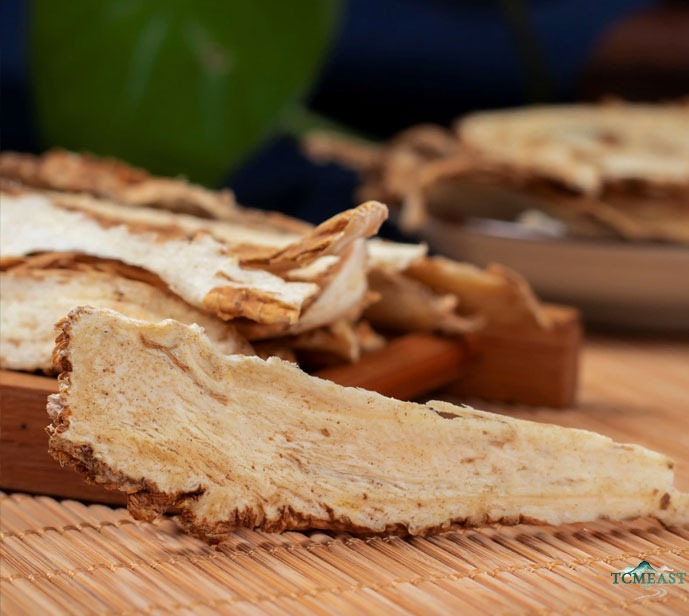
A Herb for Blood
If any single herb has earned the title "the women's herb" in Traditional Chinese Medicine, it is Dang Gui — Angelica sinensis. Known in Chinese as 当归, a name that literally means "ought to return," the herb is said to call the blood back to its proper course. It appears in more gynecological formulas than any other herb, and the classic saying "ten formulas, nine contain Dang Gui" (十方九归) speaks to its near-universal role in TCM gynecology.
But Dang Gui is far from being exclusively a "women's herb." It is the primary blood-tonifying herb in the entire Chinese materia medica, and blood deficiency — whether in men or women — is its core indication. From chronic fatigue and dry skin to palpitations and poor circulation, Dang Gui addresses the foundational issue of insufficient blood.
What Is Angelica sinensis?
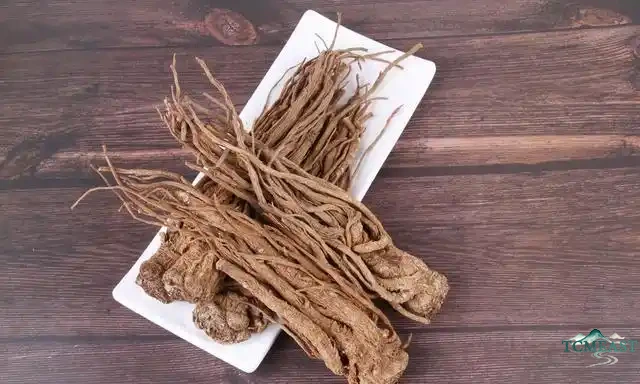
Angelica sinensis (syn. Angelica sinensis (Oliv.) Diels) is a fragrant perennial herb in the Apiaceae (carrot/parsley) family. It is native to China, where it is cultivated primarily in Gansu Province — the recognized dao di (authentic producing region). The medicinal part is the dried root, harvested in autumn of the second or third year.
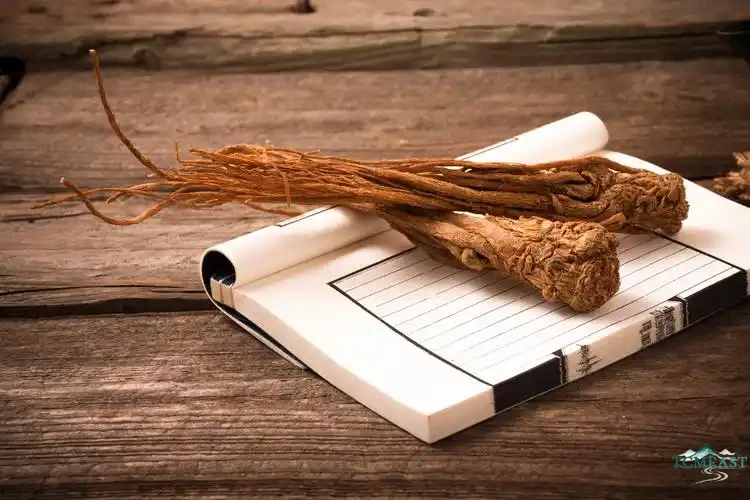
The root has a distinctive, intensely aromatic fragrance and a warm, slightly numbing taste. In traditional processing, the root is divided into three parts with slightly different actions:
| Part | Name | Primary Action |
|---|---|---|
| Head (归头) | Dang Gui Tou | Hemostatic — stops bleeding |
| Body (归身) | Dang Gui Shen | Gently tonifies blood |
| Tail (归尾) | Dang Gui Wei | Breaks up blood stasis, moves blood |
| Whole root (全归) | Dang Gui Quan | Tonifies AND moves blood simultaneously |
In modern practice, the whole root is most commonly used, relying on the combination of the three parts to achieve a balanced effect of both nourishing and circulating blood.
Nature, Flavor, and Meridian Affiliation
- Nature: Warm (温)
- Flavor: Sweet, pungent (甘、辛)
- Meridians: Liver, Heart, Spleen
The sweet flavor provides the tonifying, nourishing quality — it fills what is deficient. The pungent (acrid) flavor provides the moving, circulating quality — it prevents stagnation. The warm nature gently invigorates blood circulation.
This combination of sweet and pungent in one herb is noteworthy: Dang Gui simultaneously supplements and moves blood. Few herbs possess this dual action, which is why it is so versatile. It can be used in formulas that aim to build blood (with tonics) and formulas that aim to break stasis (with blood-moving herbs).
Dang Gui enters the Liver meridian primarily (the organ that stores blood), the Heart meridian (the organ that governs blood vessels), and the Spleen meridian (the organ that produces blood from food).
Actions and Indications
1. Tonifies and Activates Blood (补血活血)
This is Dang Gui's signature action — and the combination of tonifying and activating in one herb is what makes it unique. Because Dang Gui both builds blood and keeps it moving, it avoids the stagnation that purely tonifying herbs can cause.
Blood deficiency presents as:
- Pale complexion, pale lips and nails
- Dizziness, blurred vision
- Heart palpitations, insomnia
- Numbness or tingling in the extremities
- Dry skin and hair
- Fatigue, poor memory
- Scanty or absent menstruation
Unlike iron supplements that only address the raw material for blood production, Dang Gui works through multiple mechanisms: it supports the Spleen in producing blood, the Liver in storing blood, and the Heart in circulating blood.
2. Regulates Menstruation and Relieves Pain (调经止痛)
Dang Gui is the first-choice herb for menstrual disorders, particularly those involving blood deficiency and blood stasis. Its indications include:
- Irregular menstruation (delayed, scanty, or absent periods)
- Dysmenorrhea (painful periods, especially cramping pain)
- Amenorrhea (absence of menstruation due to blood deficiency)
- Spotting or prolonged light bleeding
- Premenstrual symptoms aggravated by deficiency
The combination of Dang Gui with other blood-regulating herbs forms the basis of countless menstrual formulas, of which Si Wu Tang (Four Substance Decoction) is the most famous.
3. Moistens the Intestines and Unblocks Bowels (润肠通便)
Dang Gui has a lubricating, moistening effect on the large intestine, making it useful for constipation due to blood and fluid deficiency. This type of constipation is characterized by dry, hard stools that are difficult to pass, often seen in the elderly, postpartum women, or those with chronic blood deficiency.
4. Disperses Cold and Relieves Pain in Bi Syndromes (散寒止痛)
Dang Gui's warm nature and blood-moving action make it effective for painful conditions involving cold and blood stasis. This includes arthritic pain (particularly in cold-damp patterns), traumatic injuries with bruising, and deep, fixed abdominal pain from blood stasis.
Classical Foundation
Shennong Bencao Jing (Divine Farmer's Materia Medica, ~1st century CE):
"Dang Gui governs women's disorders of the lower abdomen — all deficiency patterns, and all patterns of blood stasis and gathering of masses. It also treats all kinds of wounds and traumatic injuries."
Bencao Gangmu (Compendium of Materia Medica, 1590), Li Shizhen:
"Dang Gui tonifies blood, activates blood, and harmonizes the blood. It is the herb that calls blood to return to its proper place. It treats women's disorders of all kinds."
Bencao Zheng (Materia Medica Rectified, 16th century):
"Dang Gui is the holy herb for blood disorders of the liver system. It treats upward rebellion of qi and blood. It is indispensable in all patterns of blood deficiency."
Modern Pharmacological Understanding
| Area | Key Compounds | Observed Effects |
|---|---|---|
| Hematopoiesis | Ferulic acid, polysaccharides | Stimulates red blood cell and hemoglobin production |
| Uterine regulation | Ligustilide, ferulic acid | Dual-directional regulation — relaxes or contracts depending on uterine state |
| Anti-inflammatory | Ligustilide, ferulic acid | COX-2 inhibition, reduced pro-inflammatory cytokines |
| Anticoagulant | Ferulic acid | Anti-platelet aggregation, improved microcirculation |
| Neuroprotection | Ligustilide | Protection against neuronal damage in ischemia models |
| Skin health | Ferulic acid, antioxidants | Collagen synthesis support, improved skin hydration |
Ferulic acid (阿魏酸) is one of the most studied compounds in Dang Gui. It demonstrates antioxidant, anti-inflammatory, and anti-platelet aggregation effects. The combination of ferulic acid with Dang Gui's polysaccharides is thought to be responsible for the herb's hematopoietic (blood-building) effect.
Ligustilide (藁本内酯) gives Dang Gui its characteristic aromatic fragrance and contributes to its smooth-muscle-relaxing and analgesic effects. It is a volatile compound that is partially lost with prolonged storage or overcooking.
Dosage and Preparation
| Form | Daily Dose | Notes |
|---|---|---|
| Decoction | 6-15g | Standard dose for most indications |
| Wine-fried (酒当归) | 6-12g | Enhanced blood-moving, pain-relieving action |
| Raw (生当归) | 6-15g | Gentle tonifying, moistening intestines |
| Charred (当归炭) | 6-12g | Hemostatic action for bleeding |
Key Combinations
| Combination | Formula | Effect |
|---|---|---|
| Dang Gui + Shu Di Huang + Bai Shao + Chuan Xiong | Si Wu Tang | The foundation of all blood-regulating formulas |
| Dang Gui + Huang Qi (Astragalus) | Dang Gui Bu Xue Tang | Generates blood from qi for profound blood deficiency |
| Dang Gui + Sheng Jiang (Ginger) + Yang Rou (Lamb) | Dang Gui Sheng Jiang Yang Rou Tang | Classic warming, blood-nourishing soup |
| Dang Gui + Tao Ren + Hong Hua | Tao Hong Si Wu Tang | Blood deficiency with stasis — moves and builds simultaneously |
| Dang Gui + Chuan Xiong | — | Classic blood-moving pair for pain and circulation |
Precautions and Contraindications
Who should be cautious with Dang Gui:
- Excess bleeding: In cases of heavy, acute bleeding (menorrhagia, trauma), Dang Gui's blood-moving action may increase bleeding
- Damp-heat patterns: Individuals with abdominal distension, loose stools, or a thick, greasy tongue coating may find Dang Gui too rich
- Spleen deficiency with diarrhea: Dang Gui's moistening effect can worsen loose stools
- First trimester of pregnancy: Generally used with caution in early pregnancy; consult a qualified practitioner
Drug interactions:
- Anticoagulants (warfarin, aspirin): Dang Gui may enhance anticoagulant effects due to its ferulic acid content — monitor closely
- Hormonal therapies: Dang Gui has mild phytoestrogenic activity; theoretical interaction with hormone-based medications
Dang Gui in Culinary Use — Dang Gui Soup
Dang Gui is one of the most commonly used herbs in TCM culinary medicine. Its warm, aromatic, slightly bitter-sweet flavor makes it a natural fit for slow-simmered soups and stews.
Classic Dang Gui Chicken Soup
A staple in postpartum recovery across China, this soup is also used more broadly for anyone with blood deficiency — fatigue, pale complexion, cold hands and feet, and general weakness.
Basic recipe:
- 1 whole chicken (or chicken thighs)
- 10g Dang Gui sliced
- 5-6 slices fresh ginger
- 5-10g Huang Qi (Astragalus) — optional, for added qi
- 5-8 red dates (jujubes)
- Salt to taste
- Blanch the chicken in boiling water for 2 minutes, drain
- Place chicken, Dang Gui, ginger, and optional herbs in a pot
- Cover with water, bring to a boil, then reduce to a gentle simmer
- Cook for 1.5-2 hours
- Add red dates in the last 30 minutes
- Season with salt before serving
This soup is warming, nourishing, and deeply restorative. It is especially valued in the weeks following childbirth, but also beneficial during menstruation, after illness, or in cold winter months.
How to Choose and Store Dang Gui
Quality indicators:
- Appearance: The root should be thick, branched, and heavy — the larger the better
- Cross-section: A yellowish-white interior with brownish spots and a distinct brownish ring
- Aroma: Extremely aromatic, sweet-balsamic, with a characteristic penetrating fragrance — this is one of TCM's most fragrant herbs
- Taste: Initially sweet, then pungent and slightly numbing, with a lingering warmth
- Sulfur detection: Sulfur-processed Dang Gui has an unnaturally light color, a sour-chemical smell, and lacks the characteristic aromatic intensity
Storage:
Dang Gui is highly aromatic and its volatile oils (including ligustilide) degrade over time. Store in an airtight container, away from heat and light. Sliced Dang Gui should be used within 6-12 months. Whole roots store better than sliced pieces.
Common Questions Answered
Q: Can men take Dang Gui?
A: Absolutely. Despite its reputation as a "women's herb," Dang Gui is a blood tonic and blood mover used for anyone with blood deficiency or blood stasis — regardless of gender. Many classical and modern formulas containing Dang Gui are used for men as well.
Q: Does Dang Gui have estrogen-like effects?
A: Dang Gui contains compounds with mild phytoestrogenic activity. Research shows it has a regulatory rather than purely estrogenic effect — it appears to modulate the body's response to estrogen rather than simply mimic it. For most people, this regulatory effect is beneficial, particularly in conditions like irregular menstruation or menopausal transition.
Q: Can you take Dang Gui long-term?
A: Yes, when taken at appropriate doses for an appropriate indication. Dang Gui's classification as a "tonic" herb means it is designed for sustained use. However, because it has a blood-moving component, it should be used in cycles (e.g., three weeks on, one week off) or under the guidance of a practitioner to avoid over-activation of blood circulation.
Q: How is Dang Gui different from other blood-building herbs like Shu Di Huang?
A: Shu Di Huang (prepared rehmannia) is purely a blood and yin tonic with no moving quality — it is rich and cloying. Dang Gui tonifies AND moves, making it less likely to cause stagnation. In practice, the two are often combined: Shu Di Huang provides the deep nourishment, and Dang Gui provides the circulation and distribution.
