
Healing Library
Goji Berry (Gou Qi Zi) — The Vision Berry of Traditional Chinese Medicine
Goji berry (Gou Qi Zi) nourishes the liver and kidney and brightens the eyes, bridging ancient TCM wisdom and the modern superfood trend. Explore its traditional uses, modern research on eye and anti-aging benefits, and simple daily recipes for wellness.
A Small Fruit with an Extraordinary Reputation
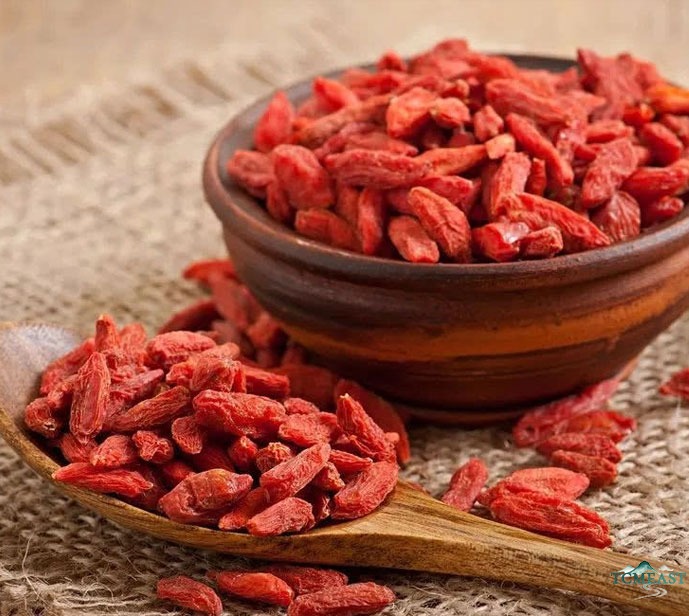
The goji berry — Gou Qi Zi (枸杞子) in Chinese — is arguably the most successful crossover herb from Traditional Chinese Medicine into the global wellness market. Walk into any health food store in New York, London, or Tokyo, and you will find goji berries in trail mixes, smoothie blends, and supplement capsules, marketed as a "superfood" rich in antioxidants.
But long before the marketing machine discovered it, goji berry occupied a specific and well-defined place in Chinese medicine: it is the premier herb for nourishing the Liver and Kidney and brightening the eyes. Unlike many TCM herbs that have been adopted by the West with little regard for their traditional context, goji berry's modern reputation as an anti-aging, vision-supporting food is remarkably consistent with how it has been used in China for over two thousand years.
What Is Goji Berry?
The goji berry is the fruit of two closely related species in the nightshade family (Solanaceae):
- Lycium barbarum L. — the primary medicinal species, originating from the Ningxia region of northwest China
- Lycium chinense Mill. — a related species, sometimes used interchangeably but considered slightly inferior
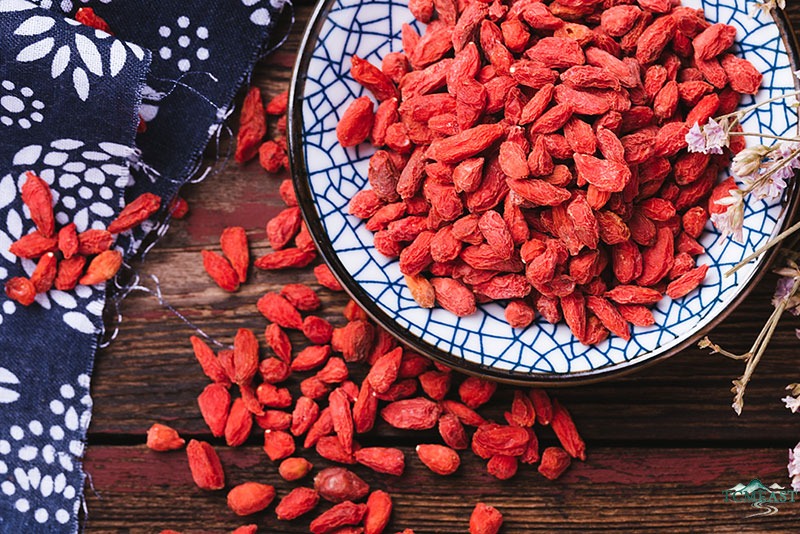
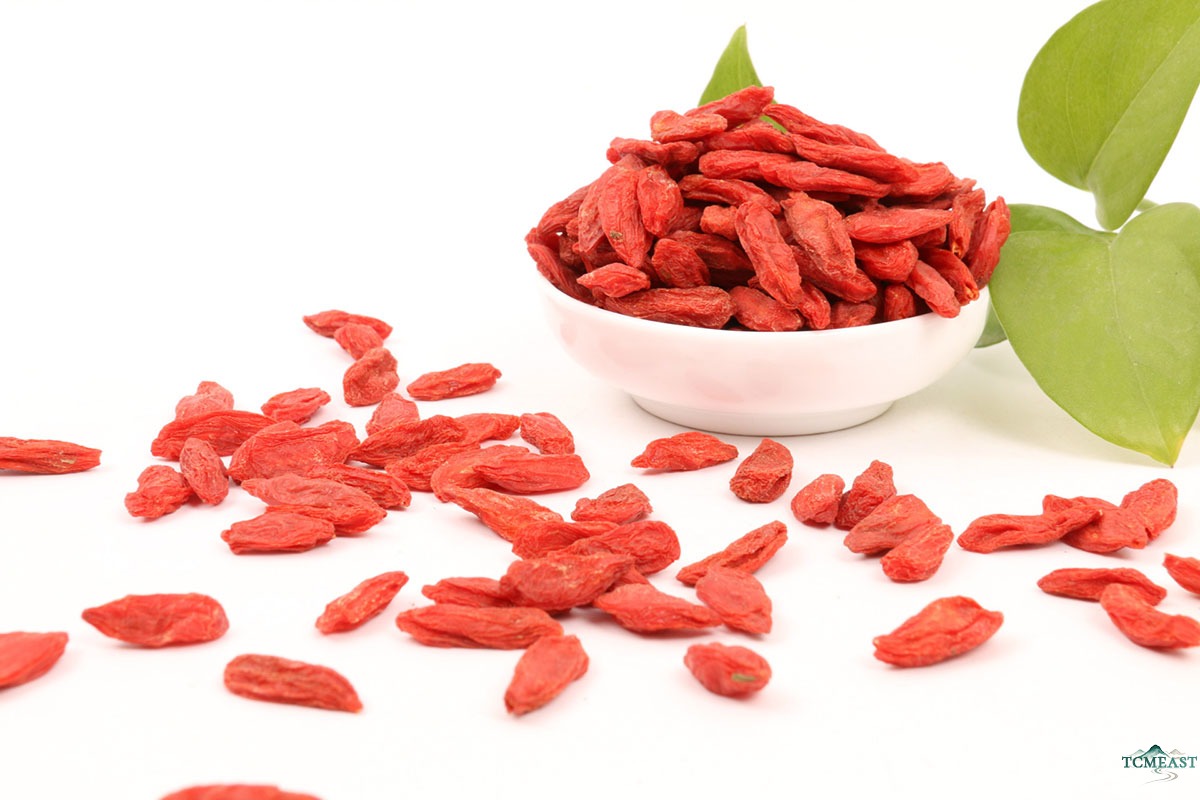
The fruit is a small, bright red-orange berry, about 1-2cm in length when dried. It is harvested in late summer and autumn when the berries turn a deep red, then gently dried — traditionally in the shade, though modern methods vary.
The Ningxia Connection
The highest-quality goji berries come from Ningxia Hui Autonomous Region in northwest China, particularly around the city of Zhongning. The unique combination of mineral-rich Yellow River silt, abundant sunshine, and significant temperature variation between day and night gives Ningxia goji berries their distinctive sweetness and deep red color. In Chinese, this is referred to as dao di (道地) — the concept that a herb's origin determines its quality and therapeutic potency.
Goji from Ningxia typically commands higher prices and is the preferred variety for medicinal use.
Nature, Flavor, and Meridian Affiliation
- Nature: Neutral (平) — neither warming nor cooling
- Flavor: Sweet (甘)
- Meridians: Liver, Kidney
The neutral nature means goji can be used by most people without concern about creating heat or cold. This is one reason it is so widely consumed as a food as well as a medicine.
The sweet flavor enters the Liver and Kidney systems — two organs that in TCM are closely linked. The Liver stores blood (肝藏血), and the Kidney stores essence (肾藏精). Blood and essence are mutually generative: when Kidney essence is sufficient, it can transform into Liver blood, and vice versa. This relationship is the theoretical basis for goji's core action.
Actions and Indications
1. Nourishes the Liver and Kidneys (滋补肝肾)
Goji is first and foremost a Liver- and Kidney-nourishing herb. In TCM theory, these are the two deepest organ systems, governing the body's constitutional strength, reproductive vitality, and aging process.
Signs that Liver and Kidney yin are depleted include:
- Dizziness and tinnitus (ringing in the ears)
- Lower back and knee soreness or weakness
- Premature graying of hair
- Reduced libido and fertility issues
- Insomnia with vivid dreaming
- Restlessness and irritability
- General signs of premature aging
Goji gently replenishes the yin and essence of these two systems, making it suitable for long-term use as a daily supplement.
2. Brightens the Vision (益精明目)
This is goji's most famous specific action. The Shennong Bencao Jing records that goji "brightens the eyes and improves vision," and it remains the herb most commonly used in TCM for eye health.
The connection between Liver blood and vision is explicit in TCM theory: the Liver opens into the eyes (肝开窍于目). When Liver blood and yin are sufficient, the eyes are clear, sharp, and moist. When Liver yin is depleted, the eyes become dry, blurred, and easily fatigued.
Goji addresses this at the root level by replenishing the Liver yin and blood that nourish the eyes. It is commonly used for:
- Age-related vision decline
- Dry eyes (especially from prolonged screen use)
- Blurred vision from Liver and Kidney deficiency
- Night blindness (with appropriate combination herbs)
3. Moistens the Lungs (润肺)
Goji also has a mild action of moistening the Lungs, making it useful for dry coughs, especially those arising from yin deficiency patterns. This is a secondary action but one that adds to goji's versatility.
Classical Foundation
Shennong Bencao Jing (Divine Farmer's Materia Medica, ~1st century CE) classifies goji as a superior herb (上品):
"Goji berry strengthens the sinews and bones, lightens the body, and slows aging. Long-term use fortifies the body and spirit."
Bencao Gangmu (Compendium of Materia Medica, 1590), by Li Shizhen:
"Goji berry is sweet and neutral. It harmonizes the five flavors, anchors the soul, calms the spirit, generates fluids, and brightens the vision."
Yaoxing Lun (On the Nature of Medicinals, 7th century):
"Goji berry nourishes essence and marrow, expels wind of the Liver and Kidneys, and treats aching lower back and painful knees."
A well-known classical story tells of a senior scholar named Zhang Gu who, at over 100 years of age, still had the appearance of a much younger man. When asked his secret, he replied, "I drink goji berry tea every day." Whether or not the story is literally true, it reflects the deep cultural association between goji and longevity.
Modern Pharmacological Understanding
Goji berry is one of the most researched of all TCM fruits, with hundreds of peer-reviewed studies published in English-language journals.
Key active compounds:
- Goji polysaccharides (Lycium barbarum polysaccharides, LBP) — the most studied and likely the most therapeutically significant group of compounds, comprising about 5-8% of the dried fruit by weight
- Zeaxanthin — a carotenoid pigment that accumulates in the macula of the eye, directly relevant to goji's vision-protective reputation
- Betaine, beta-carotene, vitamin C, various minerals
Key research findings:
| Area | Key Compound | Observed Effects |
|---|---|---|
| Vision protection | Zeaxanthin, LBP | Increased macular pigment density, protection against blue light damage |
| Anti-aging | LBP | Reduced oxidative stress markers, improved cellular longevity |
| Immune modulation | LBP | Enhanced NK cell activity, increased lymphocyte proliferation |
| Neuroprotection | LBP | Protection against retinal ganglion cell death in glaucoma models |
| Metabolic health | LBP (various) | Improved insulin sensitivity, lipid profile modulation |
| Skin health | LBP, betaine | Protection against UV-induced photoaging |
A notable 2021 randomized controlled trial published in Nutrients (PubMed: 33406738) found that daily consumption of 28g of goji berries for 90 days significantly increased macular pigment density and skin protection against UV-induced erythema in healthy elderly subjects. This is particularly relevant because it used the whole fruit rather than an extract — more closely matching the traditional mode of consumption.
Dosage and Preparation
| Form | Daily Dose | Notes |
|---|---|---|
| Dried berries (soaked/chewed) | 6-15g | About 1-2 tablespoons; can be eaten directly |
| Decoction | 6-12g | Added to other herbs in a formula |
| Tea/infusion | 5-10g | Steeped in hot water, can be re-steeped |
| Powder | 3-6g | Stirred into warm water or smoothies |
| In cooking | 10-20g | Added to soups, congee, or dishes |
Preparation notes:
- Goji berries should be rinsed briefly before use, as dried berries can have surface dust.
- For infusion, pour boiling water over the berries and steep for 5-10 minutes. The softened berries can be eaten at the end.
- In decoctions, goji is typically added during the last 10 minutes of cooking (后下) to preserve its delicate active compounds.
- Soaking goji in warm water for 15-30 minutes before use can help soften them and make their nutrients more accessible.
Key Combinations
| Combination | Effect |
|---|---|
| Goji + Ju Hua (Chrysanthemum) | Qi Ju Di Huang Wan variant — classic eye-nourishing pair |
| Goji + Tu Si Zi (Dodder Seed) | Wu Zi Yan Zong Wan — both nourish Kidney essence |
| Goji + He Shou Wu (Fo-ti) | Combined anti-aging, hair-darkening pair |
| Goji + Huang Qi (Astragalus) | Qi + yin combination — energy without heat |
| Goji + Long Yan Rou (Longan) | Sweet blood-nourishing pair for insomnia and anxiety |
| Goji + Hong Zao (Red Date/Jujube) | Simple daily nourishing tea for vitality |
Goji in Daily Cooking
Goji is one of the easiest TCM herbs to incorporate into a daily diet. Its sweet, mildly tangy flavor complements both savory and sweet dishes.
Simple Goji Tea:
Place 8-10 dried goji berries in a cup, pour boiling water over them, let steep for 5 minutes. Drink the tea and eat the softened berries. You can refill the cup 2-3 times during the day. For variety, combine with:
- Chrysanthemum flowers (for a classic eye-soothing combination)
- A slice of ginger (if you tend to feel cold)
- A few red dates (for added sweetness and blood nourishment)
Goji in Cooking:
- Congee: Add goji to rice porridge during the last 5 minutes of cooking
- Soups: A handful of goji added to chicken, pork, or vegetable soup in the final minutes of simmering
- Stir-fries: Toss a small handful into a vegetable stir-fry near the end of cooking
- Oatmeal or granola: Dried goji berries can be used like raisins
- Baking: Added to muffins, energy bars, or cookies
- Smoothies: Soaked goji berries blend well into fruit or green smoothies
Precautions and Contraindications
Who should be cautious with goji:
- People with fever or acute infection: Goji's warm, tonifying nature can trap pathogens during the acute phase of illness
- Those with Spleen deficiency with dampness: Individuals who easily experience loose stools, abdominal distension, or a feeling of fullness after eating may find goji (with its mild moistening effect) aggravating
- People on anticoagulant medications (warfarin): Goji has been reported in several case studies to potentially enhance the effect of warfarin, increasing INR and bleeding risk. If you are on warfarin, discuss goji use with your healthcare provider and monitor your INR
- Individuals with pollen allergies: Goji berry allergy is rare but documented; stop use if you experience any allergic symptoms
Pregnancy and lactation:
Goji is considered safe in food amounts during pregnancy and is traditionally used as a nourishing food in the postpartum period. Therapeutic doses should be discussed with a healthcare provider.
How to Choose and Store Goji Berries
Selecting quality goji:
- Appearance: Deep red-orange color, uniform size, plump and fleshy
- Texture: Slightly soft and chewy, not brittle or hard
- Aroma: Sweet, fruity, slightly floral
- Taste: Sweet with a slight tartness, pleasant aftertaste; should NOT be intensely sour or have a chemical taste
- Sulfur detection: Sulfur-fumigated goji has an unnaturally bright red color, a sour taste, and a harsh chemical aroma — avoid these
A simple water test: Steep a few berries in hot water. High-quality goji berries will float (they contain air inside the flesh). If they sink immediately, they may be from an inferior source or over-dried.
Storage:
Goji berries are hygroscopic and prone to clumping and mold. Store in an airtight container in a cool, dark place. In hot, humid climates, refrigerate. Reseal the bag immediately after each use. Properly stored dried goji berries last about 12-18 months, though they will gradually darken and become less pliable over time.
Goji Berry vs. Wolfberry: A Note on Naming
In the English-speaking world, Lycium barbarum is marketed under two names: "goji berry" (from the Chinese gou qi) and "wolfberry." The names are interchangeable, but "goji" has become the dominant marketing term. In botanical and nutritional contexts, "wolfberry" is still used, but "goji berry" has become the standard consumer-facing name. Both refer to the same fruit.
Common Questions Answered
Q: Can goji berries improve eyesight?
A: A qualified yes. Goji's primary TCM action is to nourish the Liver, which opens into the eyes. Research supports that regular goji consumption increases macular pigment density and may help protect against age-related vision decline. It is not a cure for established eye disease, but it supports the nutritional environment needed for healthy vision.
Q: How many goji berries should I eat per day?
A: A typical daily serving is 6-15g of dried berries, equivalent to about 1-2 tablespoons (approximately 20-40 berries). This is enough to obtain therapeutic benefit without overconsumption.
Q: Are fresh goji berries better than dried?
A: Fresh goji berries are rarely available outside of China and are highly perishable. Dried goji berries are the standard medicinal form and concentrate the active compounds. There is no advantage to fresh berries for medicinal use.
Q: What is the difference between goji berries and black goji berries?
A: Black goji (Lycium ruthenicum, 黑枸杞) is a related species with a very high anthocyanin content that gives it a deep purple-black color. It has become popular as a more expensive "superfood," but its traditional medicinal use is less established. Red goji has far more classical and modern research supporting its use.
Q: Can children take goji berries?
A: Yes, in food amounts. Goji is generally considered safe for children and can be a nutritious addition to their diet. Many TCM pediatric formulas include small amounts of goji for children with poor appetite, weak constitution, or visual strain from study.
Q: Does goji interact with blood pressure medication?
A: Goji may have a mild hypotensive effect and could theoretically enhance the effect of blood pressure medications. Monitor your blood pressure more closely if you take both. The interaction is not considered dangerous but is worth being aware of.
A Perspective on the "Superfood" Label
Goji berry's reputation as a "superfood" deserves a nuanced assessment. It is true that goji is nutrient-dense, antioxidant-rich, and supported by research for eye health and immune support. However, the marketing language often implies that goji is extraordinary compared to other fruits — a claim that is not always supported by comparative research.
What makes goji genuinely special is not that it contains more antioxidants than other berries (it doesn't, necessarily), but rather:
- The specific combination of zeaxanthin and polysaccharides is unusual among commonly consumed fruits
- The TCM framework provides a sophisticated theoretical model for how goji works in the body, allowing it to be combined intelligently with other herbs
- Two millennia of documented use provides a depth of experiential knowledge that supplements cannot match
In other words, goji's value is not in being a "magic bullet" nutrient bomb, but in being a well-understood, time-tested component of a holistic approach to health.
