
Healing Library
Panax Ginseng (Ren Shen) — The King of Herbs in Traditional Chinese Medicine
Ginseng (Ren Shen), the "King of Herbs," powerfully tonifies original qi and is used from daily wellness to critical care. Explore its classical applications, modern pharmacological research, and important precautions against misuse.
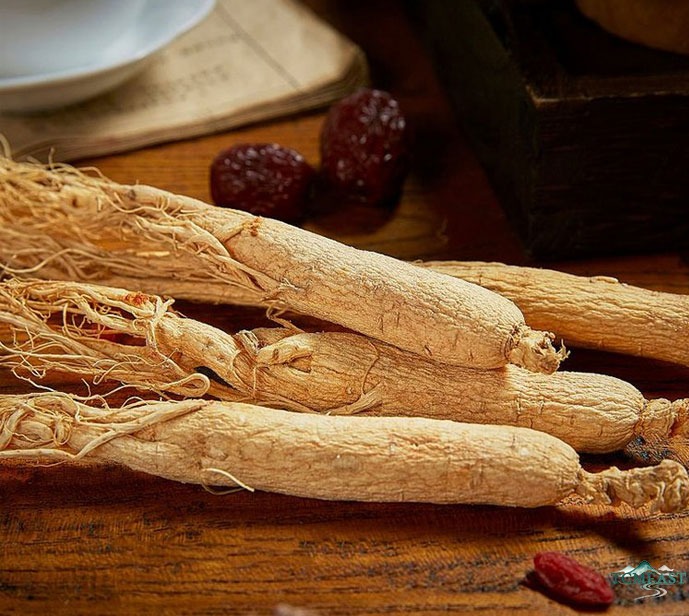
A Herb Like No Other
In the world of Traditional Chinese Medicine, no single herb commands as much respect as Panax ginseng — known in Chinese as Ren Shen (人参), literally "human root," a name that comes from the root's uncanny resemblance to the human form. For over two thousand years, ginseng has been used across the spectrum of TCM practice, from daily vitality tonics to life-saving emergency interventions. Its reputation has traveled far beyond China's borders: today, ginseng is one of the most researched medicinal plants in the world, with thousands of peer-reviewed studies published on its effects.
But beneath the headlines and the supplement bottles lies a herb whose use in TCM is far more nuanced than "take it for energy." Ginseng is classified as a qi tonifying herb — specifically, one that greatly supplements the primordial qi (元气, yuan qi), the deepest wellspring of vitality in the body. This distinction matters, because not everyone needs ginseng, and using it incorrectly can do more harm than good.
What Is Panax Ginseng?
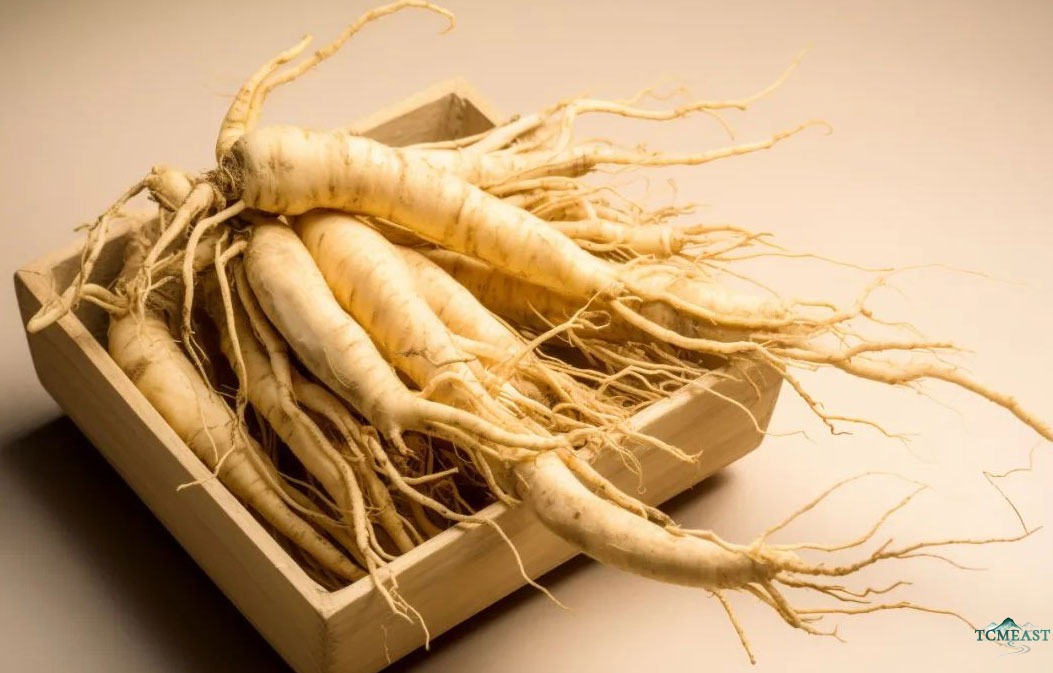
Panax ginseng (scientific name: Panax ginseng C. A. Mey.) is a perennial herb belonging to the Araliaceae family. The part used in medicine is the dried root. The genus name Panax comes from the Greek pan (all) and akos (cure) — the same root as "panacea."
There are several important forms of ginseng in TCM:
| Type | Processing | Character | Primary Use |
|---|---|---|---|
| Fresh ginseng (鲜人参) | Unprocessed, raw root | Cooler in nature | Short-term qi supplementation |
| White ginseng (生晒参) | Sun-dried after washing | Neutral-warm | General qi deficiency |
| Red ginseng (红参) | Steamed and dried | Strongly warm | Severe deficiency, cold patterns |
| Sugar ginseng (糖参) | Treated with sugar syrup | Neutral | Mild deficiency, easier to take |
| Wild ginseng (山参) | Naturally grown (rare) | Most potent | Critical cases, extreme deficiency |
The difference between cultivated (farm-grown) ginseng and wild ginseng is substantial. Wild ginseng (山参, shan shen) grows for decades in mountain forests and is now extremely rare and valuable. Most ginseng on the market today is cultivated garden ginseng (园参, yuan shen), which is grown for 4-6 years before harvest.
Nature, Flavor, and Meridian Affiliation
In TCM, every herb is understood through its nature (性, xing), flavor (味, wei), and meridian tropism (归经, gui jing):
- Nature: Slightly warm (微温)
- Flavor: Sweet and slightly bitter (甘, 微苦)
- Meridians: Spleen, Lung, Heart, and Kidney
The sweet flavor has a tonifying and harmonizing effect — it "fills" what is deficient. The slight bitterness helps direct the qi downward, preventing the stagnation that pure sweetness might cause. The warm nature gently stimulates without being harsh, making ginseng suitable for gradual, sustained supplementation.
The fact that ginseng enters four meridian systems (more than most herbs) speaks to its wide-reaching influence. It simultaneously supports the Spleen (digestion and assimilation), Lung (qi circulation and immunity), Heart (blood circulation and spirit), and Kidney (constitutional vitality).
Actions and Indications
1. Greatly Supplements Primordial Qi (大补元气)
This is ginseng's signature action. In cases of extreme qi collapse — shock, massive blood loss, severe dehydration, or respiratory failure — concentrated ginseng decoction (30g or more, decocted separately and administered via nasogastric tube) can be used as an emergency measure while waiting for modern medical intervention.
This is not a theoretical use. Classical texts record, and modern Chinese hospitals still apply, ginseng in critical care settings through Shen Fu Tang (参附汤, Ginseng and Prepared Aconite Decoction), a combination used for shock with yang collapse.
2. Supplements the Spleen and Lungs (补脾益肺)
Used more commonly and at lower doses, ginseng strengthens the digestive system (Spleen) and respiratory system (Lungs):
- Spleen qi deficiency: Poor appetite, loose stools, fatigue, weak limbs, abdominal distension after eating
- Lung qi deficiency: Shortness of breath, weak voice, spontaneous sweating, frequent colds
This is the domain of classic formulas like Si Jun Zi Tang (四君子汤, Four Gentlemen Decoction) — ginseng combined with Bai Zhu (atractylodes), Fu Ling (poria), and Gan Cao (licorice) — the foundational formula for building digestive qi.
3. Generates Fluids and Stops Thirst (生津止渴)
Ginseng promotes the production of body fluids, making it useful in patterns involving fluid damage: prolonged fever, excessive sweating, or chronic thirst. This is the logic behind Sheng Mai San (生脉散, Generate the Pulse Powder), a famous combination of ginseng, Mai Dong (ophiopogon), and Wu Wei Zi (schisandra) used for qi and yin deficiency with fluid depletion.
4. Calms the Spirit and Enhances Wisdom (安神益智)
Ginseng has a calming yet clarifying effect on the mind. Unlike stimulants that force alertness at the expense of relaxation, ginseng is said to "settle the spirit while sharpening the intellect." It is used in patterns of heart-spleen deficiency presenting with poor memory, difficulty concentrating, insomnia, and heart palpitations.
Classical Foundation
Shennong Bencao Jing (Divine Farmer's Materia Medica, ~1st-2nd century CE), the earliest surviving Chinese pharmacopoeia, classifies ginseng as a superior herb (上品) — substances that are non-toxic, can be taken long-term, and have life-enhancing effects. The text states:
"Ginseng supplements the five viscera, quiets the spirit, stabilizes the soul, stops palpitations, clears the eyes, opens the heart, and enhances wisdom. Long-term use lightens the body and extends the years."
Li Shizhen's Bencao Gangmu (Compendium of Materia Medica, 1590) expands on ginseng's applications extensively, noting that "nearly all complex deficiency patterns require ginseng."
Modern Pharmacological Understanding
Ginseng is one of the most studied medicinal plants in the world. The primary active compounds are ginsenosides (also called panaxosides) — a group of saponin glycosides unique to the Panax genus.
Key research findings:
| Area | Key Compounds | Observed Effects |
|---|---|---|
| Energy & Fatigue | Ginsenoside Rg1 | Anti-fatigue, increased physical endurance |
| Cognitive function | Ginsenoside Rb1, Rg1 | Neuroprotection, memory enhancement |
| Immune modulation | Ginsenosides (various) | Both immune-stimulating and anti-inflammatory effects |
| Stress response | Ginsenoside Rb1 | Modulation of HPA axis, adaptogenic effect |
| Cardiovascular | Ginsenoside Re, Rg3 | Vasodilation, anti-platelet aggregation |
| Blood sugar | Ginsenoside Rh2 | Improved insulin sensitivity |
A 2022 meta-analysis published in the Journal of Ginseng Research (PubMed: 35221487) reviewing 65 randomized controlled trials found that ginseng supplementation significantly improved fatigue scores compared to placebo, with a moderate-to-large effect size. The same review noted that benefits were most consistent with daily doses of 200-400mg of standardized ginseng extract.
Important caveat
Much of the existing clinical research uses standardized ginseng extracts, not traditional decoctions. The bioavailability and active compound profile differ significantly between an extract capsule and a traditionally prepared decoction. This does not invalidate either approach, but it means the two are not interchangeable in their effects.
Dosage and Preparation
| Form | Daily Dose | Notes |
|---|---|---|
| Decoction (煎服) | 3-9g | Decoct separately for 30-40 min before combining with other herbs |
| Powder (研粉吞服) | 1-3g | Taken directly with warm water |
| Emergency use | 15-30g | Single concentrated dose, severe qi collapse |
| Tea/infusion | 1-3 slices | Steeped in hot water for 10 min |
Method for decoction: Ginseng should be decocted separately (另煎) in a separate pot for 30-40 minutes before the liquid is combined with the decoction of other herbs. This is because ginseng's active constituents require longer cooking time to fully extract, and the concentrated decoction can be measured more precisely for dosage control.
Key Combinations (配伍)
| Combination | Formula | Effect |
|---|---|---|
| Ginseng + Fu Zi (Prepared Aconite) | Shen Fu Tang | Resuscitates yang collapse in shock/emergency |
| Ginseng + Bai Zhu + Fu Ling + Gan Cao | Si Jun Zi Tang | Foundation for all qi-tonifying formulas |
| Ginseng + Mai Dong + Wu Wei Zi | Sheng Mai San | Tonifies qi and nourishes yin, generates fluids |
| Ginseng + Huang Qi (Astragalus) | — | Combines two major qi tonifiers for profound deficiency |
| Ginseng + Chen Pi (Tangerine Peel) | — | Ginseng tonifies, Chen Pi moves — prevents stagnation |
Precautions and Contraindications
Who should NOT take ginseng:
- Excess patterns: Individuals with fever, acute inflammation, red face, rapid pulse, or irritability from excess heat should avoid ginseng, as its warm, tonifying nature can aggravate the condition
- Yin deficiency with heat signs: Those with night sweats, five-palm heat (hot palms and soles), dry throat, and thirst may find ginseng too warming
- Hypertension with yang hyperactivity: Red-faced individuals with high blood pressure and headaches may experience worsening of symptoms
- During acute infections: The common cold with fever, body aches, or phlegm should not be treated with ginseng until the acute phase has passed
Drug interactions:
Ginseng can interact with several classes of medication:
- Anticoagulants (warfarin, aspirin): May increase bleeding risk
- MAOIs (antidepressants): Theoretical interaction, monitor
- Hypoglycemic agents: May enhance blood-sugar-lowering effects
- Corticosteroids: Possible additive effect
Pregnancy and lactation:
Ginseng is generally not recommended during pregnancy unless prescribed by a qualified TCM practitioner for specific indications. The safety of high-dose ginseng during breastfeeding has not been established.
How to Choose and Store Ginseng
Selecting quality ginseng:
- Appearance: The root should be firm, heavy for its size, with clearly defined annular rings at the top and numerous thin rootlets
- Cross-section: The interior should be a uniform yellowish-white (white ginseng) or reddish-amber (red ginseng) with no dark spots or hollow cavities
- Aroma: A distinct, sweet, earthy fragrance — musty or sour odors indicate poor storage or sulfur processing
- Taste: Should be initially slightly sweet, then mildly bitter, with a lingering numbing sensation on the tongue
Sulfur-fumigated ginseng (common in lower-quality products) can be detected by its unnaturally white color, sour taste, and lack of the characteristic ginseng aroma. Sulfur processing reduces medicinal quality and may cause adverse reactions in sensitive individuals.
Storage:
Ginseng is hygroscopic and prone to mold, insect damage, and loss of volatile compounds. Store in an airtight container in a cool, dry place — refrigeration in a sealed bag with a moisture absorber is ideal for long-term storage. Dried whole roots can be kept for 2-3 years if properly stored; powdered ginseng is best used within 6 months.
Common Questions Answered
Q: Can young people take ginseng?
A: Yes, if there is genuine qi deficiency — chronic fatigue, weak digestion, frequent illness. However, young people with robust health do not need ginseng and may experience side effects (insomnia, nosebleeds, irritability) if they take it unnecessarily.
Q: What is the difference between ginseng and American ginseng (Panax quinquefolius, Xi Yang Shen)?
A: This is a common point of confusion. American ginseng is cool in nature, while Asian ginseng is warm. American ginseng is better suited for conditions involving heat (dry mouth, irritability, summer heat) and for people who cannot tolerate the warmth of Asian ginseng.
Q: Can ginseng be taken in summer?
A: Traditionally, ginseng is considered better suited to autumn and winter (when the body's energy naturally moves inward). However, individuals with clear qi deficiency can take it year-round, often in reduced doses or combined with cooling herbs like Mai Dong to balance the warmth.
Q: Does ginseng cause insomnia?
A: Some people, particularly those who are sensitive or have latent heat patterns, may experience insomnia or agitation when taking ginseng. This usually resolves with dose reduction or switching to a milder preparation. Taking ginseng earlier in the day (before 3 PM) also helps.
Q: Is wild ginseng really better?
A: Wild ginseng (山参) is significantly more potent than cultivated ginseng due to its much slower growth rate and higher concentration of active compounds. However, it is also extremely expensive (often thousands of dollars per root) and subject to concerns about overharvesting and authenticity. High-quality cultivated ginseng of 6+ years is sufficient for most clinical needs.
A Note on Sustainability
Wild Panax ginseng has been harvested for centuries and is now critically endangered in its natural habitat across Northeast China, Korea, and the Russian Far East. Nearly all ginseng on the international market today is farm-cultivated. While cultivated ginseng is effective, the romantic association with wild mountain ginseng persists in both Chinese and Korean culture. If you purchase "wild" ginseng, be aware that authentic wild ginseng is exceptionally rare and expensive, and many products labeled as such are either counterfeit or semi-wild cultivated ginseng grown in forested plots.
