
Healing Library
Reishi Mushroom (Ling Zhi) — The Spirit Herb of Immortality
Ling Zhi (Reishi), the "Herb of Immortality," is prized in TCM for tonifying qi and calming the spirit. Beyond the superfood hype, discover its targeted use for insomnia, palpitations, and deficiency-related fatigue, plus modern research insights.
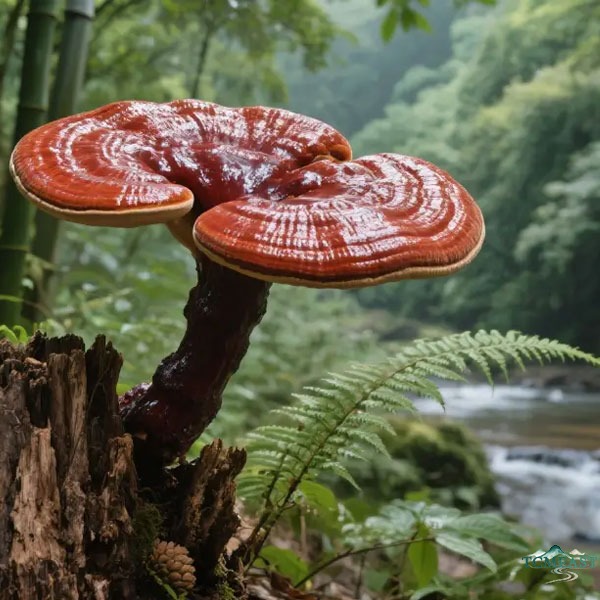
The Mushroom of Spiritual Potency
In the hierarchy of Traditional Chinese Medicine, few substances occupy as exalted a position as Ling Zhi — the reishi mushroom (Ganoderma lucidum). Known in Chinese as 灵芝, a name that combines the characters for "spirit/hermetic" (灵) and "mushroom/herb" (芝), reishi has been revered for over two thousand years as an" herb of immortality" — a substance that promotes longevity, calms the spirit, and builds the body's deepest constitutional reserves.
The Shennong Bencao Jing classifies reishi as a superior herb — the highest category reserved for substances that are non-toxic, can be taken long-term without harm, and have life-enhancing properties. In modern times, reishi has become one of the most researched medicinal mushrooms in the world, with thousands of studies exploring its immune-modulating, anti-cancer, and adaptogenic properties.
But beneath the modern supplement-industry hype lies a tradition that uses reishi with far more specificity than "take for immunity." In TCM, reishi is understood primarily as an herb that settles the spirit and tonifies the Heart and Lung qi — a distinction that shapes how and when it is prescribed.
What Is Reishi Mushroom?
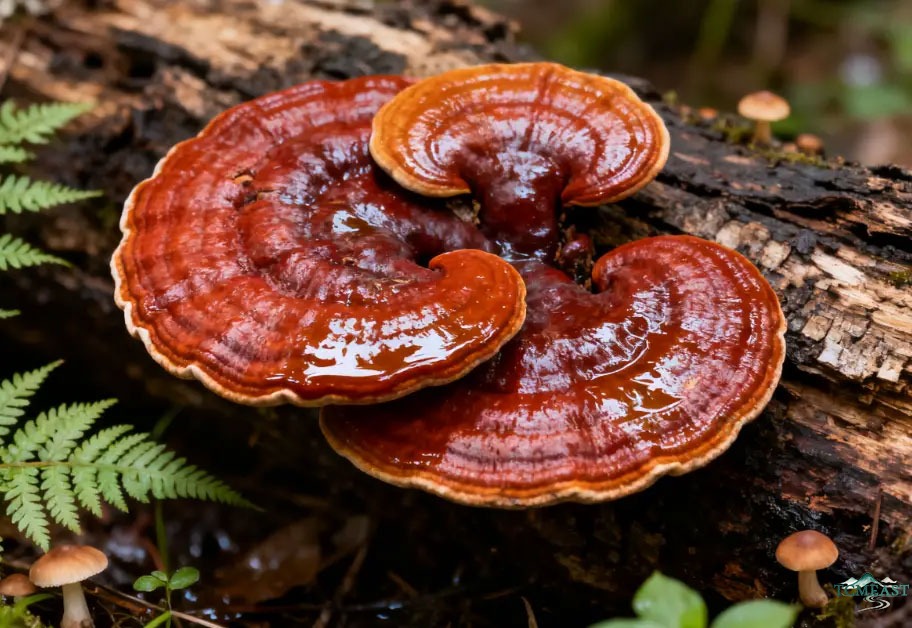
Reishi is a polypore fungus that grows on hardwood trees, particularly oaks and maples, in warm, humid forests across Asia, Europe, and the Americas. The fruiting body — the visible part of the mushroom — is the medicinal part.
Two primary species are used in TCM:
| Species | Chinese Name | Characteristics |
|---|---|---|
| Ganoderma lucidum (Leyss. ex Fr.) Karst. | 赤芝 (Red Reishi) | The standard medicinal species, kidney-shaped, reddish-brown, with a lacquered appearance |
| Ganoderma sinense Zhao, Xu et Zhang | 紫芝 (Purple Reishi) | Dark purple to blackish, considered slightly more cooling |
In addition to the fruiting body, two other forms are used:
- Reishi spores (灵芝孢子粉): The tiny, dust-like spores released from the mature mushroom. These contain a very high concentration of active compounds but have a tough outer wall that must be broken (破壁) for absorption. The standard is >95% wall-broken spores.
- Reishi mycelium (菌丝体): The vegetative root-like network of the fungus, grown in culture. This is the least expensive form but also the least concentrated in active compounds.
Nature, Flavor, and Meridian Affiliation
- Nature: Neutral to slightly warm (平/微温)
- Flavor: Sweet, slightly bitter (甘、微苦)
- Meridians: Heart, Lung, Liver, Kidney
The slightly bitter flavor enters the Heart to calm the spirit. The sweet flavor enters the Lung and Spleen to tonify qi. The neutral nature means reishi is neither significantly warming nor cooling — it works gently and can be taken by most constitutional types.
Reishi enters four meridians — Heart, Lung, Liver, and Kidney — placing it among the herbs with the broadest range of influence. This wide meridian coverage reflects its fundamental role as a constitutional remedy that strengthens multiple organ systems simultaneously.
Actions and Indications
1. Supplements Qi and Calms the Spirit (补气安神)
This is reishi's signature action and the reason it is classed as a "spirit herb." It simultaneously tonifies the body's qi and calms the shen (spirit) — addressing both the physical and mental dimensions of health.
Indications for this action:
- Palpitations and anxiety
- Insomnia with vivid dreaming
- Poor memory and concentration
- Restlessness and irritability
- Fatigue accompanied by inability to relax
This dual action distinguishes reishi from other qi tonics (which build energy but may not calm the mind) and from sedatives (which calm but don't build). Reishi does both — it is a truly adaptogenic herb in the original sense of the word: it helps the body and mind adapt to stress.
2. Stops Coughing and Calms Wheezing (止咳平喘)
Reishi tonifies Lung qi and helps stabilize the respiratory system. It is used in chronic respiratory conditions where there is deficiency at the root:
- Chronic cough with thin, watery sputum
- Asthma-like wheezing in deficiency patterns
- Shortness of breath with exertion
- Frequent respiratory infections
Unlike herbs that treat acute respiratory symptoms, reishi works slowly to strengthen the Lung system over time, reducing the frequency and severity of episodes.
3. Protects the Liver and Supports Detoxification (保肝解毒)
Reishi has a well-established hepatoprotective effect in TCM. It is used to support liver function in chronic hepatitis, fatty liver, and as an adjunct in liver disease. This effect is attributed to both its qi-tonifying action (strengthening the body's ability to process toxins) and its direct antioxidant/anti-inflammatory effects on liver tissue.
4. Benefits the Heart and Protects Blood Vessels (益心活血)
Reishi gently supports cardiovascular function by tonifying Heart qi and promoting healthy circulation. Traditional texts describe it as"benefiting the heart and opening the blood vessels" — a description that aligns with modern research on its cardiovascular effects.
Classical Foundation
Shennong Bencao Jing (~1st century CE) classifies reishi as a superior herb:
"Red reishi (赤芝) governs disorders of the chest and abdomen, benefits the heart and qi, supplements the middle burner, sharpens the intellect and memory. Long-term服用 lightens the body and prevents aging, extending the years."
"Purple reishi (紫芝) governs disorders of the ears — hardness of hearing, pain in the joints. It protects the spirit, benefits the essence and qi, strengthens the sinews and bones. Long-term服用 lightens the body and prevents aging."
Bencao Gangmu (Li Shizhen, 1590):
"Reishi is sweet, warm, and无毒. It governs deficiency and fatigue, benefits the qi of the middle burner, strengthens the will, and calms the spirit."
Modern Pharmacological Understanding
Reishi is one of the most extensively studied medicinal mushrooms. The primary active compounds are:
- Triterpenes (ganoderic acids, lucidenic acids) — over 200 identified; responsible for anti-inflammatory, anti-tumor, and hepatoprotective effects
- Polysaccharides (beta-glucans) — immune-modulating, anti-tumor, prebiotic effects
- Peptidoglycans — immune-enhancing proteins
- Sterols, nucleotides, and trace elements
| Area | Key Compounds | Observed Effects |
|---|---|---|
| Immune modulation | Beta-glucans, ganoderic acids | Enhances NK cell activity; regulates both Th1 and Th2 responses |
| Anti-tumor | Ganoderic acids, polysaccharides | Inhibits tumor growth in vitro and in animal models; enhances chemotherapy efficacy |
| Anti-inflammatory | Ganoderic acids, triterpenes | Reduces TNF-α, IL-6, and other pro-inflammatory cytokines |
| Neuroprotection | Triterpenes, polysaccharides | Protects against neuronal damage; promotes nerve growth factor (NGF) synthesis |
| Hepatoprotection | Ganoderic acids | Reduces liver enzyme elevation; protects against chemical-induced liver injury |
| Cardiovascular | Triterpenes, polysaccharides | Reduces blood pressure; improves lipid profile; anti-platelet aggregation |
| Sleep & anxiety | Triterpenes, polysaccharides | Reduces sleep latency; increases sleep duration in animal models |
A 2022 meta-analysis published in Frontiers in Pharmacology (PubMed: 35422778) reviewed 26 randomized controlled trials and found that reishi supplementation significantly improved immune function markers, fatigue scores, and quality of life in patients undergoing cancer treatment, without serious adverse effects. The review noted that benefits were most consistent with doses of 1.5-3g per day of fruiting body extract.
Dosage and Preparation
| Form | Daily Dose | Preparation Notes |
|---|---|---|
| Dried fruiting body (decoction) | 6-15g | Slice thinly, decoct for 30-60 minutes; very bitter tasting |
| Fruiting body powder | 1.5-3g | Encapsulated or stirred into warm liquid |
| Spore powder (破壁孢子粉) | 1-3g | Must be wall-broken (>95%); taken with warm water |
| Concentrated extract (standardized) | 1-2g | Follow manufacturer instructions |
| Tincture | 2-4ml | Standard 1:5 tincture |
Important: Reishi is exceptionally bitter — one of the most bitter herbs in TCM. The dried fruiting body decoction is intensely unpalatable. For this reason, encapsulated extracts and spore powder are more common for daily use. If decocting for therapeutic purposes, the bitterness can be somewhat mitigated by combining with licorice (甘草) or red dates (红枣).
Reishi decoctions should be made with the dried sliced fruiting body, cooked for at least 30 minutes (longer is better — up to 2 hours). The same pieces can be decocted 2-3 times before the active compounds are exhausted.
Key Combinations
| Combination | Effect |
|---|---|
| Reishi + Ren Shen (Ginseng) | Profound qi tonification for severe deficiency, combined energy and immune support |
| Reishi + Suan Zao Ren (Sour Jujube Seed) | Calms the spirit and treats insomnia with palpitations |
| Reishi + Huang Qi (Astragalus) | Immuno-modulating and qi-strengthening — excellent for chronic fatigue and frequent illness |
| Reishi + Ren Shen + Fu Ling | Si Jun Zi Tang with reishi — strengthens digestion and calms the spirit simultaneously |
| Reishi + Shan Yao (Chinese Yam) | Gentle qi tonic combination — suitable for long-term daily use |
Precautions and Contraindications
Who should be cautious with reishi:
- Individuals with bleeding disorders or on anticoagulants: Reishi has anti-platelet activity and may increase bleeding risk
- Those with autoimmune conditions: Reishi's immune-modulating activity could theoretically exacerbate overactive immune responses — use under professional guidance
- Low blood pressure: Reishi can lower blood pressure; those with constitutional hypotension should monitor
- Surgery: Discontinue reishi at least 2 weeks before scheduled surgery due to its anticoagulant effects
- Organ transplant recipients: Reishi's immune-enhancing effects may interfere with immunosuppressive medications
Side effects:
Reishi is generally well tolerated. Mild side effects may include dry mouth, nose, or throat; digestive upset; or mild dizziness. These usually resolve with dose adjustment. Allergic reactions are rare.
Pregnancy and lactation:
Safety during pregnancy and breastfeeding has not been systematically studied. Therapeutic doses should only be used under professional guidance. Food amounts in soups are generally considered safe.
How to Choose and Store Reishi
Quality indicators:
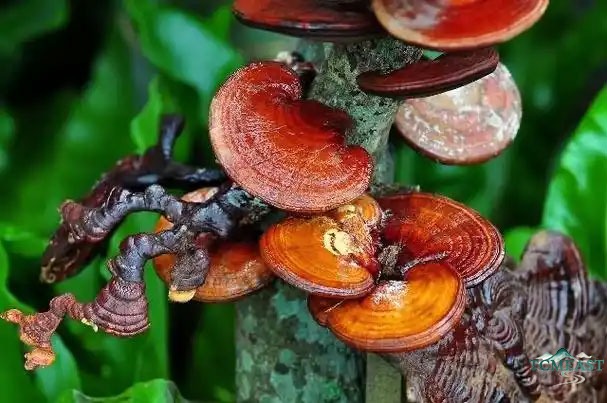
- Fruiting body: Thick, wide, fan-shaped with a lacquered, reddish-brown surface; woody texture; mild mushroom-like aroma
- Spores: Fine, brownish powder; authentic spores have a distinct mushroom-like smell; avoid products that are predominantly the mycelium grown on grain (which contains starch fillers)
- Extracts: Look for products standardized to both polysaccharides (>10%) AND triterpenes (>5%) — many products only standardize to polysaccharides, missing the important triterpene component
Authentication: Bitter taste is a quick indicator of quality — if the product has minimal bitterness, it likely has low triterpene content. Genuine reishi is intensely bitter.
Storage:
Store dried reishi in a cool, dry place in an airtight container. Powdered forms should be kept in opaque containers away from light. Spore powder is particularly sensitive to oxidation and should be refrigerated after opening.
Reishi in Modern Context — An Adaptogen Perspective
Reishi fits the modern definition of an adaptogen — a substance that helps the body resist stressors of all kinds, whether physical, chemical, or biological. The adaptogenic framework, developed by Russian scientists in the mid-20th century, identifies three criteria:
- Non-toxic — safe for long-term use ✅
- Non-specific — helps the body respond to a wide range of stressors ✅
- Normalizing — brings the body toward homeostasis regardless of the initial imbalance ✅
Reishi's role in TCM as a superior herb that "tonifies the body's righteous qi" aligns almost perfectly with this modern adaptogenic paradigm. This is one reason reishi has become such a prominent herb in the global functional mushroom movement.
Common Questions Answered
Q: Can reishi cure cancer?
A: No single herb can "cure" cancer, and this claim should be treated with skepticism whenever it appears. However, reishi has been extensively studied as an adjunctive therapy — its immune-modulating and quality-of-life-improving effects are well documented in cancer patients undergoing chemotherapy and radiation. It is not a replacement for conventional cancer treatment.
Q: How long does it take to feel the effects of reishi?
A: Reishi is a slow-acting herb. Most people report noticeable effects after 3-6 weeks of daily use — improved energy, better sleep quality, and a calmer disposition. Some effects (immune function) may take longer.
Q: Why is reishi so bitter?
A: The bitterness comes from the triterpene compounds (ganoderic acids), which are also responsible for many of its therapeutic effects. The bitterness level is actually an indicator of quality — more bitter generally means higher triterpene content.
Q: Can I take reishi with other medications?
A: Reishi is generally safe but has documented interactions with anticoagulants, antiplatelet drugs, and immunosuppressants. If you are taking any prescription medications, consult your healthcare provider before starting reishi.
Q: What is the difference between reishi spore powder and fruiting body extract?
A: Spore powder contains a different profile of compounds (higher in certain polysaccharides and sterols) from the fruiting body (higher in triterpenes). The fruiting body is more traditionally used in Chinese medicine. Both forms have research support. Many quality products combine both.
