Wisdom of TCM
The Classification of Zang-Fu Organs and Their Physiological Characteristics
Chinese medicine classifies the internal organs into three categories: the five zang, the six fu, and the extraordinary fu organs. The five zang (heart, lung, spleen, liver, kidney) store essence qi — “they store and do not drain; they are full but not solid.” The six fu (gallbladder, stomach, small intestine, large intestine, bladder, sanjiao) transmit and transform substances — “they drain and do not store; they are solid but not full.” The extraordinary fu organs (brain, marrow, bone, vessel, gallbladder, uterus) resemble the zang in function while differing from the fu in morphology, likewise storing without draining. This article draws on classical sources to explain their physiological characteristics and the clinical significance of the principle that “zang diseases tend toward deficiency, fu diseases tend toward excess.”
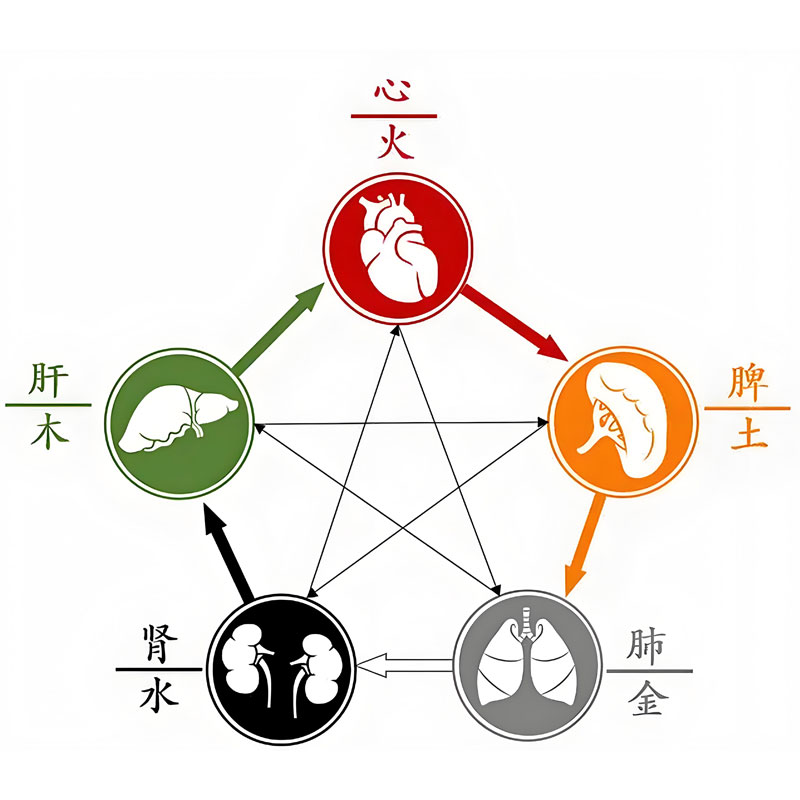
Visceral manifestation theory (Zang-Xiang) centers on the study of the zang-fu organs. The zang-fu organs are the general term for the internal organs of the human body. Based on their physiological functional characteristics and morphological structures, Chinese medicine classifies the body's internal organs into three categories: the five zang, the six fu, and the extraordinary fu organs.
The five zang are the heart, lung, spleen, liver, and kidney. They are mostly solid, parenchymatous organs with relatively dense internal tissues located within the thoracic and abdominal cavities. Their common function is to produce and store essence qi (jing qi). The six fu are the gallbladder, stomach, small intestine, large intestine, bladder, and sanjiao (triple burner). They are mostly hollow, sac-like or tubular organs located within the thoracic and abdominal cavities. Their common function is to receive, contain, and transmit water and grains (food and drink). Therefore, the Suwen · Wuzang Bie Lun (Basic Questions: Special Treatise on the Five Zang) states: “The so-called five zang store essence qi and do not drain it; hence they are full but cannot be solid. The six fu transmit and transform substances and do not store; hence they are solid but cannot be full.” The Lingshu · Ben Zang (Spiritual Pivot: On the Viscera) also states: “The five zang are that which stores the spirit, essence, qi, blood, ethereal soul, and corporeal soul. The six fu are that which transforms water and grains and circulates body fluids.” Here, the formulations of storing, draining, fullness, and solidity succinctly and cogently summarize the respective physiological functional characteristics of the five zang and six fu and clarify the main distinctions between the two groups.
The principle that the five zang “store and do not drain” and are “full but not solid” emphasizes that the zang primarily store essence qi. Essence qi should be maintained in a state of fullness and should not be directly excreted outside the body. However, the essence qi of the five zang must flow and circulate throughout the entire body without becoming stagnant or obstructed — that is, the qi dynamic of the five zang must remain unobstructed. If the essence qi of the five zang cannot be adequately replenished and maintained, deficiency patterns will form. Hence the saying that “diseases of the zang are mostly deficiency.”
The principle that the six fu “drain and do not store” and are “solid but not full” emphasizes that the fu primarily transmit and transform substances. Food and drink must continually be conducted and transformed within the six fu, alternating between fullness and emptiness, without storing essence qi for any extended period. As the Tang dynasty scholar Wang Bing annotated in the Suwen · Wuzang Bie Lun: “Essence qi constitutes fullness; water and grain constitute solidity. The five zang store only essence qi, hence they are full but cannot be solid. The six fu do not store essence qi but only receive water and grain.” If the transmission and transformation function of the six fu becomes impaired, water, grain, and waste matter will stagnate within them, forming excess patterns. Hence the saying that “diseases of the fu are mostly excess.”
The extraordinary fu organs are the collective term for the brain, marrow, bone, vessel, gallbladder, and uterus. The Suwen · Wuzang Bie Lun states: “The brain, marrow, bone, vessel, gallbladder, and uterus — these six are generated by the qi of the earth. They all store yin and resemble the earth. Therefore, they store and do not drain, and are called the extraordinary fu organs.” This indicates that in terms of physiological function, the extraordinary fu organs possess a role similar to that of the five zang in storing essence qi. However, their functions are mostly subordinated to the five zang, and with the exception of the gallbladder, they have neither interior-exterior (biao-li) pairing relationships with the zang-fu organs nor meridian connections. Although the gallbladder forms an interior-exterior relationship with the liver, its function is to store and excrete bile, which differs from the other fu organs' function of transmitting and transforming water and grain and expelling waste; thus it is also categorized among the extraordinary fu organs. In fact, the bone, marrow, and vessels are not typically considered “internal organs” in the conventional sense, and in Chinese medical theory they are often discussed in conjunction with the five zang.