
Seasonal Wellness
Lung Dryness in Autumn: Foods and Herbs to Moisturize and Protect
Autumn is the season of dryness in TCM. Learn which foods and herbs moisten the Lungs, how to protect against dry cough and itchy throat, and why the change of season matters.
A Personal NoteIn TCM, each season carries a quality. Autumn's quality is dryness. As summer's humidity fades and the air cools, the body's fluids begin to evaporate a little faster. The Lungs are the organ most exposed to the air, and they are also the organ that governs the skin and the moisture of the upper body. When autumn dryness meets a body that is already a little low on fluids, the result is a dry scratchy throat, a tickling cough, dry skin, chapped lips, and a nose that feels papery inside. The traditional answer is not a stronger cough syrup. It is to moisten from within: food and herbs that protect the Lungs and rebuild the fluids they have lost.
How Autumn Dryness Affects the Body
Autumn dryness, called qiu zao in Chinese, can arrive as "warm dryness" in early autumn or "cool dryness" later in the season. Both share the same core: the body is losing moisture faster than it can replace it.
Common signs of Lung dryness:
- Dry cough with little or no phlegm
- Scratchy, itchy throat, especially in the morning
- Dry skin, lips, and nasal passages
- Sensitivity to wind and air-conditioning
- Feeling thirsty even after drinking
- Dry, brittle hair or nails
People with Yin deficiency, who tend toward dryness all year, feel autumn's effect first.
Foods That Moisturize the Lungs
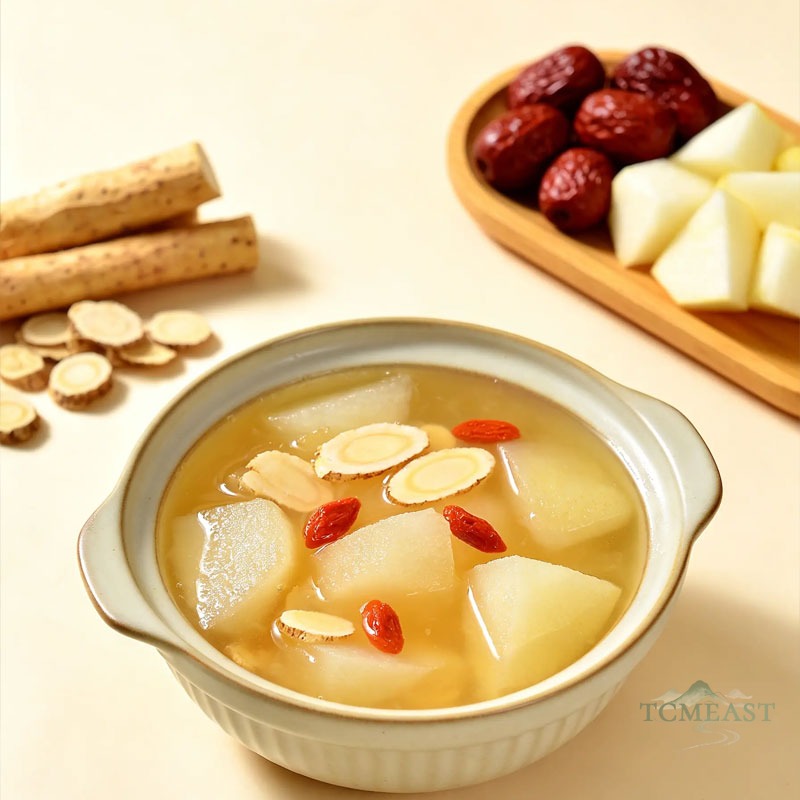
The classic pear: Cooked pear with a little honey is the simplest Lung-moistening remedy in Chinese food therapy. Poach, steam, or simmer it; raw pear is cooler and more suitable for heat.
White and pale foods: TCM maps the Lungs to the color white. White fungus (snow fungus), lily bulb, lotus root, daikon radish, white sesame, almond, and rice congee are the traditional autumn foods.
Healthy fats and seeds: Walnuts, sesame, almond, and a little olive or coconut oil protect the skin and support moisture.
Broth and soup: Bone broth, chicken broth, and vegetable soup rebuild fluids. Slow-cooked soups are the most digestible way to hydrate in autumn.
Lightly cooked greens: Spinach, bok choy, and chard retain their moisture when cooked briefly. Avoid relying only on raw salad when the air is dry.
Herbs for Lung Dryness
Sha Shen (Glehnia): Nourishes Lung and Stomach yin and moistens dryness. One of the first herbs for dry autumn cough.
Mai Dong (Ophiopogon): Moistens the Lungs, generates fluids, and calms the Heart. Found in many autumn formulas.
Bai He (Lily bulb): Nourishes the Lungs and calms the spirit. Good for dry cough with emotional restlessness.
Tian Dong (Asparagus root): Stronger moisture for deeper dryness.
Chuan Bei Mu (Fritillaria): Softens and clears dry cough with sticky phlegm.
Gan Cao (Licorice): Harmonizes and soothes the throat in most formulas.
Sheng Mai San is the classic formula for Lung qi and yin deficiency with dryness and fatigue. Qing Zao Jiu Fei Tang is used when autumn dryness causes a dry cough with a scratchy throat. A practitioner should choose between them.
A Daily Autumn Routine
Morning: Start with warm water and a few slices of pear or a spoon of honey. Avoid very hot, very cold, or strongly spiced drinks on an empty stomach.
Meals: Build each meal around a warm, moist base: congee, soup, or stew, then add a small portion of protein and one cooked vegetable.
Skin care from inside and out: Moisturize the skin after a warm shower, and include sesame, walnut, and almond in the diet. The Lungs govern the skin, so internal moisture shows up on the surface.
Humidity at home: A bowl of water near the radiator or a simple humidifier helps the Lungs, which are sensitive to dry indoor air.
Gentle breathing practice: A few minutes of slow, deep abdominal breathing each morning expands the Lungs and circulates moisture. Coughing hard to clear a dry throat usually makes dryness worse; sip warm water instead.