
Desserts
Osmanthus Lotus Seed Soup (Gui Hua Lian Zi Geng)
Osmanthus lotus seed soup is a classic sweet soup originating from Shanghai cuisine, renowned for its "tender lotus seeds and fragrant osmanthus." The lotus seeds are simmered until soft and floury, melting on the tongue, while the soup is clear and thick like honey. The elegant, sweet fragrance of osmanthus rises gently, refreshing the senses. This warm, comforting soup embodies the refined elegance of Jiangnan cuisine and the wisdom of TCM's "food as medicine." The ancients called lotus seeds "the fruit of the spleen, blessed with pure fragrance and the essence of grains", and when paired with the celestial fragrance of osmanthus, it becomes a classic dessert that is both elegant and nourishing. Perfect for cold autumn and winter days, or when you're feeling run-down – one warm bowl soothes the stomach, calms the heart, and restores the spirit.
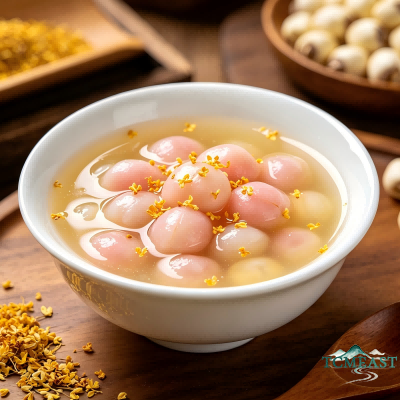
Main Ingredients
- Dried lotus seeds (core-removed) 60g
- Dried osmanthus flowers (or sweet osmanthus syrup) 2-3g
- Rock sugar 30-40g
- Lotus root powder 15g
- Water approx. 800ml
Steps
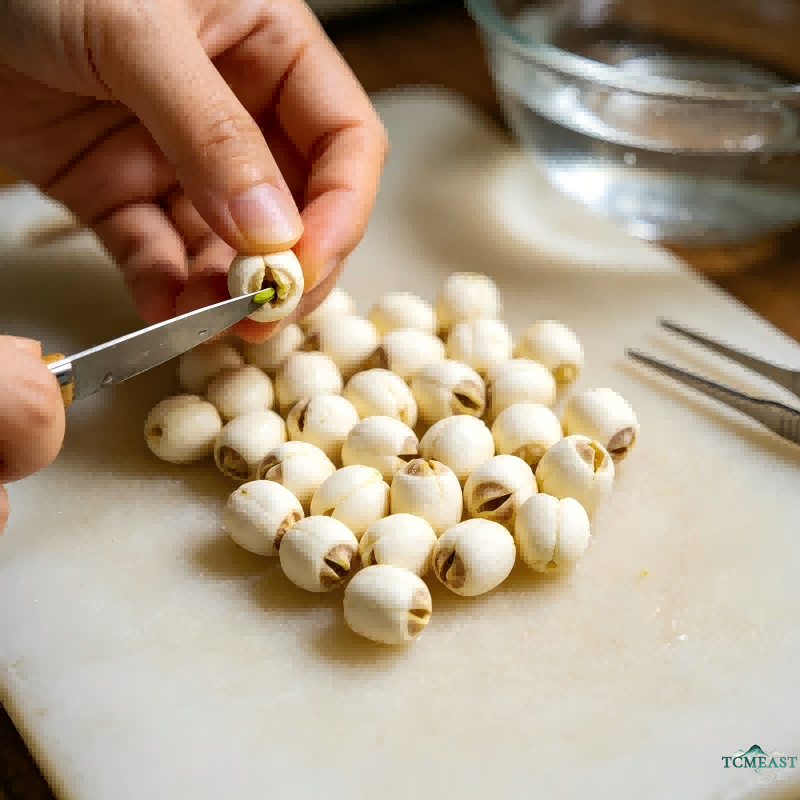
Soak dried lotus seeds in water or warm water for 1-2 hours until they swell and soften. Check and remove any remaining green cores.
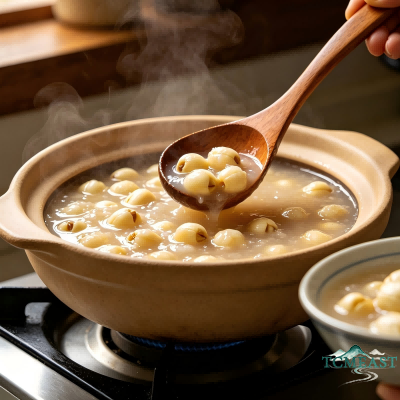
Place the soaked lotus seeds into a clay pot or stainless steel pot with approx. 800ml of water. Bring to a boil over high heat, skim off any foam, then reduce to low heat and simmer for 1-2 hours, until the lotus seeds are completely tender and the liquid thickens.
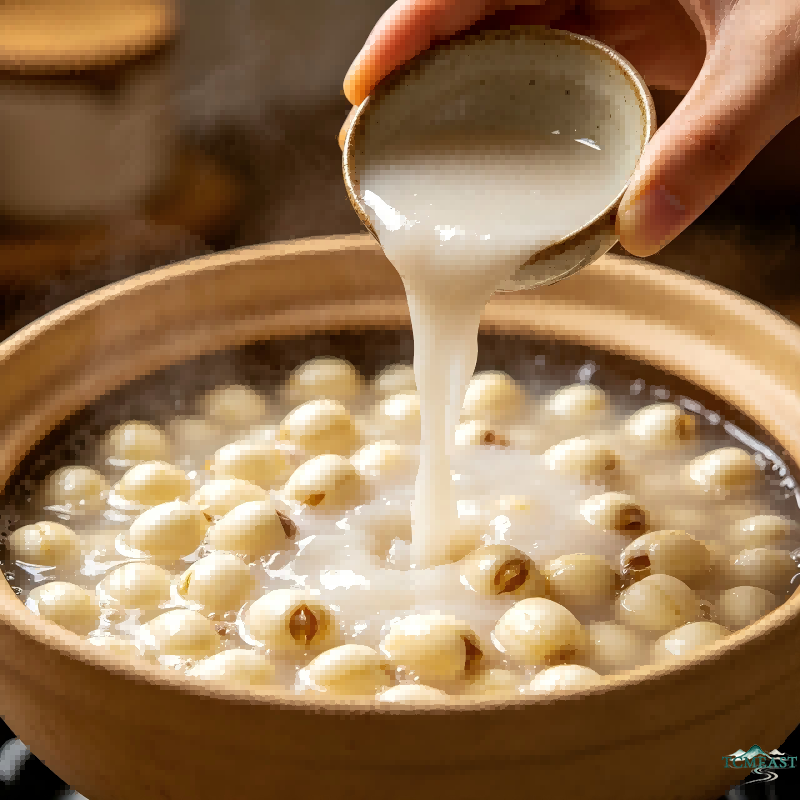
Dissolve lotus root powder in a little warm water to form a paste. Once the lotus seeds are tender, slowly drizzle the paste into the pot while stirring constantly, and cook until the soup turns translucent and thick.
Add rock sugar and dried osmanthus (or sweet osmanthus syrup), and continue simmering for 3-5 minutes until the sugar dissolves completely and the osmanthus fragrance is fully released.
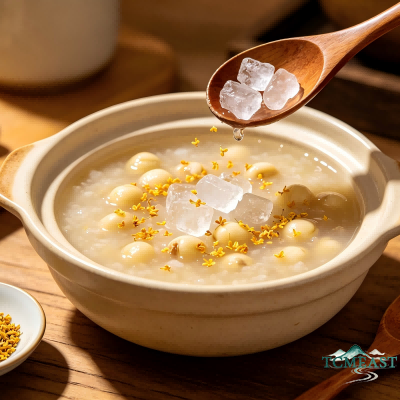
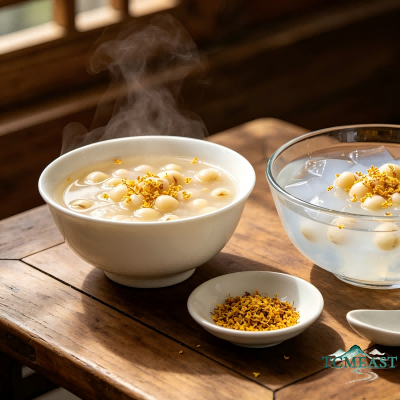
Remove from heat and ladle into bowls. Garnish with a pinch of dried osmanthus for extra aroma. Serve warm for a soothing treat or chilled for a refreshing dessert – both are delightful.
TCM Notes
Heart-nourishing, spleen-strengthening & mind-calming (core benefit): Lotus seeds are neutral in nature with a sweet and astringent taste, acting on the heart, spleen and kidney meridians. They strengthen the spleen, stop diarrhea, consolidate the kidneys, and calm the mind. They are effective for chronic diarrhea due to spleen deficiency, palpitations, insomnia, excessive dreaming, and forgetfulness. Though bitter, the lotus seed germ has significant heart-strengthening and heart-fire-clearing effects. Warming the middle, dispersing cold & relieving stomach pain: Osmanthus is warm in nature with a pungent taste – it warms the lungs, transforms phlegm, and disperses cold to relieve pain. Paired with lotus seeds, it warms the middle burner, disperses cold, and relieves stomach pain, especially beneficial for cold stomach pain and deficiency-cold of the stomach and intestines. Nourishing, moisturizing & blood-tonifying: Lotus seeds tonify the middle qi, while osmanthus warms the lungs and stops coughs. Together they nourish the body, moisturize dryness, and generate fluids. They relieve fatigue, poor appetite, dry throat and thirst, and dry skin. Mood-elevating & sleep-promoting: The fragrance of osmanthus helps balance emotions, relieve stress, and dispel anxiety; the mind-calming effect of lotus seeds further supports better sleep quality. Nutrient-rich: Lotus seeds are rich in protein, multiple vitamins, and minerals including calcium, phosphorus and potassium; osmanthus provides volatile oils and aromatic compounds – together they offer gentle, nourishing support.
Suitable for:Those with weak spleen and stomach, poor appetite, or indigestion People suffering from insomnia, excessive dreaming, palpitations, forgetfulness, or restlessness Those with cold stomach pain or deficiency-cold of the stomach and intestines Individuals with fatigue, weakness, or qi-blood deficiency People needing warming nourishment during autumn and winter Health-conscious individuals seeking a nourishing dessert
Not suitable for:Those with severe constipation or dry hard stools (use with caution!): Lotus seeds are sweet and astringent, with astringent and diarrhea-stopping properties. They reduce intestinal moisture and worsen constipation. This is especially important for the elderly and weak with yin deficiency, internal heat, and dry intestines – they should not use astringent, yin-damaging herbs. Those with wind-heat colds or febrile diseases (use with caution): Osmanthus is warm in nature and lotus seeds have astringent properties. Consuming during wind-heat colds with fever and sore throat may trap pathogens and worsen the condition. Those with yin deficiency with fire-excess or damp-heat excess (limit intake): Symptoms include dry mouth, sore throat, greasy tongue coating, and abdominal distension. Overconsumption may generate heat or aggravate stagnation. Diabetics (caution): This soup contains rock sugar and natural sugars from lotus seeds. Diabetics should reduce or omit rock sugar and strictly control portion size. Those with abdominal bloating, food stagnation, or acute indigestion: The astringent nature of lotus seeds may worsen abdominal distension. Infants under 1 year old: Lotus seeds contain alkaloids, and their digestive systems are underdeveloped – avoid. Those allergic to osmanthus or lotus seeds (rare).