
Herbal Teas
Sang Ju Bo He Tea (Mulberry Leaf, Chrysanthemum and Mint Tea)
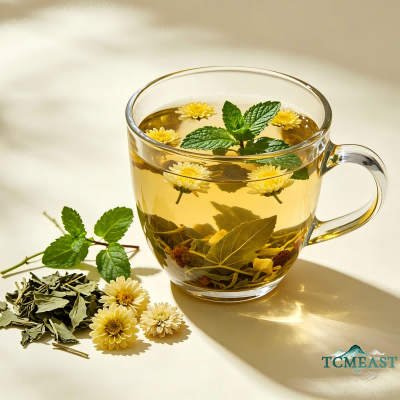
Sang Ju Bo He tea is a classic wellness tea derived from the "Sang Ju Yin" formula in Wu Jutong's Treatise on Febrile Diseases from the Qing Dynasty. Mulberry leaves, cold in nature, disperse wind-heat, clear lung heat, and brighten the eyes. Chrysanthemum, slightly cold in nature, disperses wind-heat and calms liver yang. Mint, pungent and cool, is a key herb for dispersing wind-heat. Together, they clear wind-heat, ventilate the lungs, and soothe the throat. The tea has a clear, pale yellow color with a cool, sweet aftertaste. It is especially suitable for early-stage wind-heat colds, sore throats, and red, painful eyes – a natural "fire extinguisher" for spring and autumn wellness.
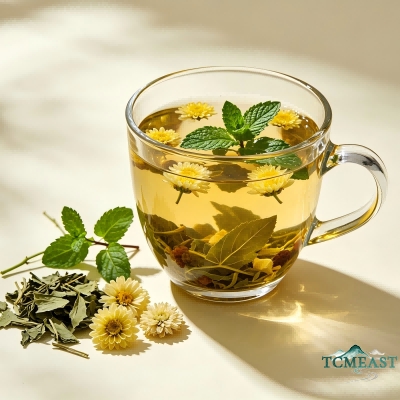
Main Ingredients
- Mulberry leaves (Sang Ye) 5-10g
- Chrysanthemum flowers 5-10g
- Mint leaves (Bo He) 3-6g
- Rock sugar or honey to taste
Steps
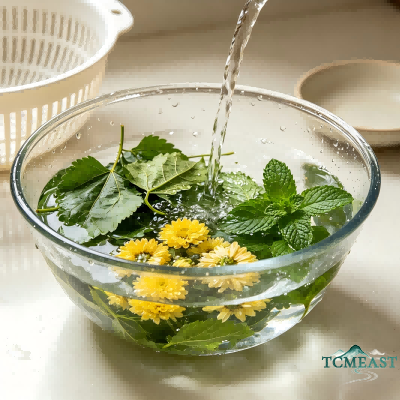
Quickly rinse the mulberry leaves, chrysanthemum, and mint with water to remove surface dust.
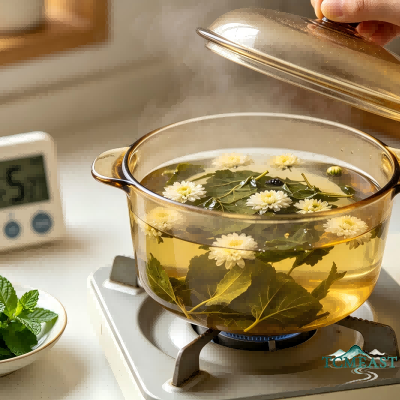
Brewing method (convenient): Place the ingredients into a teacup or teapot. Pour in boiling water at 95℃-100℃. Cover and steep for 10-15 minutes. Decoction method (more potent): Place mulberry leaves and chrysanthemum in a pot with water. Bring to a boil, then reduce to low heat and simmer for 5-10 minutes. Add mint 1-2 minutes before turning off the heat, cover, and let steep for 5 minutes.
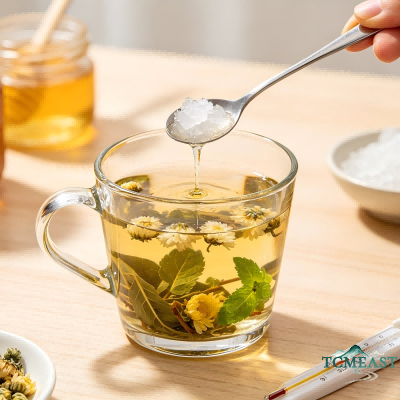
When the tea cools to about 50℃-60℃, add rock sugar or honey to taste.
Drink 1 serving per day as a tea substitute. Best consumed at the onset of wind-heat colds or when experiencing throat discomfort. It is recommended not to consume continuously for more than 3-5 days.
TCM Notes
Dispersing wind-heat, ventilating the lungs & soothing the throat (core benefit): Mulberry leaves, chrysanthemum, and mint are all pungent and cool in nature, dispersing wind-heat pathogens. They help relieve fever, headache, sore throat, and cough with yellow phlegm caused by wind-heat colds. Clearing liver heat & improving vision: Both mulberry leaves and chrysanthemum act on the liver meridian, clearing liver heat to improve vision. They help relieve red, swollen eyes, headaches, and dizziness caused by liver-fire. Clearing lung heat, moistening dryness & promoting fluids: Mulberry leaves clear lung heat and moisten dryness, relieving dry mouth, dry nose, and dry cough with little phlegm during autumn. Refreshing & relieving fatigue: The cooling aroma of mint helps refresh the mind and relieve spring fatigue and autumn lethargy.
Suitable for:Those with early-stage wind-heat colds – fever, headache, sore throat, cough with yellow phlegm, thirst Those with exuberant liver-fire – red, swollen eyes, headaches, dizziness, irritability Those with autumn dryness – dry mouth, dry nose, throat discomfort, dry cough with little phlegm, dry skin Those with eye strain – dry eyes, blurred vision from prolonged screen use Those with balanced constitution – for daily prevention during autumn and winter
Not suitable for:Those with wind-cold colds (Strictly avoid!): Symptoms include severe chills, mild fever, no sweating, clear runny nose, cough with thin white phlegm – the cooling herbs may worsen the condition. Those with spleen-stomach deficiency-cold (Use with caution!): Symptoms include cold intolerance, abdominal pain, loose stools – the cooling tea may worsen deficiency-cold symptoms. Those with yang deficiency or spleen deficiency with loose stools (Use with caution or avoid!): Cooling teas may damage yang qi and worsen diarrhea. Pregnant and breastfeeding women (Use with caution): Mint is cooling in nature – consume only under medical guidance. Infants and those with weak constitution or excessive sweating (Use with caution): Their delicate systems may be affected by cooling herbs. Those with allergies (Use with caution): Those allergic to mulberry leaves, chrysanthemum, or mint may experience rashes or itching. Diabetics (Control portion size): If sweetening the tea, strictly limit the amount of sugar added.
