
Soups
Chinese Yam and Lamb Soup
Chinese Yam and Lamb Soup is a classic, time-honored warming medicinal soup, often hailed as the "ultimate winter warming soup." Made with lamb and Chinese yam as the core ingredients, it is slowly simmered to perfection. Lamb is warm in nature, sweet in taste yet not greasy, warm without being harsh, and channels to the Spleen and Kidney meridians. It is renowned for tonifying kidney yang, warming the middle burner, nourishing qi and blood, and dispelling cold. The Compendium of Materia Medica records: "Lamb warms the middle, tonifies deficiency, benefits qi, strengthens the stomach, nourishes kidney qi, supports the gallbladder, brightens the eyes, and treats consumptive cold and fatigue." Chinese yam (Shan Yao) is neutral in nature, sweet in taste, and channels to the Spleen, Lung, and Kidney meridians. It is known for tonifying the spleen and nourishing the stomach, promoting salivation and moistening the lungs, and consolidating kidney essence. Combined with fresh ginger and red dates for harmony, the soup features tender, fall-apart lamb, creamy and slightly sticky yam, and a clear, rich, white broth. It is deeply warming and smooth, without any gamey smell, leaving a subtle sweet aftertaste. This soup is especially suitable for those with cold hands and feet, spleen-stomach deficiency-cold, sore lower back and knees, and qi-blood deficiency in winter. It is a bowl that truly "warms you to the bone."
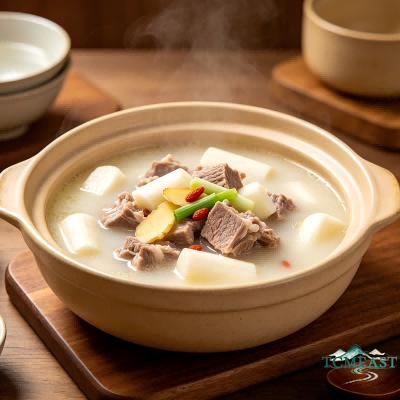
Main Ingredients
- Lamb (leg meat or rack, bone-in preferred) 500-600g
- Chinese yam (Dioscorea opposita, iron yam preferred) 300-350g
- Fresh ginger 5-8 thick slices
- Spring onion (white sections) 2-3 sections
- Red dates (pitted) 6-8 pieces
- Goji berries 10g
- Salt To taste
- White pepper powder To taste
- Cilantro or chopped scallions A small handful of
- Water Approx. 2000-2500ml
- Cooking wine 2 tbsp (approx. 15ml)
Steps
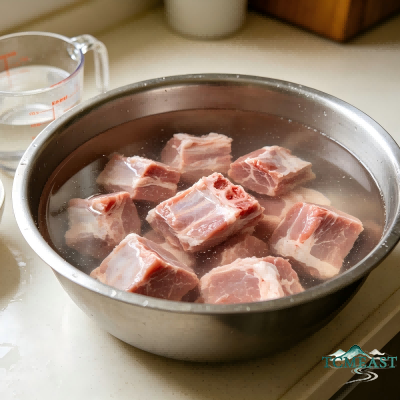
Cut lamb into large chunks (approx. 4-5 cm). Place in a large bowl, cover with plenty of cold water, and soak for 1-2 hours, changing the water 2-3 times until the water runs clear. This removes most of the gamey flavor from the blood.
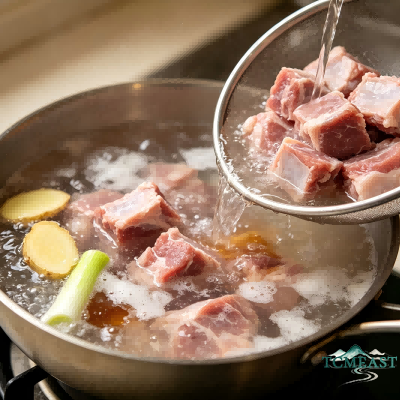
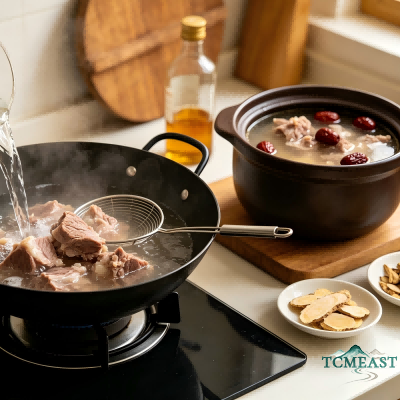
Place the soaked lamb in a pot with cold water. Add 2-3 slices of ginger, 1 section of spring onion, and 1 tablespoon of cooking wine. Bring to a boil over high heat, skimming off all foam. Continue boiling for 3-5 minutes. Remove the lamb and rinse thoroughly with warm water to remove all impurities (do not use cold water, as it will contract the meat fibers and make it tough).
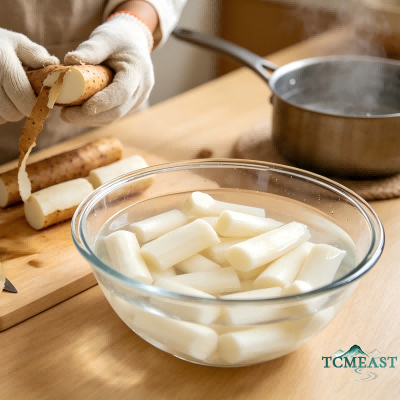
Wearing gloves (the mucilage can irritate skin), peel the Chinese yam and cut into segments about 4-5 cm long. Immediately soak in lightly salted water to prevent oxidation (turning black). Alternatively, blanch in boiling water for 1 minute to remove excess mucilage and prevent clouding the broth.
Add a small amount of cooking oil to a clay pot or wok. Sauté the remaining ginger slices, spring onion sections, and Sichuan peppercorns (if using) until fragrant. Add the blanched lamb chunks and stir-fry over medium heat for 2-3 minutes until the surface turns slightly golden, the fat is rendered, and a rich aroma develops. This step transforms any residual gaminess into a savory, roasted flavor.
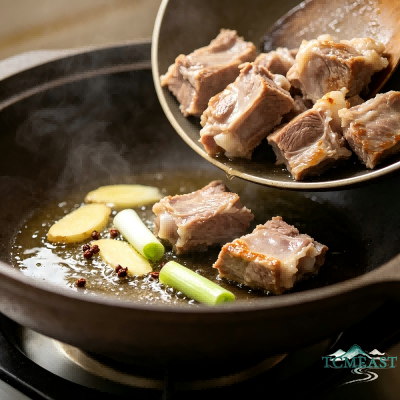
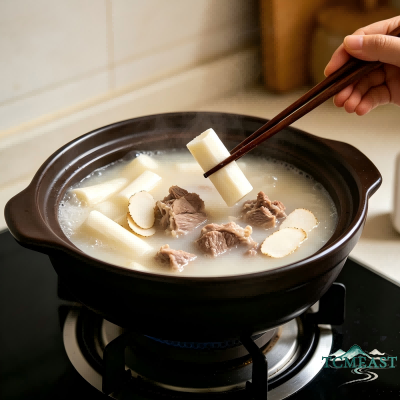
Pour enough boiling water into the pot (must use hot water for a white, creamy broth) to cover the lamb by 3-4 cm (approx. 2000-2500ml). Bring to a boil over high heat, skimming off any remaining foam or floating oil. Transfer to a clay pot. Add the red dates, remaining cooking wine, and any additional herbs (like Danggui or Huangqi).Reduce to low heat and simmer for 1 – 1.5 hours until the lamb can be easily pierced with a chopstick.
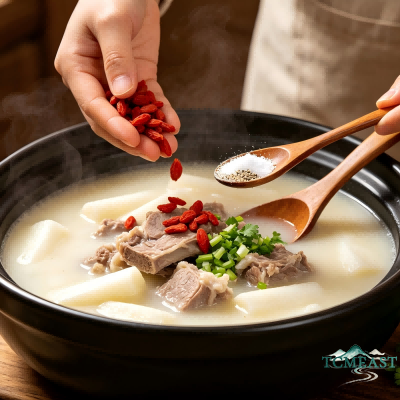
Add the goji berries and cook for another 5 minutes. Turn off the heat. Season with salt (add salt only after turning off the heat to keep the meat tender), white pepper, and garnish with cilantro or chopped scallions. Stir well and serve.
Add the goji berries and cook for another 5 minutes. Turn off the heat. Season with salt (add salt only after turning off the heat to keep the meat tender), white pepper, and garnish with cilantro or chopped scallions. Stir well and serve.
TCM Notes
Lamb is rich in creatine, which supports muscle growth and physical stamina. Its fat has a melting point of 47°C (higher than human body temperature), making it less prone to being absorbed as body fat. It also contains vitamins B1, B2, B6, and minerals like potassium, phosphorus, and magnesium. Chinese yam is rich in mucin (a mucopolysaccharide-protein complex) that protects the gastric mucosa, and contains active compounds like saponins and polyphenol oxidase that aid digestion. Traditional Chinese Medicine Perspective: Lamb: Sweet, warm in nature, channels to the Spleen and Kidney. Tonifies kidney yang, warms the middle, nourishes qi and blood, dispels cold and relieves pain. Effective for kidney-yang deficiency symptoms like cold lower back pain, cold extremities, and frequent nighttime urination. Chinese yam: Sweet, neutral, channels to the Spleen, Lung, and Kidney. Strengthens the spleen and stomach, promotes salivation and lung health, and consolidates kidney essence. Helps with poor appetite, chronic diarrhea, lung deficiency cough, and nocturnal emissions. Ginger and Red Dates: Transform pungency into yang energy, harmonize the body's defensive and nutritive qi, moderate the warmth of lamb, and enhance spleen-stomach tonification. Modern Research: L-carnitine in lamb promotes fatty acid oxidation for energy, aiding in anti-fatigue. Conjugated Linoleic Acid (CLA) has anti-inflammatory and immunomodulatory effects. Yam polysaccharides exhibit antioxidant, blood glucose-lowering, and immune-regulating bioactivities.
Suitable for:Those with yang-deficiency who feel cold easily (cold limbs, preference for hot drinks, frequent night urination) Those with spleen-stomach deficiency-cold (poor appetite, bloating, loose stools, abdominal cold pain) Those with qi-blood deficiency (sallow complexion, dizziness, palpitations, postpartum weakness) Those with sore lower back, weak knees, or kidney deficiency-related back pain Middle-aged and older adults (warming the spleen and kidneys, anti-aging) Those with cold hands and feet in winter, or who catch colds easily Those recovering from illness or post-surgery Women with uterine coldness or dysmenorrhea (non-heat type) Generally suitable for most people during autumn and winter in moderation
Not suitable for:Those with excessive internal heat (high fever, toothache, mouth sores, constipation, dark urine) Those with yin-deficiency and fire-excess (palms and soles hot, night sweats, flushed cheeks, dry mouth) Those with excess-heat or damp-heat constitutions (red face, irritability, yellow/greasy tongue coating) Those with colds, fevers, or unresolved external wind-heat (lamb's warming nature can trap pathogens inside) Those with acute enteritis or severe diarrhea (not suitable for tonification) Those with hypertension (should limit intake if blood pressure is poorly controlled, as lamb's warmth may cause fluctuations) Those with hyperlipidemia or high cholesterol should consume sparingly and skim off surface oil Those in acute gout flare-ups (lamb is moderate-high in purines, approx. 120mg/100g) Those allergic to lamb or Chinese yam Those with active eczema, urticaria, or other skin conditions (as a "trigger food," may exacerbate symptoms) Pregnant women: May consume in moderation but not excessively. If experiencing gestational hypertension or severe edema, consult a doctor. Children (pure-yang constitution) should not overconsume to prevent heat accumulation.
