
Soups
Ginseng, Angelica, and Pig's Heart Soup
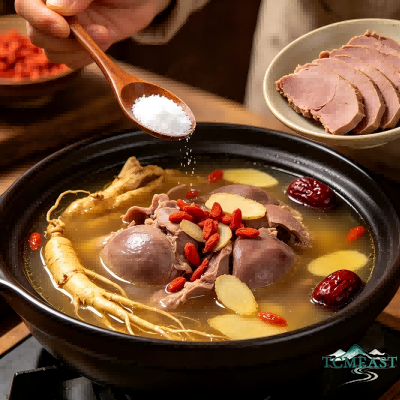
Ginseng, Angelica, and Pig's Heart Soup is a classic traditional Chinese medicinal soup, originating from TCM classics such as the Zhengzhi Yaojue (Essentials of Syndrome and Treatment). Made with pig's heart as the main ingredient, paired with ginseng and angelica (Danggui), and slowly simmered to perfection, this soup follows the principle of "like nourishes like." Pig's heart is neutral in nature, sweet and salty in taste, and channels to the Heart meridian. It is known for calming the spirit, relieving palpitations, and nourishing heart blood. Ginseng is sweet and slightly bitter, warm in nature, and channels to the Spleen, Lung, Heart, and Kidney meridians. It is renowned for greatly tonifying vital qi, restoring pulse, and calming the spirit. Angelica is sweet and pungent, warm in nature, and channels to the Heart, Liver, and Spleen meridians. Often called the "holy herb for blood tonification," it nourishes and invigorates blood, regulates menstruation, and relieves pain. Together, ginseng tonifies qi, angelica nourishes blood, and pig's heart strengthens the heart — a perfect harmony of tonification, nourishment, and strengthening, providing both prevention and treatment. The soup is clear and aromatic, with tender pig's heart and a harmonious blend of herbal and meaty flavors. It is especially suitable for those with heart qi deficiency and heart blood deficiency, presenting symptoms such as palpitations, insomnia, poor memory, excessive dreaming, spontaneous sweating, night sweats, dizziness, fatigue, and shortness of breath.
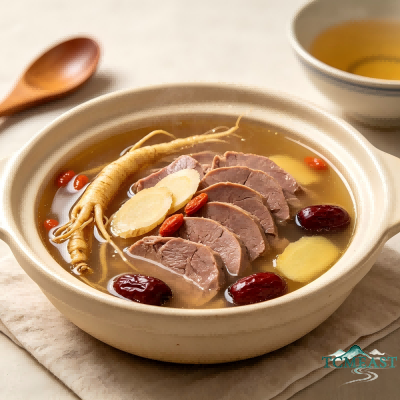
Main Ingredients
- Pig's heart 1 piece (approx. 250-300g)
- Ginseng (fresh ginseng or red ginseng preferred) 6-10g
- Angelica (Danggui) 10-15g
- Fresh ginger 3-5 slices
- Red dates (pitted) 3-5 pieces
- Goji berries 5-10g
- Salt To taste
- Water Approx. 1000-1500ml
Steps
Cut the pig's heart open lengthwise and remove all blood clots and coagulated blood from the interior. Rinse thoroughly under running water until the water runs clear. Remove excess fat and membranes from the surface. Place the cleaned heart in a bowl, cover with water and a splash of cooking wine, and soak for 20-30 minutes to further remove any gamey odor.

Rinse ginseng and slice thinly or grind into coarse pieces. Rinse angelica and slice thinly. If using red dates, rinse and remove pits. Briefly soak goji berries in water and drain.
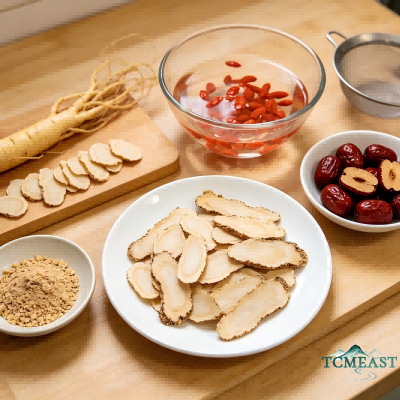
Stuff the sliced ginseng and angelica into the cavity of the opened pig's heart. If using a large amount of herbs, secure the opening with a toothpick to prevent the herbs from spilling out during simmering.

Place the stuffed pig's heart into a stewing pot or clay pot. Add ginger slices and red dates (if using). Pour in enough boiling water (approx. 1000-1500ml) to fully submerge the heart.
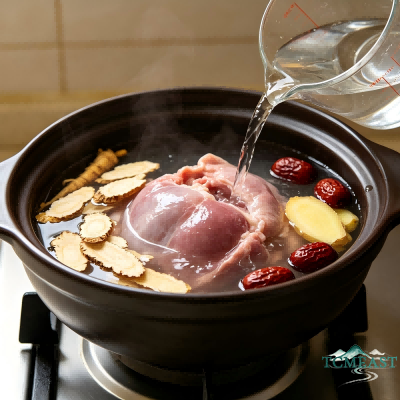
Double-boiling method (recommended): Cover the stewing pot, place it in a steamer, and slowly steam over low heat for 2-3 hours until the heart is thoroughly tender. Clay pot method: Bring to a boil over high heat, then reduce to low heat and simmer for 1.5-2 hours until the heart is soft and tender.
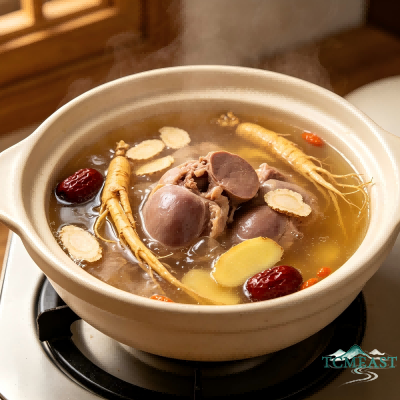
Add goji berries (if using) 5-10 minutes before removing from heat. After turning off the heat, remove the pig's heart and slice it into thick or thin pieces. The ginseng and angelica can be discarded (or the ginseng slices can be chewed and eaten). Season the broth with salt to taste. Return the sliced heart to the soup and serve.
TCM Notes
The protein content of pig's heart is approximately 2.5 times that of pork, while its fat content is only one-tenth that of pork. Pig's heart also contains vitamins B1, B2, calcium, iron, selenium, and other trace minerals. It plays a positive role in strengthening myocardial nutrition and enhancing myocardial contractility. Nutritional Value of Ginseng: Ginseng contains ginsenosides (over 46 identified compounds), ginseng polysaccharides, volatile oils, peptides, flavonoids, organic acids, amino acids, vitamins, and various trace elements. Ginsenosides are the material basis for ginseng's bioactivity. Nutritional Value of Angelica: Angelica contains volatile oils, organic acids, ferulic acid, polysaccharides, 19 amino acids, vitamin B12, vitamin E, and over 20 trace elements including calcium, iron, zinc, and selenium. Ferulic acid helps inhibit platelet aggregation and increase cardiovascular blood flow. Traditional Chinese Medicine Perspective: Ginseng: Sweet and slightly bitter, warm, channels to the Spleen, Lung, Heart, and Kidney. Greatly tonifies vital qi, restores pulse, tonifies the spleen and lung, generates fluids and nourishes blood, and calms the spirit. Angelica: Sweet and pungent, warm, channels to the Heart, Liver, and Spleen. Nourishes and invigorates blood, regulates menstruation, relieves pain, and moistens the intestines. Pig's heart: Sweet and salty, neutral, channels to the Heart. Calms the spirit, relieves palpitations, and nourishes heart blood. Modern Research: Ginseng regulates various body systems, enhances resistance, and calms the spirit. Angelica helps prevent myocardial ischemia and increases coronary blood flow. The combination of all three ingredients improves sleep quality and alleviates symptoms of heart deficiency, spontaneous sweating, and palpitations.
Suitable for:Those with heart qi deficiency and heart blood deficiency (pale complexion, palpitations, insomnia, poor memory, excessive dreaming) Those with spontaneous sweating, night sweats, dizziness, and vertigo Those with fatigue, weakness, and shortness of breath Those with neurasthenia, mental exhaustion, and overworked brains Those with paroxysmal tachycardia, palpitations with excessive sweating, and insomnia Postpartum women with blood deficiency and qi-blood deficiency Middle-aged and older adults (for daily heart-nourishing and spirit-calming) Generally suitable for most people in autumn and winter in moderation
Not suitable for:Those with colds, fevers, or unresolved external pathogens Those with excess pathogenic factors (internal excess heat, fire, dampness, etc.) Those with yin deficiency and fire excess (palms and soles hot, night sweats, dry mouth and throat) Those with heat-related bleeding — angelica is warming and tonifying; contraindicated for excess heat conditions Those with dampness excess and abdominal fullness, or loose stools — angelica should be used with caution Those with hypercholesterolemia — pig's heart is relatively high in cholesterol (151mg/100g); consume in moderation Those with hypertension (caution advised if blood pressure is poorly controlled) Those allergic to ginseng, angelica, or pig's heart Pregnant women — angelica has blood-invigorating properties; use only under medical supervision Children — should not overconsume to prevent excessive tonification
