
Soups
Water Chestnut and Pork Stomach Soup
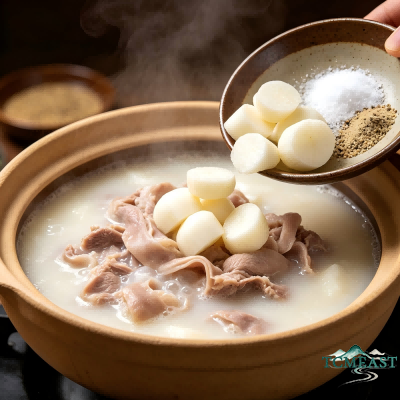
Water Chestnut and Pork Stomach Soup is a classic traditional Cantonese and Minnan home-style nourishing soup, made with water chestnuts (Chinese马蹄) and pork stomach as the main ingredients, slowly simmered to perfection. This soup originates from an ancient medicinal recipe, with records of "Water Chestnut and Pork Stomach Soup" found in the Bencao Jingshu (Commentary on the Materia Medica). Pork stomach is slightly warm in nature, sweet in taste, and channels to the Spleen and Stomach meridians. It is known for tonifying deficiency and strengthening the spleen and stomach. Water chestnuts are cold in nature, sweet in taste, and channel to the Lung and Stomach meridians. They are known for clearing heat, promoting salivation, resolving phlegm, dispersing stagnation, cooling blood, and promoting diuresis. Together, pork stomach warms and tonifies the spleen and stomach, while water chestnuts clear and disperse accumulations — one warming and one cooling, one dispersing and one tonifying, with dispersion within tonification. The combination achieves the effects of strengthening the spleen, resolving accumulations, and benefiting qi to reduce swelling. The soup has a milky white, clear broth, with tender, chewy pork stomach and crisp, sweet water chestnuts. It is especially suitable for those with food stagnation, abdominal fullness, spleen-stomach weakness, and indigestion.
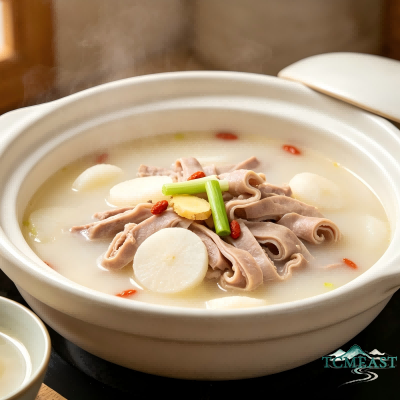
Main Ingredients
- Pork stomach 1 piece (approx. 400-500g)
- Water chestnuts(Chinese Mati) 250-300g (approx. 15 pieces)
- Fresh ginger 5-8 slices
- Yellow cooking wine (or Shaoxing wine) To taste
- Salt To taste
- White pepper powder A pinch
- Water 2500ml
Steps
Cleaning fresh pork stomach is the key to the success of this soup. Recommended methods: Salt and vinegar method or Salt and starch method: Method 1 (Salt + Vinegar): Turn the stomach inside out and rub thoroughly with salt to remove mucus; then rub with white vinegar; rinse with clean water. Method 2 (Salt + Starch): Place the stomach in a bowl, add salt and starch (or flour), rub repeatedly with your hands, clean both sides, then rinse thoroughly. Advanced de-odoring: Rub once with salt, once with starch, then marinate in cooking wine for half an hour, and finally rinse clean. When cleaning, be sure to scrape off all the fat and white membrane from the inner wall of the stomach; otherwise, the soup will have an unpleasant odor.
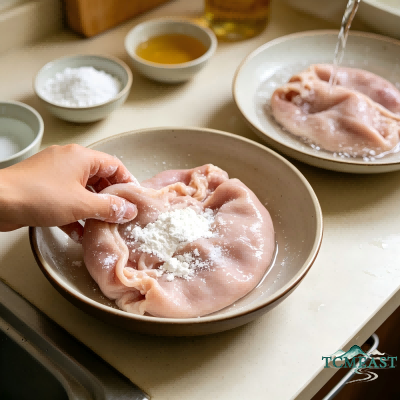
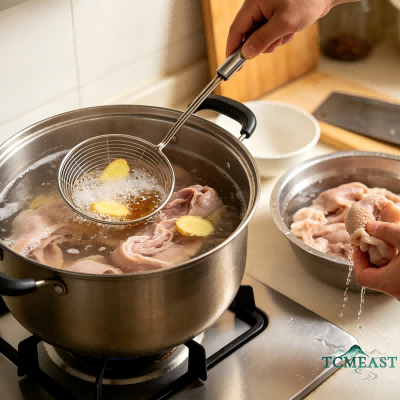
Add enough cold water to a pot, place the cleaned pork stomach in, and add 2-3 slices of ginger and a splash of yellow cooking wine. Bring to a boil over high heat and continue boiling for 3-5 minutes, skimming off any foam that rises. Remove the stomach, rinse with warm water, peel off the membrane near the navel while hot, and scrape off any remaining fat.
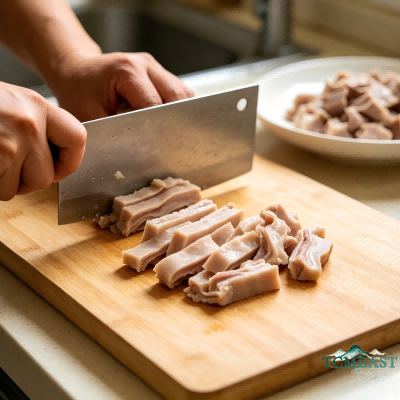
Cut the prepared pork stomach into strips about 1-2 cm wide. Do not cut too thin, as the stomach will shrink slightly during long simmering.
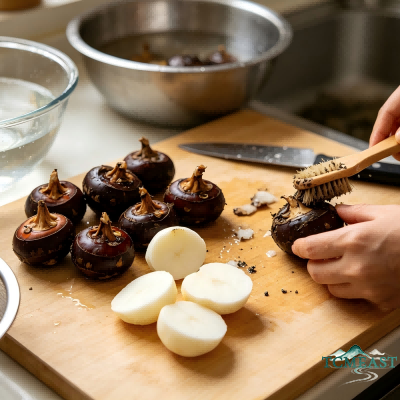
Scrub the water chestnuts clean, peel off the skin, and cut in half or into thick slices. Water chestnuts grow in mud and harbor many bacteria — be sure to wash thoroughly and cook completely before consuming.
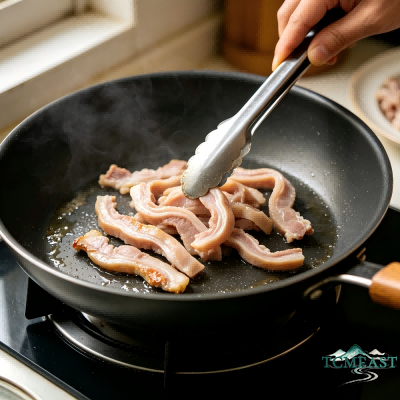
Heat a wok without oil, add the pork stomach strips, and fry briefly on one side, then flip and fry the other side until the surface moisture evaporates. This step further removes any remaining gamey odor and enhances the soup's flavor.
Bring sufficient water (approx. 2000-2500ml) to a boil in a clay pot. Once boiling, add the prepared pork stomach strips, ginger slices, and yellow cooking wine.
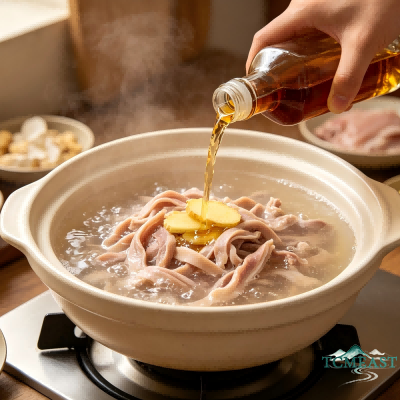
Bring to a boil over high heat, then reduce to low heat and simmer for 1.5-2 hours until the soup turns milky white and the pork stomach is tender.
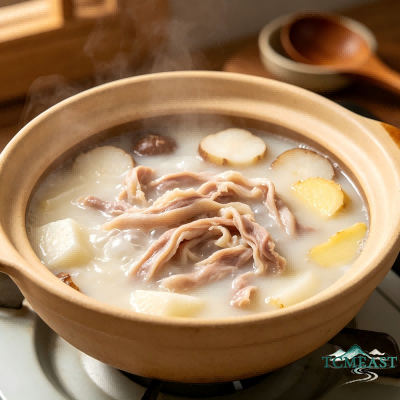
Add the water chestnuts and continue cooking for another 10-15 minutes until they are fully cooked. Add salt to taste just before turning off the heat. Do not add salt too early, as it will cause the pork stomach to shrink and become tough. Sprinkle with a little white pepper and chopped spring onions if desired.
TCM Notes
Water chestnuts contain an antibacterial compound called "puchiin" (Chinese water chestnut抗菌成分), which has inhibitory effects on pathogenic bacteria such as Staphylococcus aureus and E. coli. Pork stomach is a low-fat, high-protein ingredient, rich in iron, zinc, and B-complex vitamins. Traditional Chinese Medicine Perspective: Pork stomach: Sweet, slightly warm, channels to the Spleen and Stomach. Tonifies deficiency, strengthens the spleen and stomach. Effective for consumptive weakness, diarrhea, and childhood nutritional impairment (gan积). Water chestnuts: Sweet, cold, channels to the Lung and Stomach. Clears heat, promotes salivation, resolves phlegm, disperses accumulations, cools blood, and promotes diuresis. Combined effect: One disperses, one tonifies — dispersion within tonification, expelling pathogens without harming the healthy qi. Modern Nutrition Research: Spleen and stomach health: Pork stomach nourishes the stomach through the principle of "like nourishes like," providing adjunctive support for stomach cold, indigestion, and duodenal ulcers. Dispelling accumulations: Water chestnuts clear heat, resolve phlegm, and promote digestion. Combined with the tonifying effect of pork stomach, they effectively improve food stagnation and abdominal fullness. Clearing heat and promoting diuresis: Water chestnuts are cold in nature and promote urination, helping with burning urination and scanty dark urine.
Suitable for:Those with food stagnation, abdominal fullness, and indigestion Those with spleen-stomach weakness and consumptive weakness Those with stomach cold, cold pain in the heart and abdomen Those with poor appetite and childhood nutritional impairment (gan积) Those with liver disease-related ascites and kidney disease-related edema (adjunctive therapy) Generally suitable for most people in moderation during autumn and winter
Not suitable for:Those with severe spleen-stomach deficiency-cold: Water chestnuts are cold in nature; those with weak digestion in children or spleen-stomach cold should avoid Those with cold-damp phlegm or blood deficiency: Use with caution Those with diarrhea: Water chestnuts are cold and may worsen diarrhea Diabetics: Water chestnuts contain carbohydrates and natural sugars; portion control is necessary Those allergic to water chestnuts or pork stomach Those with gout: Pork stomach contains moderate purines; avoid during acute flare-ups