
Herbal Teas
Walnut and Chestnut Drink
Walnut and Chestnut Drink is a classic autumn-winter nourishing warm beverage, made with walnut kernels and chestnuts as the main ingredients, combined with glutinous rice or milk, and blended in a high-speed blender or food processor. Walnuts are warm in nature, sweet in taste, and channel to the Kidney, Lung, and Large Intestine meridians. They are known for tonifying the kidney and consolidating essence, warming the lungs and relieving asthma, and moistening the intestines to relieve constipation, earning the title of "longevity fruit." Chestnuts are sweet and astringent, neutral in nature, and channel to the Spleen, Stomach, and Kidney meridians. They are known for benefiting qi, strengthening the spleen, tonifying the kidney, and strengthening the sinews and bones. The Compendium of Materia Medica notes they "treat kidney deficiency with weak lower back and feet." Together, walnuts benefit intelligence and nourish the brain, while chestnuts strengthen the spleen and kidneys. The drink is rich, smooth, and warmly sweet. A cup in the morning warms the stomach, dispels cold, and boosts brainpower; a cup in the afternoon satisfies hunger, relieves fatigue, and nourishes body and mind. This drink is especially suitable for mental workers, those with sore lower backs and weak knees, middle-aged and older adults, and those who feel cold easily in autumn and winter.
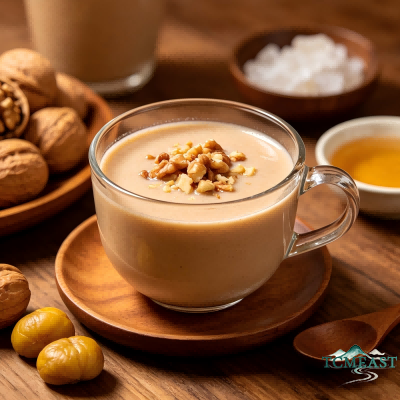
Main Ingredients
- Walnut kernels 40g
- Cooked chestnut kernels 120g
- Glutinous rice (or regular rice) 25g
- Whole milk (or warm water/soy milk) 500ml
- Rock sugar (or honey) 25g
- Red dates (pitted) 3-5 pieces
Steps
Remove the bitter skin from walnuts (optional, recommended): Place walnut kernels in a bowl and soak in boiling water for 5-10 minutes. Remove and gently peel off the yellowish-brown thin skin (which contains tannins that can make the drink bitter). Skip this step for convenience or if you don't mind a slight bitterness. Soak glutinous rice (if using): Rinse the glutinous rice and soak in cold water for 30 minutes to 2 hours, then drain. Glutinous rice gives the drink a richer, smoother texture. Prepare chestnuts: If using raw chestnuts, wash them, score a cross on each shell, steam or boil for 20-25 minutes, then shell and peel.
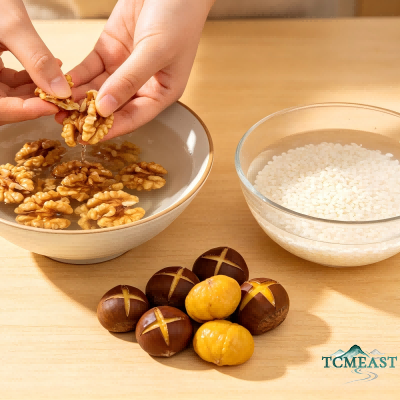
Place the prepared walnut kernels, cooked chestnut kernels, soaked glutinous rice (if using), and pitted red dates (if using) into a high-speed blender or food processor. Add 200-250ml of water (or part of the milk). Select the "porridge/rice paste" mode or "soup/grain" mode and start the machine.
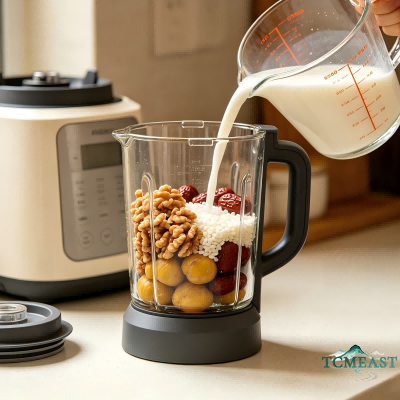
Once the blending program finishes (about 20-30 minutes), open the lid. Add the remaining milk (about 200-250ml) and rock sugar (or honey). Blend for another 30 seconds to 1 minute using the "stir/pulse" mode until well combined. If using honey, wait until the drink cools below 60°C (140°F) to preserve the active enzymes.
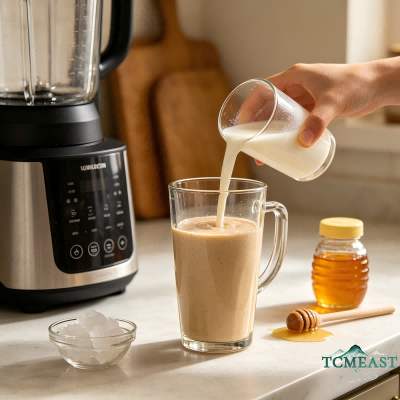
For an ultra-smooth texture, strain the blended drink through a fine-mesh sieve or cheesecloth to remove any residual nut and grain particles. Home-style preparation often skips this step to retain dietary fiber.
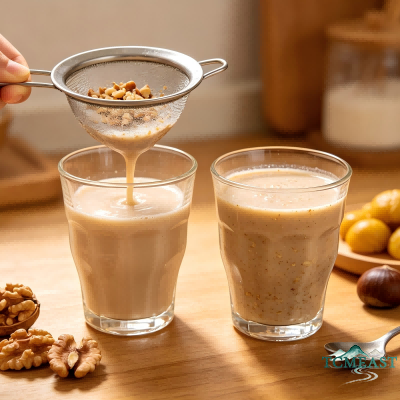
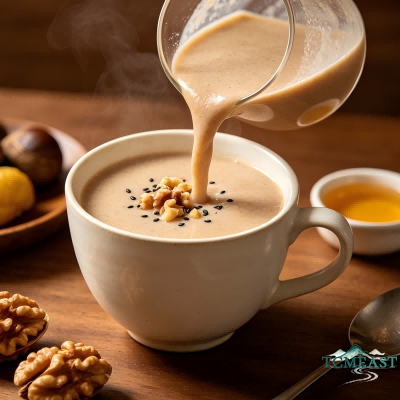
Pour the walnut and chestnut drink into cups and serve warm. Garnish with a sprinkle of roasted black sesame seeds or crushed walnuts for extra aroma.
TCM Notes
Traditional Chinese Medicine Perspective: Walnuts: Sweet, warm, channels to the Kidney, Lung, and Large Intestine. Tonify the kidney and consolidate essence, warm the lungs and relieve asthma, moisten the intestines to relieve constipation, and benefit intelligence and the brain. Chestnuts: Sweet and astringent, neutral, channels to the Spleen, Stomach, and Kidney. Benefit qi, strengthen the spleen, tonify the kidney, and strengthen sinews and bones. Glutinous rice: Sweet, warm, channels to the Spleen, Stomach, and Lung. Tonify the middle, supplement qi, strengthen the spleen, and warm the stomach. Modern Nutrition Research: Brain health and intelligence: Alpha-linolenic acid in walnuts converts to DHA, which, together with phospholipids, promotes brain cell development and repair, enhancing memory and cognitive function. Studies show that long-term walnut consumption improves episodic memory in middle-aged and older adults. Kidney and bone strength: Chestnuts enter the Kidney meridian, and walnuts consolidate kidney essence. Together, they improve sore lower backs, weak knees, and weak bones and sinews. Spleen-stomach health and warming: Chestnuts strengthen the spleen, glutinous rice warms the stomach, and walnuts are warm in nature. A hot cup quickly dispels internal cold. Antioxidant and anti-aging: Vitamin E and polyphenols in walnuts synergistically act as antioxidants, scavenging free radicals and protecting cells. Laxative effect: Walnuts are rich in oils that lubricate the intestines, relieving autumn/winter constipation caused by dryness. Energy supply: Chestnuts provide slow-release carbohydrates and walnuts provide high-quality fats, helping to stabilize blood sugar and provide long-lasting satiety.
Suitable for:Traditional Chinese Medicine Perspective: Walnuts: Sweet, warm, channels to the Kidney, Lung, and Large Intestine. Tonify the kidney and consolidate essence, warm the lungs and relieve asthma, moisten the intestines to relieve constipation, and benefit intelligence and the brain. Chestnuts: Sweet and astringent, neutral, channels to the Spleen, Stomach, and Kidney. Benefit qi, strengthen the spleen, tonify the kidney, and strengthen sinews and bones. Glutinous rice: Sweet, warm, channels to the Spleen, Stomach, and Lung. Tonify the middle, supplement qi, strengthen the spleen, and warm the stomach. Modern Nutrition Research: Brain health and intelligence: Alpha-linolenic acid in walnuts converts to DHA, which, together with phospholipids, promotes brain cell development and repair, enhancing memory and cognitive function. Studies show that long-term walnut consumption improves episodic memory in middle-aged and older adults. Kidney and bone strength: Chestnuts enter the Kidney meridian, and walnuts consolidate kidney essence. Together, they improve sore lower backs, weak knees, and weak bones and sinews. Spleen-stomach health and warming: Chestnuts strengthen the spleen, glutinous rice warms the stomach, and walnuts are warm in nature. A hot cup quickly dispels internal cold. Antioxidant and anti-aging: Vitamin E and polyphenols in walnuts synergistically act as antioxidants, scavenging free radicals and protecting cells. Laxative effect: Walnuts are rich in oils that lubricate the intestines, relieving autumn/winter constipation caused by dryness. Energy supply: Chestnuts provide slow-release carbohydrates and walnuts provide high-quality fats, helping to stabilize blood sugar and provide long-lasting satiety.
Not suitable for:Diabetics: Chestnuts and glutinous rice are high in carbohydrates, and rock sugar is pure sugar — high glycemic index. Recommendations: use no sugar, reduce chestnuts to 50g, replace glutinous rice with oats, strictly limit portion size (no more than 200ml per serving), and consume 2 hours after meals while monitoring blood sugar. Those with poor digestion or severe bloating: Walnuts and chestnuts are rich in oils and starches; overconsumption may cause gas and indigestion. Limit to 150ml per serving. Those with diarrhea or loose stools: Walnuts have a laxative effect and may worsen diarrhea. Those with yin deficiency with fire excess or internal heat (mouth sores, constipation, red eyes): Walnuts are warm in nature; overconsumption may exacerbate heat symptoms. Those with hyperlipidemia or severe obesity: Walnuts are high in fat (58.8g/100g). Strictly control intake (no more than 15g of walnuts per serving), avoid glutinous rice and sugar, and substitute water for milk. Those allergic to walnuts or chestnuts Infants under 1 year old: Nuts pose a choking hazard and are difficult to digest — not recommended.
