
Herbal Teas
Rose and Chuanxiong (Ligusticum wallichii) Soup
Rose and Chuanxiong (Ligusticum wallichii) Soup, commonly known as the core of the "Rose Four-Substance Decoction," is a classic Chinese medicinal soup. It is based on the renowned "Four-Substance Decoction" (Si Wu Tang) — composed of Chuanxiong, Chinese Angelica (Danggui), White Peony Root (Baishao), and Prepared Rehmannia Root (Shudi) — with the addition of roses. Chuanxiong, pungent and warm in nature, is known as the "Qi-moving herb in the blood aspect," with effects of activating blood, promoting Qi flow, dispelling wind, and relieving pain. Roses, sweet and slightly bitter, warm in nature, soothe the liver, relieve depression, activate blood, and relieve pain. Combined with the other three herbs, the formula ensures blood is tonified without stasis, and Qi is moved without deficiency, achieving the combined effects of tonifying and activating blood, regulating menstruation and relieving pain, soothing the liver and relieving depression, and calming the spirit and beautifying the skin. This soup has a delicate floral and herbal aroma with a sweet, smooth taste. It is especially suitable for daily nourishment of those with Qi-Blood deficiency, irregular menstruation, dysmenorrhea, dull complexion, and liver Qi stagnation.
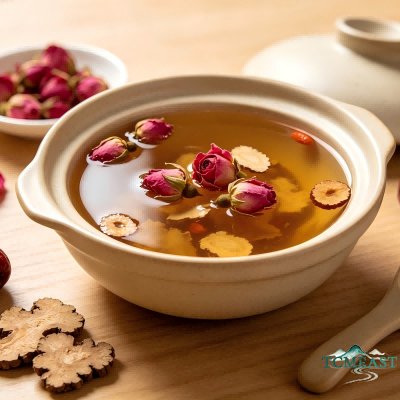
Main Ingredients
- Chuanxiong (Ligusticum wallichii) 5g
- Chinese Angelica (Danggui) 10g
- White Peony Root (Baishao) 20g
- Prepared Rehmannia Root (Shudi) 20g
- Dried Roses 10g
- Brown sugar (or black sugar/rock sugar) To taste
- Water 1500ml
Steps
Quickly rinse the Chuanxiong, Chinese Angelica, White Peony Root, and Prepared Rehmannia Root to remove surface dust. Place them in a clay pot or herbal tea maker. Add 1200-1500ml of cold water and soak for 20 minutes. Soaking helps release the active compounds more effectively.
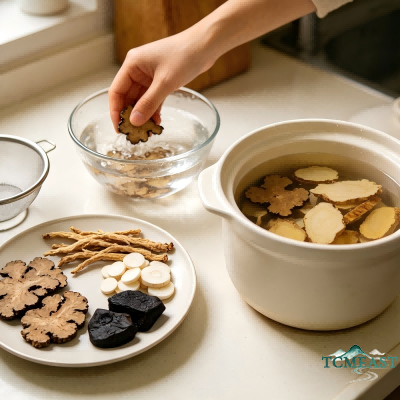
Place the pot over heat, bring to a boil over high heat, then reduce to low heat and simmer for 20-30 minutes. The four herbs are relatively hard and require sufficient decoction to release their active compounds.
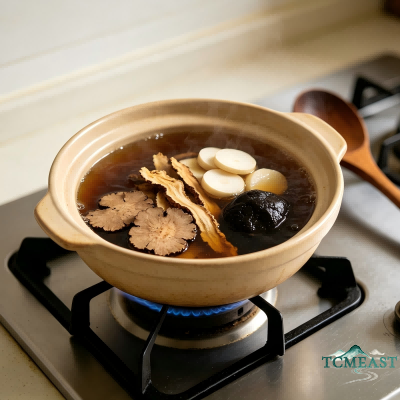
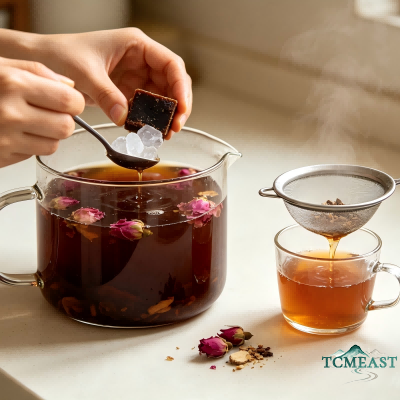
Just before turning off the heat (or after turning off), add the rinsed roses to the soup. Cover and steep for 5-10 minutes. Roses are rich in volatile oils and should not be boiled for long, as this will dissipate their fragrance.
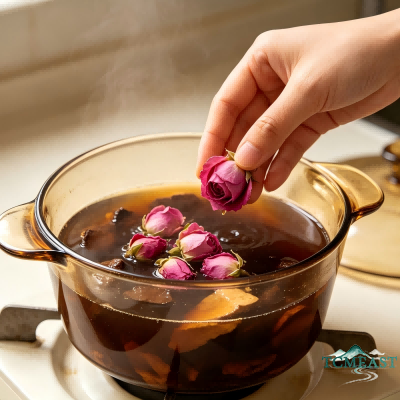
Add brown sugar (or black sugar/rock sugar) to taste, stirring until fully dissolved. Strain out the herbal residue, pour the soup into a cup, and serve warm.
TCM Notes
Modern Nutrition & Pharmacological Research: Tonifying and activating blood: The Four-Substance Decoction is a classic foundational formula for tonifying and activating blood in TCM, known as the "first formula for gynecology". Chuanxiong activates blood and promotes Qi flow, ensuring the formula "tonifies blood without causing stasis". Menstrual regulation and pain relief: Roses and Chuanxiong work synergistically to activate blood, resolve stasis, and soothe the liver, effectively relieving dysmenorrhea, irregular menstruation, and menstrual blood with clots caused by Qi stagnation and blood stasis. Soothing the liver and relieving depression: Roses enter the Liver meridian, relieving liver depression and improving chest tightness, hypochondriac pain, and irritability caused by emotional stress. Beauty and skincare: The Four-Substance Decoction tonifies blood, while roses activate blood, jointly improving dull and sallow complexion. Long-term use helps fade spots and moisturize the skin. Calming the spirit: Roses have a spirit-calming effect, helping to improve palpitations, insomnia, and restlessness.
Suitable for:Those with Qi-Blood deficiency, sallow complexion, dizziness, and palpitations Those with irregular menstruation, dysmenorrhea, amenorrhea, and menstrual blood with clots Those with liver Qi stagnation, depression, and chest/hypochondriac distension Those in postpartum recovery requiring blood activation and stasis resolution (under medical guidance) Those with dull complexion and pigmentation Those with migraines (especially those related to the menstrual cycle)
Not suitable for:Pregnant women: Chuanxiong and safflower have strong blood-activating effects and are absolutely contraindicated due to the risk of miscarriage Those with heavy menstrual bleeding or metrorrhagia: Blood-activating herbs may increase bleeding Those with Yin deficiency and fire excess (hot palms/feet, dry mouth, night sweats): Chuanxiong is warm and may consume Yin fluids Women during menstruation: Generally recommended to pause during menstruation and resume after it ends Those with uterine fibroids, ovarian cysts, or malignant tumors: Contraindicated Those with fibrocystic breast disease: Use with caution; some may experience breast distension and discomfort Those with bleeding disorders or those taking anticoagulant medications: Use only under medical supervision Those allergic to any of the above ingredients
