
Congees
Hawthorn Congee
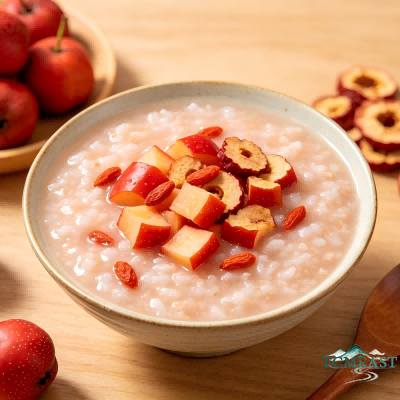
Hawthorn Congee is a classic traditional Chinese medicinal porridge, originating from the Common Disease Dietary Therapy and Food Supplement Encyclopedia. Made with hawthorn and japonica rice as the main ingredients, it is slowly simmered to perfection. Hawthorn is sour and sweet in taste, slightly warm in nature, and channels to the Spleen, Stomach, and Liver meridians. It is known for promoting digestion, strengthening the stomach, promoting Qi circulation, resolving blood stasis, and reducing turbidity and lipids. The Compendium of Materia Medica records that it "transforms food and eliminates meat stagnation", making it especially effective for digesting meat and greasy foods. Japonica rice harmonizes the middle and regulates the stomach. Together, hawthorn promotes digestion and activates blood circulation, while rice protects and nourishes the stomach, achieving the combined effects of promoting digestion, activating blood circulation, and strengthening the spleen and stomach. The porridge is thick, smooth, sweet, and slightly sour. This porridge is especially suitable for those with food stagnation, meat and greasy food stagnation, poor digestion, and abdominal fullness.
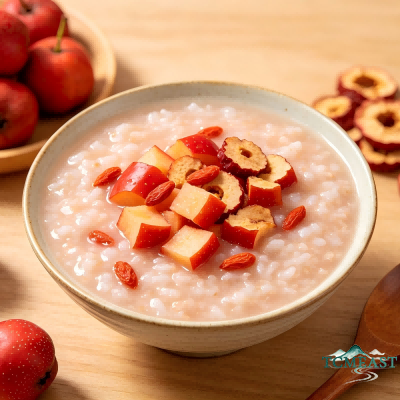
Main Ingredients
- Hawthorn (dried) 40g
- Japonica rice 100g
- White sugar (or rock sugar/brown sugar) To taste
- Water 1000ml
Steps
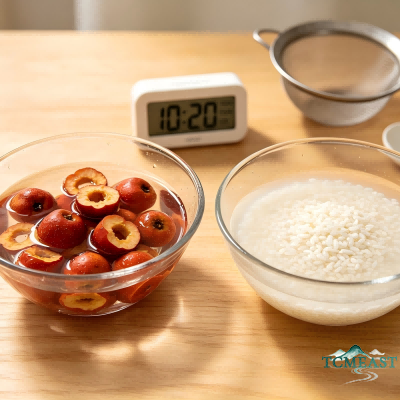
Rinse the dried hawthorn and soak for 10-20 minutes. Rinse the japonica rice and soak for 30 minutes.
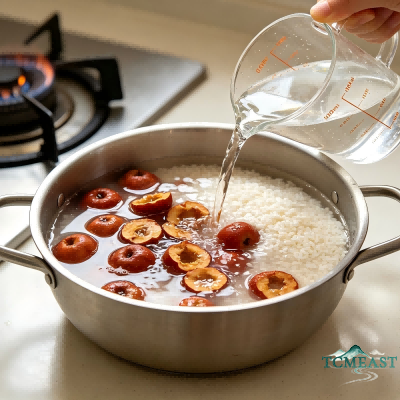
Place the hawthorn and rice into a pot with enough water (approx. 800ml). Bring to a boil over high heat, stirring slightly.
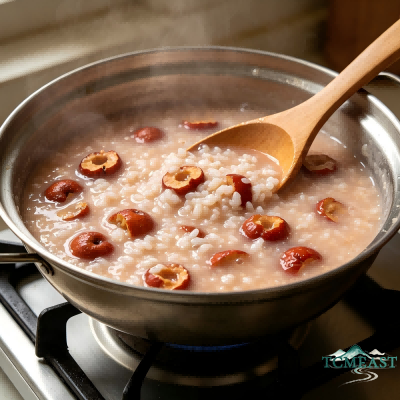
Reduce to medium-low heat and simmer for 30-40 minutes until the porridge thickens.
Add white sugar or rock sugar and cook until dissolved.
TCM Notes
Modern Nutrition Research: Promoting digestion: Hawthorn contains various organic acids that promote gastric juice secretion, increase pepsin activity, and enhance protein digestion. Lipase and digestive enzymes in hawthorn promote the breakdown of fatty foods. Hawthorn is especially effective for digesting meat and greasy food stagnation. Activating blood circulation: Hawthorn has blood-activating and stasis-resolving effects, suitable for blood-stasis dysmenorrhea and postpartum blood stasis pain. Lipid and blood pressure support: Flavonoids in hawthorn are the main active components for treating hyperlipidemia. Hawthorn dilates blood vessels, increases coronary blood flow, and lowers blood pressure. It also has lipid-lowering, blood pressure-lowering, heart-strengthening, and anti-arrhythmic effects. Rich nutrition: Hawthorn contains almost all the nutrients found in fruits, with particularly high levels of organic acids and vitamin C. Its calcium content ranks first among fresh fruits. Hawthorn porridge contains protein, fat, carbohydrates, crude fiber, calcium, phosphorus, iron, carotene, niacin, and other nutrients.
Suitable for:Those with food stagnation and poor digestion Those with meat and greasy food stagnation and abdominal fullness Those with loss of appetite and poor food intake Those with blood-stasis dysmenorrhea and postpartum blood stasis pain Those with hyperlipidemia, hypertension, and coronary heart disease (adjunctive therapy) Those with mild fatty liver and atherosclerosis risk Those with summer dampness, spleen困, and loss of appetite Generally suitable for most people in moderation
Not suitable for:Pregnant women: Hawthorn has blood-activating and uterine-contracting effects — contraindicated or use with caution Those with excess stomach acid, gastric ulcers, or gastritis: Hawthorn is acidic and may stimulate gastric acid secretion, worsening symptoms Those with spleen-stomach weakness: Should not overconsume Those with hypotension: Hawthorn has blood pressure-lowering effects — use with caution Diabetics: Be mindful of sugar intake — sugar-free version is recommended Children (during tooth development): Excessive consumption may affect tooth development — rinse mouth after eating On an empty stomach: Not recommended, as it may irritate the gastric mucosa
