
Soups
White Peony Root and Dendrobium Soup
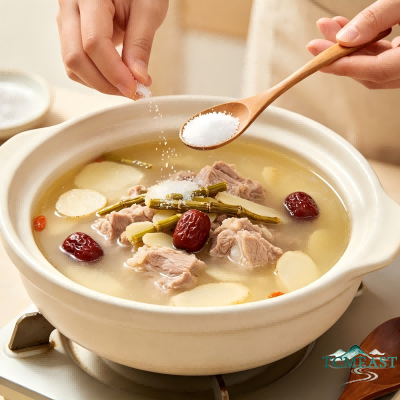
White Peony Root and Dendrobium Soup is a classic Chinese medicinal soup for nourishing the stomach. Made with white peony root (Baishao), dendrobium (Shihu), and lean pork as the main ingredients, it is slowly simmered to perfection. White peony root is bitter and sour in taste, slightly cold in nature, and channels to the Liver and Spleen meridians. It is known for nourishing blood, regulating menstruation, astringing yin and stopping sweating, soothing the liver and relieving pain, and suppressing liver yang. Dendrobium is sweet in taste, slightly cold in nature, and channels to the Stomach and Kidney meridians. It is known for nourishing stomach yin, promoting salivation, and clearing deficiency heat. Lean pork nourishes yin, moistens dryness, and tonifies the middle. Together, white peony root nourishes blood, astringes yin, and soothes the liver to relieve pain, while dendrobium nourishes yin, promotes salivation, and clears stomach heat, achieving the combined effects of benefiting the stomach, nourishing yin, promoting salivation, moistening dryness, and relieving pain. The soup is clear and light, with a subtle herbal aroma and a sweet, smooth taste. This soup is especially suitable for daily nourishment of those with stomach yin deficiency, manifesting as dull stomach pain, dry mouth and throat, and poor appetite, as well as those with chronic gastritis.
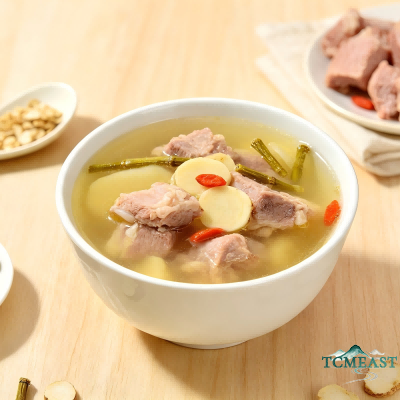
Main Ingredients
- Lean pork 250g
- White peony root (Baishao) 10g
- Dendrobium (Shihu) 10g
- Red dates (Jujubes) 4 pieces
- Fresh ginger 3 slices
- Salt To taste
- Water 1500ml
Steps
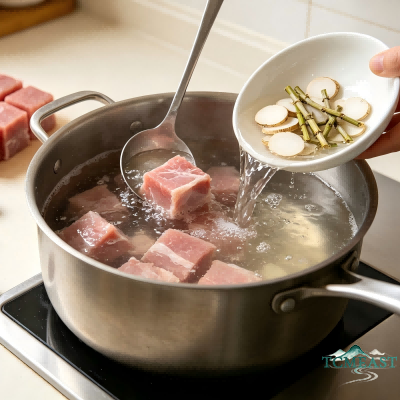
Lean pork: Wash and cut into 2-3 cm cubes. Place in a pot with enough cold water to cover, bring to a boil and blanch for 2-3 minutes, skimming off any foam. Remove and rinse thoroughly with warm water. Blanching removes blood and impurities, resulting in a clearer soup. Herbs: Quickly rinse the white peony root and dendrobium to remove surface dust. Rinse the red dates and remove the pits (the pits are slightly warming and pose a safety hazard).
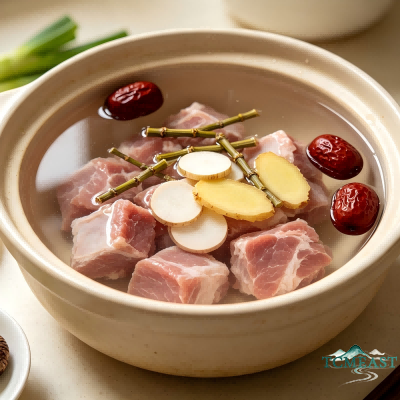
Place the prepared lean pork, white peony root, dendrobium, red dates (along with ginger and other optional ingredients) into a clay pot or soup pot. Add enough water (approx. 1500ml).
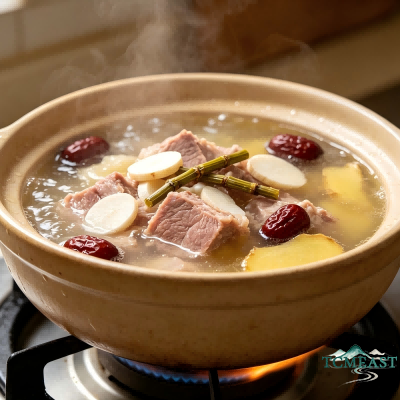
Bring to a boil over high heat, then reduce to low heat and simmer for 1-1.5 hours until the meat is tender and the active compounds of the herbs are fully released.
Add salt to taste just before turning off the heat, and stir well. Add salt at the end — adding it too early may make the meat tough.
TCM Notes
Modern Nutrition & Pharmacological Research: Stomach-nourishing and pain relief: White peony root has antispasmodic and analgesic effects, relieving stomach pain associated with chronic gastritis. Dendrobium is excellent for nourishing stomach yin and promoting salivation. Together, they are especially suitable for stomach yin deficiency-type stomach pain or chronic gastritis with yin deficiency and heat. Soothing the liver and harmonizing the stomach: White peony root enters the Liver and Spleen meridians, regulating the liver and spleen and relieving symptoms such as indigestion and acid regurgitation caused by chronic gastritis. Nourishing blood and promoting salivation: White peony root nourishes blood and astringes yin, dendrobium nourishes yin and promotes salivation, and red dates benefit qi and nourish blood. Together, they provide excellent yin-nourishing, salivation-promoting, and blood-tonifying effects.
Suitable for:Those with stomach yin deficiency (dull stomach pain, dry mouth and throat, poor appetite, weight loss) Those with chronic gastritis (especially yin deficiency type with deficiency heat) Those with restlessness, constipation, and poor appetite Those with yin deficiency constitution and internal deficiency heat Those recovering from illness with depleted body fluids, needing stomach yin nourishment Generally suitable for most people in dry seasons for yin nourishment and moisturizing
Not suitable for:Those with spleen-stomach deficiency-cold (cold abdominal pain, loose stools, preference for warmth and pressure) — both white peony root and dendrobium are slightly cold in nature and may worsen symptoms Those with external wind-cold and no sweating — not recommended Those allergic to any of the above ingredients
