
Congees
Asparagus and Coix Seed Porridge
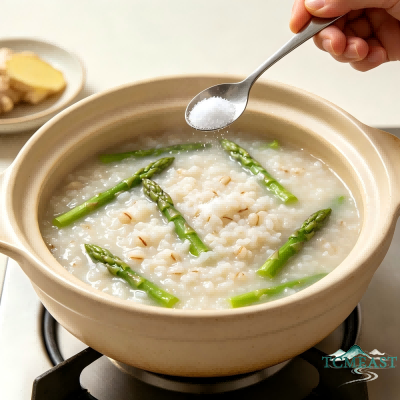
Asparagus and Coix Seed Porridge is a classic Chinese medicinal congee, made with fresh asparagus and coix seeds (Job's tears) as the main ingredients, cooked with japonica rice. Asparagus is cool in nature, sweet and slightly bitter in taste, and channels to the Spleen and Lung meridians. It is known for clearing heat, promoting diuresis, activating blood circulation, and dispersing nodules. Coix seeds are slightly cold in nature, sweet and bland in taste, and channel to the Spleen, Stomach, and Lung meridians. They are known for promoting diuresis, draining dampness, strengthening the spleen, stopping diarrhea, and detoxifying. Together, asparagus clears heat and promotes diuresis, while coix seeds strengthen the spleen and drain dampness, achieving the combined effects of clearing heat, draining dampness, strengthening the spleen, and harmonizing the stomach. The porridge is thick and smooth, with the fresh aroma of asparagus perfectly complemented by the nutty fragrance of coix seeds. This porridge is especially suitable for those with damp-heat accumulation, edema and scanty urine, poor appetite, spleen-deficiency diarrhea, and as an adjunctive dietary therapy for cancer patients.
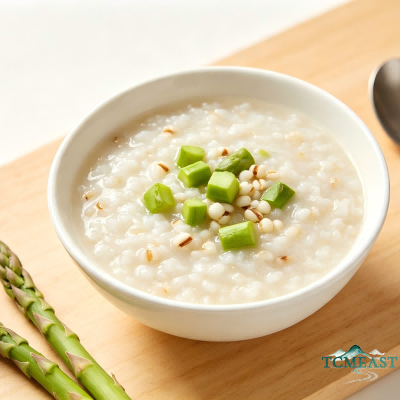
Main Ingredients
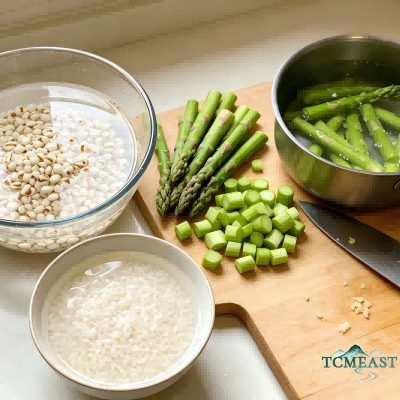
- Fresh asparagus 150g
- Coix seeds (Job's tears) 50g
- Japonica rice 100g
- Salt A pinch
- Fresh ginger 3 slices
- Water 1500ml
Steps
Soak coix seeds: Rinse the coix seeds and soak in plenty of water for 3-4 hours (or overnight in the refrigerator) until fully swollen. Coix seeds are hard and require thorough soaking to soften properly. Prepare asparagus: Rinse the fresh asparagus, cut off the tough ends, and chop into 1-2 cm sections or small pieces. Asparagus is rich in oxalates — blanching is recommended before adding to the porridge. Prepare rice: Rinse the japonica rice and soak for 30 minutes in advance.
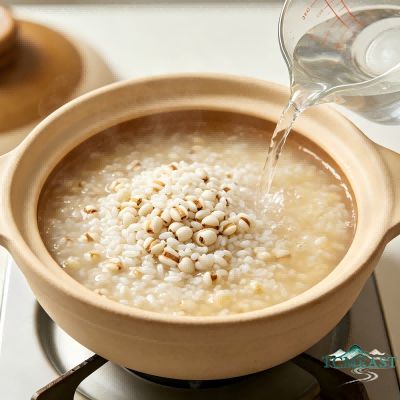
Place the soaked coix seeds and rinsed japonica rice into a clay pot or rice cooker. Add enough water (approx. 1000-1500ml). Bring to a boil over high heat, then reduce to low heat and simmer for 30-40 minutes until the coix seeds are tender, the rice grains bloom, and the porridge thickens.
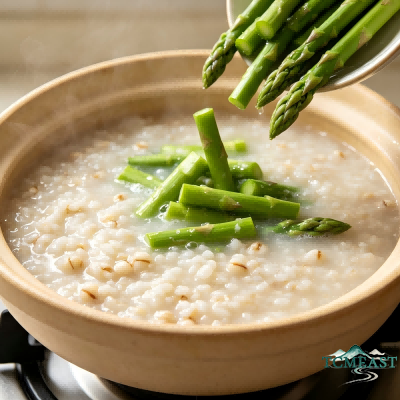
Add the prepared asparagus (blanched if desired) to the porridge and continue simmering over low heat for 3-5 minutes until the asparagus is cooked and its fragrance is infused. Do not overcook the asparagus, as it will lose its crisp texture and vibrant green color.
Add a pinch of salt to taste before turning off the heat, and stir well. If using ginger, add it during the simmering stage.
TCM Notes
Modern Nutrition Research: Clearing heat and draining dampness: Asparagine and potassium in asparagus have diuretic effects, helping to expel excess water. Coix seeds also promote diuresis and drain dampness. Together, they effectively improve damp-heat accumulation, edema, and scanty urine. Strengthening the spleen and harmonizing the stomach: Coix seeds strengthen the spleen and stop diarrhea, suitable for spleen-deficiency diarrhea and poor appetite. Dietary fiber in asparagus promotes gastrointestinal motility and improves digestion. Anti-cancer effects: Asparagus is known as the "king of vegetables," containing multiple anti-cancer compounds that enhance immunity. Coix seed alcohol extract has been shown to significantly inhibit Ehrlich ascites carcinoma and prolong the survival of tumor-bearing mice. Asparagus has demonstrated special therapeutic effects on mid-to-late stage esophageal cancer, gastric cardia cancer, liver cancer, lung cancer, nasopharyngeal carcinoma, cervical cancer, breast cancer, bladder cancer, and skin cancer. Immunity enhancement: Asparagus juice, polysaccharides, and saponins enhance immune function. Polysaccharides in coix seeds enhance immune cell activity. Lipid and blood sugar regulation: Dietary fiber in asparagus reduces intestinal absorption of cholesterol and glucose, helping to lower blood lipids and blood sugar, and preventing arteriosclerosis, diabetes, obesity, and fatty liver.
Suitable for:Those with damp-heat accumulation (yellowing of skin and eyes, dark urine, abdominal fullness) Those with edema, scanty urine, and urinary difficulty Those with spleen-deficiency diarrhea and poor appetite Cancer patients (especially liver, lung, bladder, and skin cancer) as adjunctive therapy Those with hyperlipidemia and fatty liver Those with hypertension and heart disease Generally suitable for most people for clearing heat, draining dampness, and nourishing the spleen and stomach
Not suitable for:Those with spleen-stomach deficiency-cold: Both asparagus and coix seeds are cooling in nature and may worsen cold symptoms, causing diarrhea or abdominal pain Those with cold constitution: Coix seeds are slightly cold and may further weaken those with cold constitutions Those with gout or hyperuricemia: Asparagus is high in purines — use with caution Those with severe constipation: Coix seeds promote diuresis and may worsen constipation Pregnant women: Coix seeds have a slippery nature — use with caution Women during menstruation: Raw coix seeds may cause coldness in the body — use with caution Those allergic to asparagus or coix seeds
