
Herbal Teas
Hawthorn, Lotus Leaf & Alisma Soup
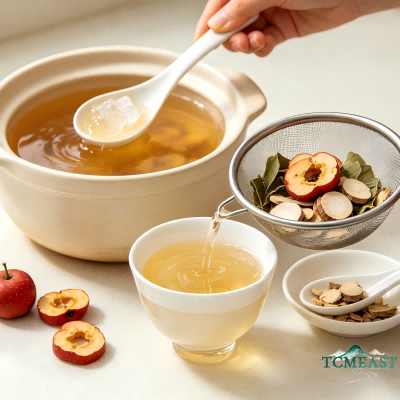
Hawthorn, Lotus Leaf & Alisma Soup is a classic traditional Chinese medicinal decoction renowned for its lipid-lowering and blood pressure-reducing properties. It combines the digestive and fat-dissolving effects of hawthorn, the heat-clearing and dampness-resolving properties of lotus leaf, and the diuretic and heat-draining action of alisma. The tea has a light yellow color, a sweet-sour aroma with a hint of lotus fragrance, and a mildly sour yet sweet aftertaste. This soup is known for its lipid-reducing, dampness-clearing, blood pressure-lowering, and weight-management benefits. It is especially suitable for hot summer days or for individuals with phlegm-dampness constitution as a daily wellness drink. Ready in just 20 minutes, it's a simple and ideal choice for a healthy lifestyle.
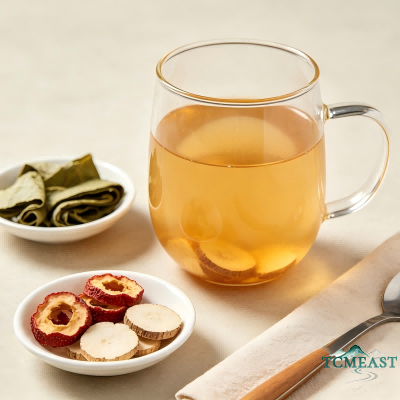
Main Ingredients
- Hawthorn (dried slices) 15 g
- Dried lotus leaf 12 g
- Alisma (Zexie) 10 g
- Rock sugar 10 g
- Water 800ml
Steps
Rinse the dried hawthorn slices under running water to remove dust. Tear the dried lotus leaf into small pieces and rinse clean. Rinse the alisma clean.
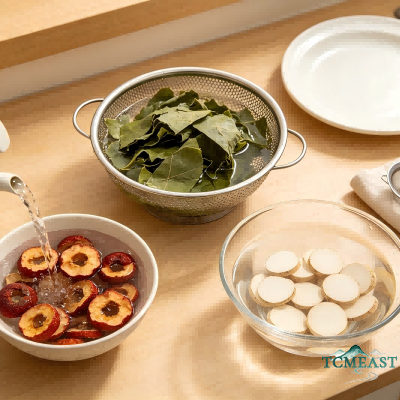
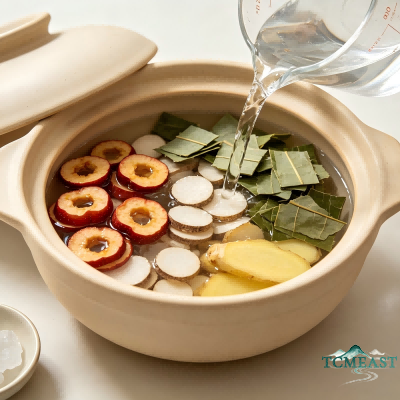
Place all ingredients (except rock sugar) into a pot. Add approximately 500-800ml of water.
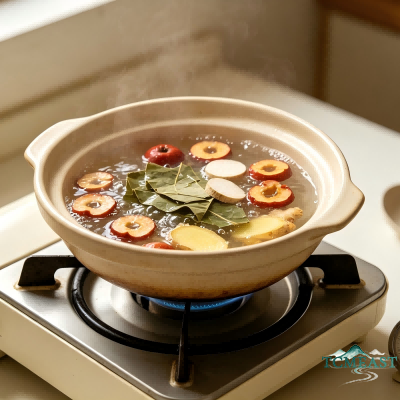
Bring to a boil over high heat. Reduce to low heat and simmer for 20 minutes.
Add rock sugar and stir until completely dissolved. Strain and discard the solids, reserving the liquid for drinking.
TCM Notes
Hawthorn: Slightly warm in nature, sour and sweet in taste, acts on the Spleen, Stomach, and Liver meridians. Rich in crataegic acid, flavonoids, and vitamin C. Hawthorn is known to promote digestion, invigorate blood circulation, disperse blood stasis, and reduce turbidity and lipids. It accelerates fat breakdown and lowers cholesterol, effectively relieving meat-induced stagnation and gastric distension. Lotus leaf: Neutral in nature, bitter and astringent in taste, acts on the Liver, Spleen, and Stomach meridians. Rich in nuciferine, flavonoids, and various alkaloids. Lotus leaf is known to clear summer heat, resolve dampness, raise yang energy, and cool blood to stop bleeding. It inhibits lipase activity and reduces fat absorption, making it particularly suitable for phlegm-dampness type obesity. Alisma (Zexie) : Cold in nature, sweet and bland in taste, acts on the Kidney and Bladder meridians. Rich in alisol, triterpenoids, and potassium salts. Alisma is known to promote diuresis, drain dampness, and clear heat – helping to eliminate excess water and sodium ions from the body, and improving edema and difficult urination. Together, they achieve the synergistic effects of reducing lipids, eliminating stagnation, clearing heat, draining dampness, lowering blood pressure, and supporting weight management. One cup (approx. 300ml) contains very few calories (approx. 20-30 kcal, depending on sugar content), with virtually no fat or cholesterol.
Suitable for:Those with hyperlipidemia and fatty liver: Proven to lower blood lipids and help prevent fatty liver disease Those with hypertension and arteriosclerosis: Supports blood pressure reduction and vascular health Those with simple obesity or overweight: Aids in weight reduction Those with damp-heat constitution: Symptoms include greasy tongue coating, heavy limbs, and sticky stools Those suffering from summer heat with thirst and poor appetite Postpartum women with damp-heat type obesity (not during breastfeeding)
Not suitable for:Pregnant and breastfeeding women: Alisma is cold in nature, and hawthorn promotes blood circulation – strictly avoid during pregnancy Those with Spleen-Stomach deficiency cold: Symptoms include frequent abdominal pain, diarrhea, cold sensitivity, and loose stools Those with low blood pressure: This decoction has blood-pressure-lowering effects – use with caution Those with hyperacidity or gastric ulcers: Hawthorn may stimulate gastric acid secretion and worsen symptoms Those with kidney deficiency and spermatorrhea: Alisma's diuretic effect may aggravate kidney deficiency symptoms Those with extreme deficiency-cold constitution Children: Should avoid use Caution for long-term use: Alisma has mild toxicity; animal studies suggest long-term excessive use may cause kidney damage
