
Herbal Teas
White Radish and Ginger Drink
White Radish and Ginger Drink is a time-honored traditional Chinese食疗方 (dietary therapy), originating from the "Fresh Ginger and Radish Juice" recorded in the ancient medical text Puji Fang. It masterfully combines the "cool" nature of white radish with the "warm" nature of ginger, creating a balanced and effective health beverage. White radish is known for descending qi, resolving phlegm, and aiding digestion, while ginger excels at releasing the exterior, dispelling cold, and warming the lungs to stop coughs. Together, they help resolve phlegm, relieve coughs, and soothe sore throats. Simple to prepare and ready in minutes, it's an excellent choice for daily family wellness.
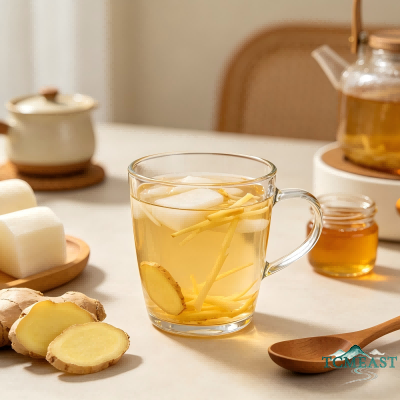
Main Ingredients
- White radish (daikon) 250-500g
- Fresh ginger 30g
- Honey or rock sugar to taste
- Water as needed
Steps
Wash and peel the white radish and ginger. Slice or cut into small pieces.
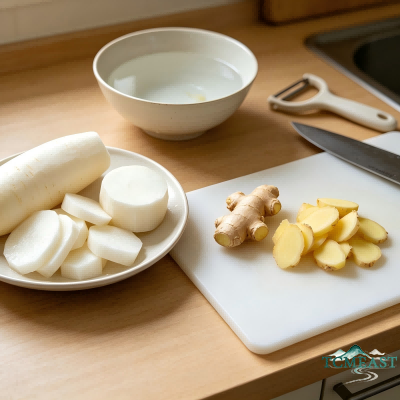
Place the prepared radish and ginger in a pot and add an appropriate amount of water. Bring to a boil over high heat, then reduce to low heat and simmer for 10-15 minutes.

Turn off the heat and strain the liquid. Sweeten with rock sugar or honey (add after it cools slightly) to taste. Drink it warm for the best effect.

TCM Notes
White radish: Pungent and sweet in taste, cool in nature, acts on the Lung and Stomach meridians. Rich in dietary fiber, vitamin C, mustard oil, and diastase. Mustard oil and crude fiber promote gastrointestinal motility and aid digestion; diastase helps break down starches. In TCM, it is known to promote digestion, descend qi, resolve phlegm, and moisten the lungs. Ginger: Pungent in taste, warm in nature, acts on the Lung, Spleen, and Stomach meridians. Rich in gingerol and volatile oils. Gingerol helps induce sweating, dispel cold, and accelerate blood circulation. Ginger's warm nature also counterbalances the coolness of the radish, making the drink more balanced. Together, they achieve the effects of resolving phlegm, relieving coughs, soothing the throat, aiding digestion, and dispelling cold.
Suitable for:Those in the early stages of a wind-cold cold: Symptoms include chills, clear nasal discharge, and mild cough. Those with throat discomfort or hoarseness: Such as acute or chronic sore throat or loss of voice. Those with indigestion or food stagnation: Feeling bloated or having a poor appetite. Those with a cold constitution or cold hands and feet: Ginger's warming property helps improve cold sensitivity. Those with constipation: The dietary fiber in radish can help promote bowel movements.
Not suitable for:Those with Spleen-Stomach deficiency cold: People with frequent diarrhea, cold sensitivity, or loose stools should not consume too much. Those with Yin deficiency and internal heat: People experiencing dry mouth, hot palms and soles, or night sweats should avoid it. Those with a heaty constitution: People prone to上火 (excessive internal heat), such as dry stools, dry mouth, or acne, should avoid it as it may worsen symptoms. During diarrhea: Radish's "descending qi" property may worsen diarrhea symptoms. Note: White radish should not be consumed with ginseng or American ginseng.
