
Congees
Snakehead Fish Porridge
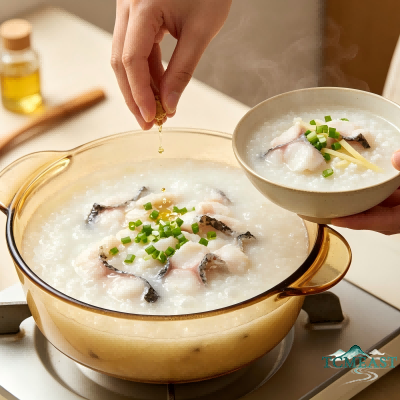
Snakehead Fish Porridge is a classic Cantonese "raw-rolled" porridge, featuring a smooth, creamy base and tender, silky fish slices. Also known as "Channa" or "black fish," it is regarded as a precious nourishing food in folk tradition. With firm, boneless flesh, it is ideal for making fish slice porridge. The preparation involves simmering rice into a thick congee, then quickly cooking marinated thin fish slices in the boiling porridge. The result is a smooth, savory porridge with tender fish, offering benefits of strengthening the spleen, supplementing qi, and promoting diuresis. This dish serves as a daily health breakfast and is also suitable for postpartum recovery and post-illness recuperation.
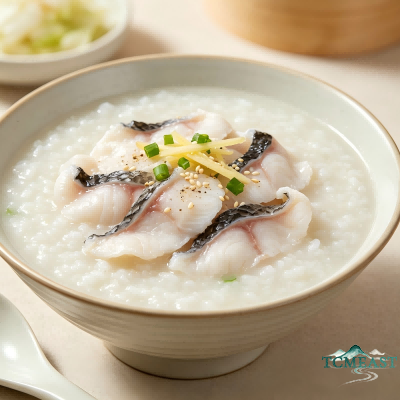
Main Ingredients
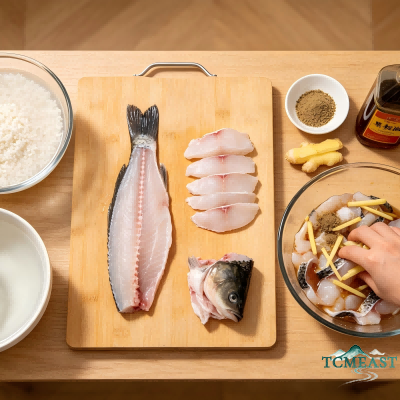
- Snakehead fish (black fish / Channa argus) 1 piece
- Rice (or japonica rice) 100g
- Fresh ginger 1 piece
- Spring onions 2 stalks
- Cooking wine 1 tsp
- Ground white pepper 1/4-1/2 tsp
- Salt approx. 1/2 tsp
- Cooking oil 1 tsp
- Sesame oil a few drops
Steps
Rice: Rinse the rice and soak in water for 30 minutes, then drain. Soaking allows the rice to absorb water and cook more easily into a creamy texture. Snakehead fish: Clean and gut the fish. Fillet along the backbone, then slice into thin pieces about 0.2-0.3cm thick with the skin side down. Thinner slices cook faster and are more tender. The remaining head and bones can be saved for making fish stock. Marinate the fish slices: Place the fish slices in a bowl. Add ginger strips, cooking wine, ground white pepper, a pinch of salt, and cooking oil. Mix well and marinate for 15-30 minutes. This removes any fishy odor and enhances flavor.
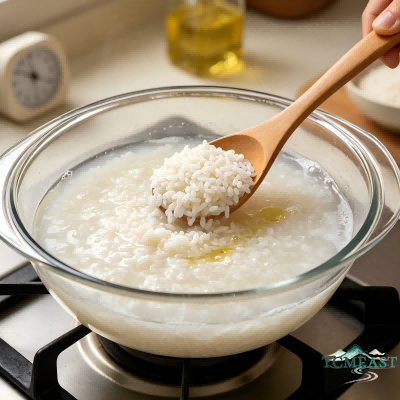
Add sufficient water to a pot (rice-to-water ratio approximately 1:8 to 1:10). Bring to a boil over high heat, then add a few drops of cooking oil to prevent boiling over and add gloss. Add the soaked rice. Return to a boil, then reduce to low heat and simmer for about 40 minutes until the rice grains bloom and the porridge becomes thick and creamy, with a layer of "rice oil" forming on the surface. Stir occasionally to prevent sticking.
v
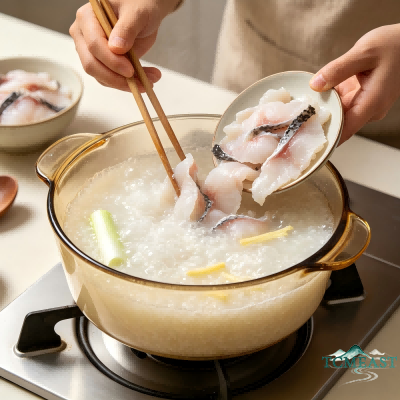
Turn off the heat. Garnish with chopped green onion and drizzle with a few drops of sesame oil. Ladle into bowls and serve hot for the best flavor.
TCM Notes
Snakehead fish: Sweet in taste, cool (or neutral) in nature, acts on the Spleen and Stomach meridians. Rich in high-quality protein (approx. 18-20g per 100g), 18 amino acids, and essential minerals including calcium, phosphorus, iron, and various vitamins. It is known to strengthen the spleen, supplement qi, promote diuresis, reduce swelling, nourish blood, tonify deficiency, and benefit yin and yang. It is especially beneficial for physical weakness, hypoproteinemia, spleen-stomach qi deficiency, malnutrition, and anemia. In folk tradition, snakehead fish is used to promote lactation and nourish blood, and is considered a valuable dietary therapy for postpartum women and rheumatism patients. Rice (japonica rice) : Nourishes the spleen and stomach, supplements the middle qi. When cooked into porridge with snakehead fish, it becomes easy to digest and absorb, allowing the tonic effects to be mild and sustained. In summary, snakehead fish porridge offers the benefits of strengthening the spleen, supplementing qi, promoting diuresis, reducing swelling, nourishing blood, and tonifying the kidneys.
Suitable for:Those with physical weakness, post-illness recovery, or malnutrition Those with spleen-stomach qi deficiency, poor appetite, or indigestion Those with anemia or hypoproteinemia Postpartum women with insufficient lactation needing to promote milk production Those with edema or difficult urination (due to the diuretic effect) Those with gestational edema General population for daily wellness
Not suitable for:Those with Yin deficiency and fire excess – should avoid Those with skin conditions such as sores or tinea – consume with caution Those with acute inflammation (acute nephritis, pneumonia, etc.) – consume with caution Those with colds, fever, or gastrointestinal disorders – consume with caution Those with abdominal distension, pain, or diarrhea – should avoid Menstruating women – consume with caution Those with hemorrhoids or physical injuries – not suitable Post-cesarean section women – should not consume within 20 days after surgery Those allergic to fish – strictly avoid Infants and young children – introduce with caution; recommended after 1 year of age
