
Stir-Fries
Cold Tossed Purple Cabbage
Cold Tossed Purple Cabbage is a vibrant, crisp, and refreshing homestyle cold dish, especially popular on summer tables. Purple cabbage, also known as red cabbage, originated in the Mediterranean region and is ranked by the World Health Organization (WHO) as the third-best edible vegetable. Its deep purple leaves are rich in natural anthocyanins. Purple cabbage is typically consumed raw to maximize its nutritional value and crisp texture. The preparation involves shredding the cabbage into fine strips, salting to remove excess moisture, and tossing with a dressing made from garlic, vinegar, sugar, and sesame oil. The finished dish features a bright purplish-red color, a crisp texture, and a sweet-and-sour flavor that is both appetizing and refreshing.
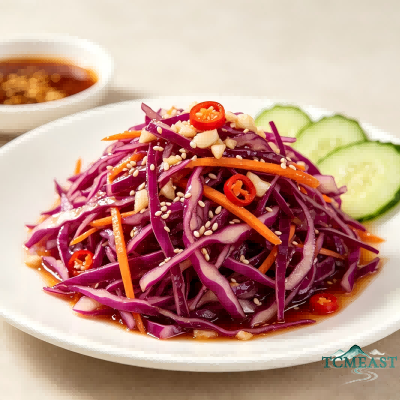
Main Ingredients
- Purple cabbage (red cabbage) half
- Coriander (cilantro) 2-3 stalks
- Garlic (minced) 3-4 cloves
- Red chili pepper 1-2 pieces
- Toasted white sesame seeds 5g
- Peanuts a handful
- Salt to taste
- White sugar 15g
- White vinegar (or black vinegar / balsamic vinegar) 20ml
- Light soy sauce 15ml
- Sesame oil 10ml
- Chili oil 10ml
- Sichuan peppercorn oil a dash
- Chicken powder or mushroom powder a pinch
Steps
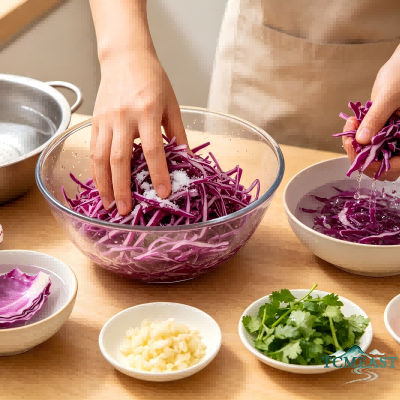
Purple cabbage: Separate the leaves one by one and soak in lightly salted water for 5-10 minutes to kill bacteria and remove potential pesticide residues. Rinse thoroughly under running water and drain. Shred the cabbage as finely as possible (the finer the shreds, the better the flavor absorption). Place the shredded cabbage in a large bowl, add an appropriate amount of salt (about 1.5-2 tbsp), and massage evenly. Let it marinate for 10-30 minutes. After the cabbage releases water and softens, drain the liquid, rinse with clean water, and squeeze out excess moisture firmly (this is critical – the drier the cabbage, the crisper the texture and the better the flavor absorption). Aromatics: Mince the garlic; cut coriander into sections; slice the chili pepper into rings (if using).
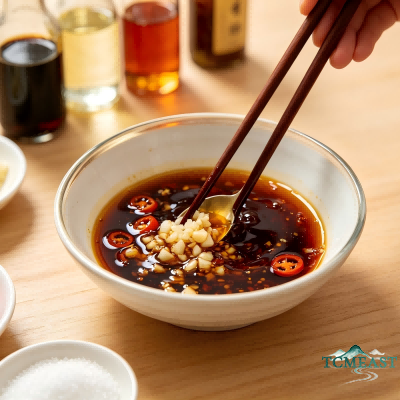
In a small bowl, combine minced garlic, chili pepper rings (if using), light soy sauce, white vinegar (or black vinegar), sugar, sesame oil, chili oil, Sichuan peppercorn oil (if using), and a pinch of chicken powder. Mix well.
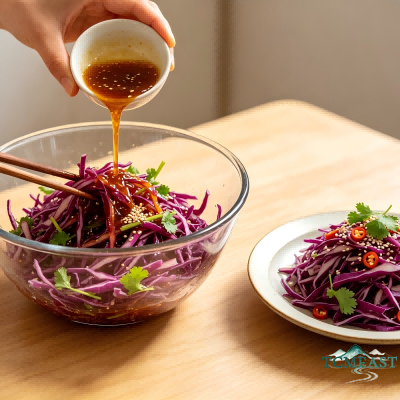
Place the squeezed purple cabbage shreds in a large bowl. Add coriander sections and toasted white sesame seeds. Pour the dressing over the cabbage and toss thoroughly with chopsticks to ensure every strand is evenly coated. Let it rest for 5-10 minutes to allow the flavors to meld, then plate and serve. Tastes even better when chilled.
TCM Notes
Purple cabbage is highly nutritious and is a typical low-calorie, high-fiber food. Per 100g, it contains only about 25 kcal, with dietary fiber content higher than that of regular cabbage. Anthocyanins: The most notable nutritional feature of purple cabbage is its high anthocyanin content, ranging from 90.5 to 322 mg per 100g – comparable to blueberries (72–325 mg per 100g). Anthocyanins are powerful antioxidants, with antioxidant activity 50 times that of vitamin E and 20 times that of vitamin C. Long-term consumption helps protect cardiovascular health, enhance vascular elasticity, delay vascular aging, prevent cognitive decline, and protect vision while relieving eye strain. Vitamin C: Purple cabbage contains 26 mg of vitamin C per 100g – 1.6 times that of regular cabbage. Potassium: Purple cabbage contains 177 mg of potassium per 100g – nearly 4 times that of regular cabbage. Sulfur: Rich in sulfur, which helps maintain skin health when consumed in moderation. Calcium and Vitamin D: Contains calcium and vitamin D, which may help prevent osteoporosis in middle-aged and elderly individuals. In summary, cold tossed purple cabbage offers benefits including antioxidant, anti-inflammatory, eye-protecting, digestive, and nutritional supplementation effects.
Suitable for:Those on weight-loss diets: Low-calorie, high-fiber; enhances satiety and promotes intestinal motility Those with chronic constipation: Dietary fiber promotes gastrointestinal motility and relieves constipation Mental workers and those with eye strain: Anthocyanins protect vision and relieve eye fatigue Those at high risk of cardiovascular disease: Anthocyanins protect cardiovascular health Middle-aged and elderly individuals: Calcium and vitamin D help prevent osteoporosis Those with anemia, arthritis, skin itching, or eczema Pregnant women: Provides dietary fiber, promotes digestion, and improves appetite Infants and young children: Can be consumed in moderation
Not suitable for:Those with Spleen-Stomach deficiency cold: Purple cabbage is cool in nature; excessive consumption may aggravate coldness and gastrointestinal discomfort Those with chronic diarrhea or poor gastrointestinal function: The high fiber content may accelerate intestinal motility and worsen diarrhea Those prone to coldness, cold extremities, or abdominal distension Those with poor appetite, nausea, or vomiting Those with thyroid disorders (especially hypothyroidism or Hashimoto's) : Purple cabbage belongs to the cruciferous vegetable family and contains glucosinolates. Raw consumption may competitively inhibit iodine absorption and interfere with thyroid hormone synthesis. It is recommended to blanch before eating or control intake Those allergic to purple cabbage Those taking anticoagulant medications such as warfarin: Purple cabbage is rich in vitamin K, which may interfere with drug efficacy Those with skin itching, eye congestion, or lung inflammation should avoid or limit consumption
