
Soups
Coix Seed and Duck Stew
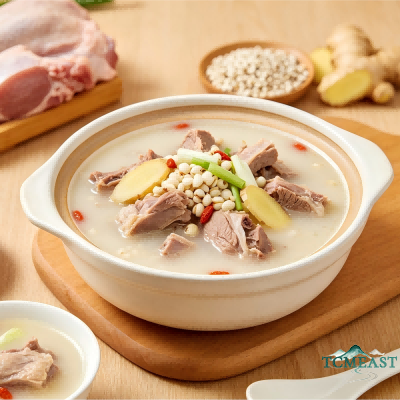
Coix Seed and Duck Stew is a classic medicinal soup for clearing heat and removing dampness. Coix seeds (Job's tears) are known for "strengthening the spleen and draining dampness," while duck meat, being cool in nature, can "nourish yin, benefit the stomach, and promote diuresis". Simmered together, the duck becomes tender, the coix seeds soft and chewy, and the broth clear and flavorful. This stew is especially suitable for those suffering from summer heat, excessive dampness, and loss of appetite.
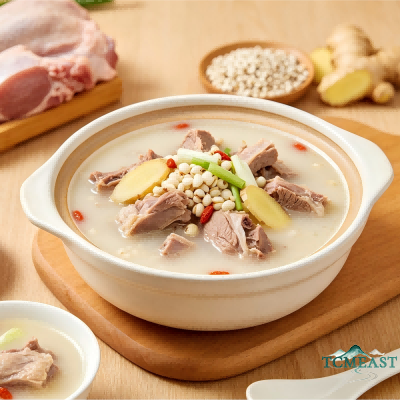
Main Ingredients
- Duck meat 500g
- Coix seeds 50g
- Fresh ginger 5 slices
- Spring onion 1 section
- Cooking wine 10g
- Salt 5g
- Sesame oil 5g
- MSG or chicken powder a pinch
- Ground white pepper a pinch
Steps
Coix seeds: Rinse and soak in water for 2-4 hours (or overnight) to allow them to fully absorb water and cook more easily. Duck: Wash the duck meat, remove any remaining feathers and excess skin along with subcutaneous fat (removing the fatty skin makes the soup less greasy). Cut into 3cm cubes. Ginger: Wash and lightly crush; Spring onion: Wash and cut into segments.
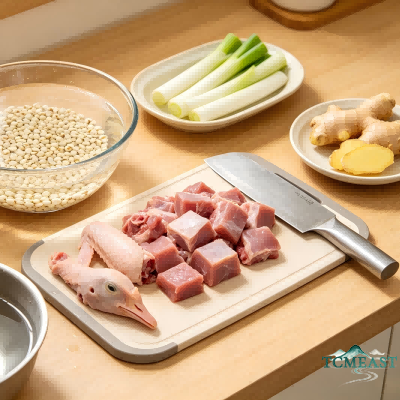
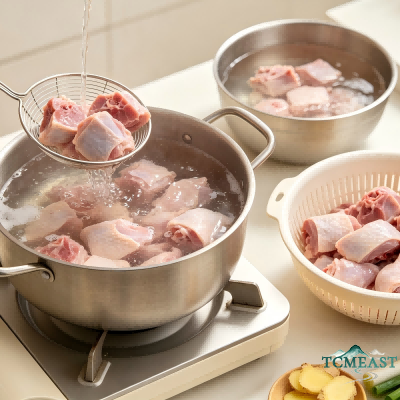
Bring a pot of water to a rolling boil. Add the duck pieces and cook for about 3-5 minutes until scum rises and the meat changes color. Remove the duck, rinse with warm water, and drain.
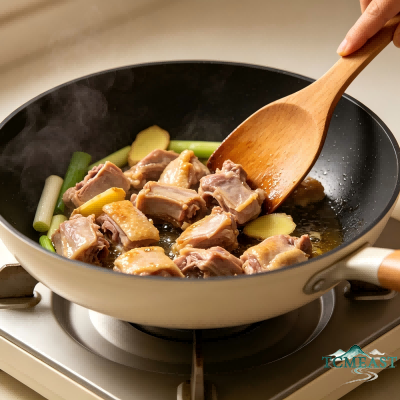
Heat a wok or skillet (oil-free is fine). Add the blanched duck pieces, ginger slices, and spring onion. Stir-fry over low heat until the duck surface turns slightly golden and fat renders out. Add cooking wine and stir-fry evenly to remove any gamey odor.
Place the prepared duck, coix seeds, ginger, spring onion, and cooking wine into a clay pot or stewing pot. Add enough boiling water (about 1500-2000ml). Add all water at once; do not add more during cooking. Bring to a boil over high heat, skim off any foam, then reduce to low heat and simmer for 1-1.5 hours until the duck is tender and the coix seeds are soft and fully cooked.
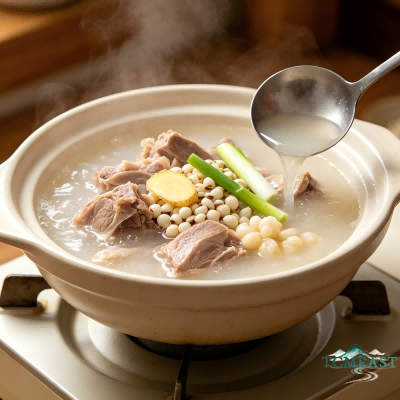
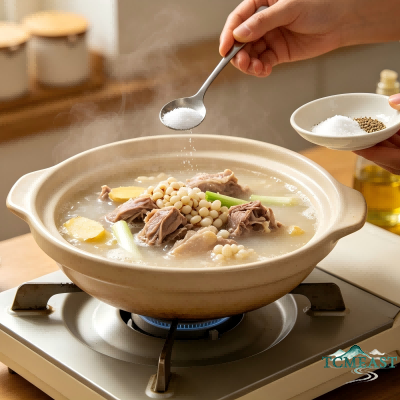
Add salt to taste (a pinch of ground white pepper and MSG can be added for extra flavor). Drizzle with sesame oil (if using) and turn off the heat.
Drink the soup and eat the meat, 1-2 times daily. Best consumed warm. Can be served as a side dish with a meal or enjoyed on its own as a medicinal soup.
TCM Notes
Duck meat: Sweet and slightly salty in taste, cool in nature, acts on the Spleen, Stomach, Lung, and Kidney meridians. Rich in B vitamins and vitamin E, with low-melting-point fatty acids that are easy to digest. Known to nourish the yin of the five zang organs, clear deficiency-heat, enrich blood, promote fluid circulation, and nourish the stomach. Suitable for those with internal heat,上火 (excessive internal heat), edema, weakness, and poor appetite. Coix seeds (Job's tears) : Sweet and bland in taste, slightly cold in nature, acts on the Spleen, Stomach, and Lung meridians. Rich in carbohydrates, protein, coixenolide, and various vitamins. Known to promote diuresis, drain dampness, strengthen the spleen, stop diarrhea, and clear heat to expel pus. Modern research shows coix seeds can inhibit cancer cell proliferation and enhance immune function. Together, they achieve the synergistic effects of strengthening the spleen, draining dampness, clearing heat, relieving summer heat, nourishing yin, benefiting the stomach, and promoting diuresis.
Suitable for:Those suffering from summer heat with thirst and excessive sweating Those with excessive dampness, heavy limbs, and poor appetite Those with hypertension, diabetes, obesity, kidney disease, edema, and other damp-heat conditions Cancer patients and those recovering from radiotherapy or chemotherapy General population as a summer and early autumn nourishing dietary therapy
Not suitable for:Those with Spleen-Stomach deficiency cold: Symptoms include frequent abdominal pain, cold sensitivity, and loose stools – avoid overconsumption Pregnant women: Coix seeds may stimulate uterine contractions – avoid or use with extreme caution Those with Yin deficiency and fire excess: Hot palms/feet, dry mouth and throat, night sweats – avoid overconsumption Those with weak constitution or poor digestion: Avoid overconsumption Menstruating women: Avoid during menstruation Those with unresolved colds: Avoid Those with Liver-Kidney deficiency: Avoid
