
Congees
Sea Cucumber and Millet Porridge
Sea Cucumber and Millet Porridge is a classic Chinese wellness porridge that combines the delicate fragrance of millet with the savory freshness of sea cucumber. Millet, known as the "king of grains" and often called "ginseng soup," soothes the stomach and replenishes vital energy. Sea cucumber, ranked first among the "Eight Treasures of the Sea," is rich in high-quality protein and trace minerals. Slowly simmered until the millet blooms and the porridge becomes silky, with tender and springy sea cucumber, this porridge is warm and nourishing. It is renowned for tonifying the kidneys, enriching essence, nourishing blood, moistening dryness, and strengthening the spleen and stomach. It is an ideal daily tonic for those with weakness, post-surgical recovery, and the elderly. Preparation takes about 1 hour (excluding sea cucumber rehydration time) – simple and nutritious.
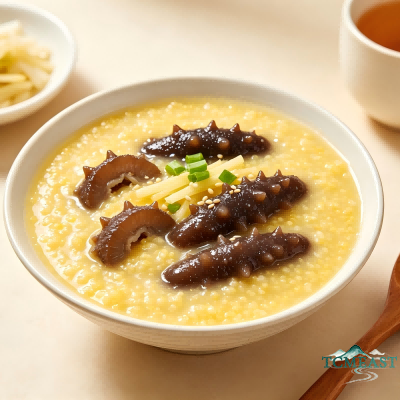
Main Ingredients
- Millet 100g
- Rehydrated sea cucumber (or ready-to-eat sea cucumber) 2 pieces
- Fresh ginger 8g
- Goji berries 5g
- Spring onion 1 stalk
- Cooking wine 15ml
- Salt 3g
- Ground white pepper a pinch
- Sesame oil a few drops
- Chicken stock or bone broth as needed
Steps
Sea cucumber preparation (if using dried sea cucumber, rehydrate 48 hours in advance): Cut open the rehydrated sea cucumber along the belly, remove the sand mouth and internal organs, and rinse clean. If using ready-to-eat sea cucumber, rinse directly. Bring water to a boil in a pot with ginger slices, spring onion sections, and cooking wine. Add sea cucumber and blanch for 2-3 minutes, then remove and cut into sections (about 3-5cm) or slices. Millet preparation: Rinse the millet and soak in water for 20-30 minutes, then drain.
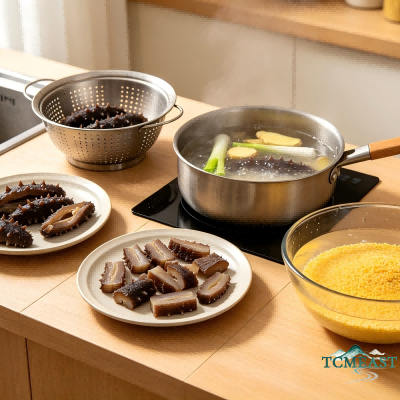
Add sufficient water or stock to a clay pot (millet-to-water ratio approximately 1:10 to 1:13). Bring to a rolling boil, then add the soaked millet. After it returns to a boil, reduce to the lowest heat, cover, and simmer for about 25-30 minutes. Do not open the lid during this time to prevent the loss of aroma.
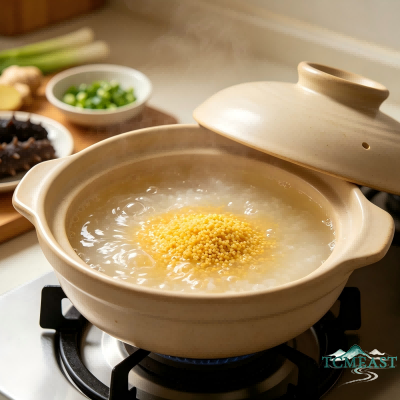
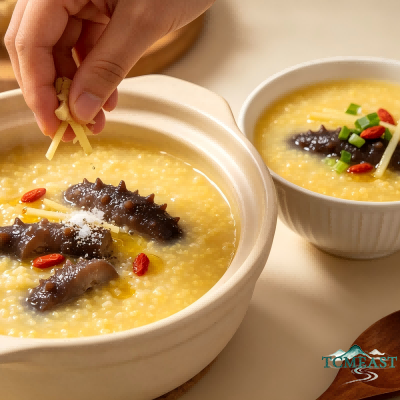
Once the millet porridge is thick and the grains have bloomed, add the ginger strips and sea cucumber pieces. Continue to simmer for 3-5 minutes until the sea cucumber is fully cooked. Add salt to taste, sprinkle in goji berries, and drizzle with a few drops of sesame oil and a pinch of white pepper before turning off the heat. Garnish with chopped spring onion and serve.
TCM Notes
Sea cucumber: Sweet in taste, warm in nature, acts on the Heart and Kidney meridians. Per 100g of finished product contains approximately 12.6g of high-quality protein and less than 1.2g of total fat – a typical high-protein, low-fat, nearly cholesterol-free food. Rich in 18 amino acids, collagen, sea cucumber polysaccharides, saponins, and minerals including calcium, iron, phosphorus, zinc, and selenium. In TCM, it is known to tonify the kidneys, enrich essence, nourish blood, and moisten dryness – effective for essence-blood deficiency, weakness, and constipation due to dryness. Modern research shows that sea cucumber boosts immunity, promotes wound healing, improves memory, and delays aging. Millet: Rich in protein, B vitamins (B₁, B₂), and trace elements including calcium, phosphorus, iron, manganese, and zinc. Its dietary fiber content is higher than most grains, helping to promote intestinal motility. In TCM, millet is known to tonify the spleen and stomach, soothe the stomach and calm the mind – especially suitable for those with weak spleen and stomach or poor digestion. Together, they achieve the synergistic effects of tonifying the kidneys, enriching essence, strengthening the spleen and stomach, nourishing blood, moistening dryness, and enhancing overall vitality. Best consumed on an empty stomach for optimal nutrient absorption.
Suitable for:Those with weak constitution, qi and blood deficiency, or malnutrition Those recovering from illness, post-surgery, or postpartum Middle-aged and elderly individuals for daily nourishment (especially suitable for winter warming) Those with hypertension, hyperlipidemia, arteriosclerosis, or diabetes Those with dry skin or needing to nourish blood and moisten dryness Mental workers and those prone to fatigue General population – can be consumed in moderation
Not suitable for:Those with greasy tongue coating or dampness in the spleen and stomach: Sea cucumber is slippery in nature and should be avoided by those with internal dampness Those with cough and copious thin phlegm: Should avoid tonics during excessive phlegm-dampness conditions Those with poor liver or kidney function: Excessive consumption may increase the burden on the liver and kidneys Those with acute enteritis, bacillary dysentery, colds with fever, or asthma: Should avoid during acute illnesses Those with loose stools or diarrhea: Not suitable Infants and children under 5 years old: Digestive systems are not fully developed – not recommended Those allergic to seafood: Strictly avoid Those with bleeding with stasis or dampness obstruction: Use with caution Should not be consumed with persimmon or hawthorn: Tannins in persimmon and hawthorn may react with sea cucumber protein, potentially causing abdominal pain and nausea