
Soups
Lamb Bone Soup (Yanggu Tang)
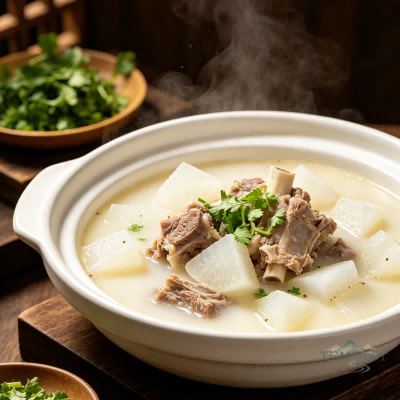
Lamb Bone Soup is a classic medicinal soup originating from the Yuan Dynasty classic Yinshan Zhengyao (Principles of Correct Diet), which records its use for "treating consumptive fatigue and lumbar weakness". Lamb bones are sweet and warm in nature, entering the Spleen and Kidney meridians, with the effects of tonifying the kidneys, strengthening bones, and warming the middle to stop diarrhea. Paired with white radish to promote qi circulation and aid digestion, tsaoko to warm the middle and dispel cold, and tangerine peel to regulate qi and strengthen the spleen, the soup is fragrant, rich, and not gamey. After long, slow simmering, the marrow essence fully dissolves into the broth, creating a milky-white, nutrient-rich soup. Most suitable for winter nourishment, it warms the entire body for those with deficiency-cold constitution.
Main Ingredients
- Lamb bones 500g
- White radish 1 piece
- Fresh ginger 3-5 slices
- Spring onion 1 stalk
- Tsaoko (cardamom) 2 pieces
- Dried tangerine peel 1 strip
- Peppercorns to taste
- Cooking wine 1 tbsp
- Salt to taste
- Cilantro some
Steps
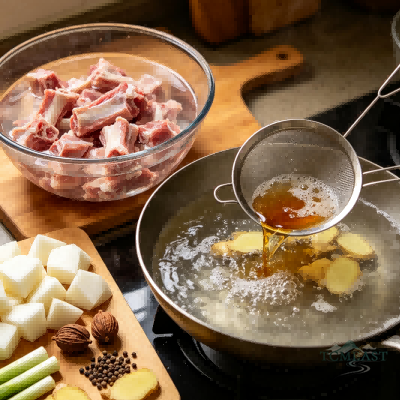
Cut 500g of lamb bones into small sections. Soak in water for 30-40 minutes to remove blood. Place in cold water with ginger slices and cooking wine, bring to a boil, skim off foam, boil for 3-5 minutes, rinse with warm water, and drain. Peel and cut white radish into chunks; crush 2 tsaoko pieces with the back of a knife; lightly crush peppercorns; slice ginger and section spring onion.
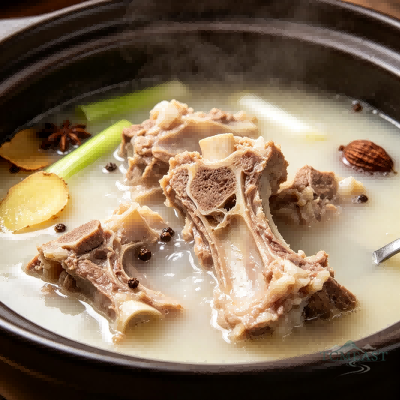
Place blanched lamb bones in a clay pot or soup pot, add enough water (approx. 2000-2500ml), then add ginger slices, spring onion sections, tsaoko, tangerine peel, and peppercorns. Bring to a boil over high heat, skimming off any foam that rises. Cover, reduce to low heat, and simmer for 1.5 hours until the meat on the bones is tender, the marrow is fully dissolved, and the soup turns milky white. If liquid reduces too much, add hot water (never cold).
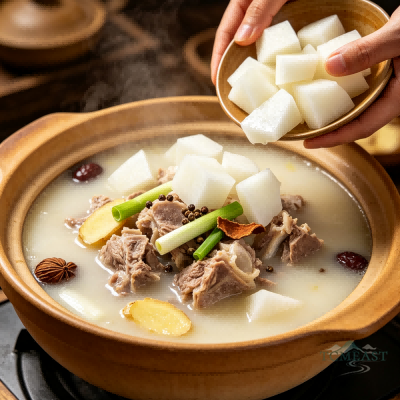
Add white radish chunks and continue simmering for 20-30 minutes until the radish is translucent and tender.
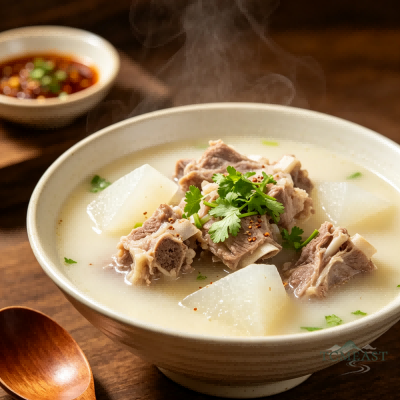
Add salt to taste (add salt only at the end – adding it too early toughens the meat). Transfer to bowls, garnish with chopped cilantro, and serve hot.
TCM Notes
Lamb Bones: Rich in calcium phosphate, calcium carbonate, bone collagen, and other essential nutrients for bone health. Minerals such as calcium, phosphorus, and magnesium are fundamental for normal metabolism. The small-molecule amino acids in lamb bone soup are easily absorbed. In TCM, lamb bones tonify the kidneys and strengthen sinews and bones, used for consumptive fatigue, lumbar weakness, and joint pain. White Radish: Rich in vitamin C and dietary fiber, helps promote qi circulation, aid digestion, and moisten dryness. Tsaoko & Peppercorns: Warm the middle, dispel cold, and dry dampness to strengthen the spleen. Tangerine Peel: Regulates qi circulation and resolves dampness-phlegm. Overall: Rich in high-quality protein, collagen, and various minerals. Total approx. 200-300 kcal (lower after skimming fat), 15-20g protein – a warming nourishing soup.
Suitable for:Those with consumptive fatigue, lumbar weakness, and joint pain Those with spleen-stomach cold, poor digestion, and loss of appetite Those with cold-induced joint discomfort and stiff neck/shoulders Those with deficiency-cold constitution, sensitivity to cold, and prone to colds Those with anemia or in need of nutritional supplementation Middle-aged and elderly for osteoporosis prevention General population for wellness maintenance
Not suitable for:Those with yin deficiency with internal heat – symptoms include hot palms/soles, dry mouth, and night sweats Those with stomach fire excess – symptoms include bitter dry mouth, dry stools, and thick yellow tongue coating Those with fever Gout / Hyperuricemia patients – lamb bone soup has high purine content (approx. 150mg/100g); absolutely avoid during acute flare-ups; strictly control during remission Hypertension patients – control intake and avoid high-salt cooking; avoid entirely if complicated with hyperuricemia Those with hyperlipidemia – strictly control consumption frequency Those with chronic kidney disease – protein intake must be limited Those on anticoagulant medication – avoid large amounts
