
Herbal Teas
Rose Tea (Meiguihua Cha)
Rose Tea is a classic qi-regulating medicinal tea originating from the Qing Dynasty classic Bencao Gangmu Shiyi (Supplement to the Compendium of Materia Medica). Rose buds, the dried flower buds of Rosa rugosa, were first recorded in the Ming Dynasty Shiwu Bencao (Food Materia Medica), which states they "primarily benefit the lungs and spleen, and nourish the liver and gallbladder; they are aromatic, sweet, and delicious, and refresh the mind". The Bencao Gangmu Shiyi describes them as "fragrant and warm in nature, sweet and slightly bitter in taste, entering the spleen and liver meridians, harmonizing and activating blood, and regulating qi to treat wind-dampness". The Bencao Zhengyi praises them as "the most fragrant, clear yet not turbid, mild yet not fierce, softening the liver and awakening the stomach, benefiting qi and activating blood". Rose buds are warm in nature, sweet and slightly bitter in taste, and enter the Liver and Spleen meridians. They have the effects of regulating qi to relieve depression, harmonizing blood, and relieving pain. Brewed as a tea, they can be used as adjunctive therapy for liver-stomach qi pain, poor appetite with nausea, irregular menstruation, distension in the flanks, and traumatic injuries. Modern research shows that rose buds are rich in vitamin C, amino acids, soluble sugars, alkaloids, and minerals such as calcium and iron, with antioxidant, anti-inflammatory, antibacterial, and sedative effects. This tea is especially suitable for women's daily wellness and for those with liver qi stagnation, making it an ideal tea for soothing the liver, relieving depression, and beautifying the skin.
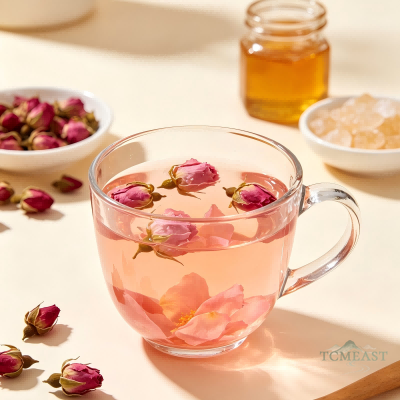
Main Ingredients
- Dried rose buds 6g
- Warm water 300ml
- Rock sugar or honey to taste
Steps
Take rose buds, rinse quickly.
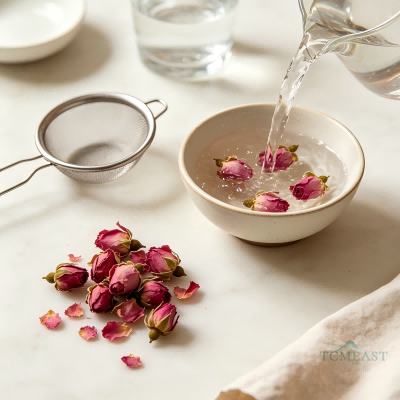
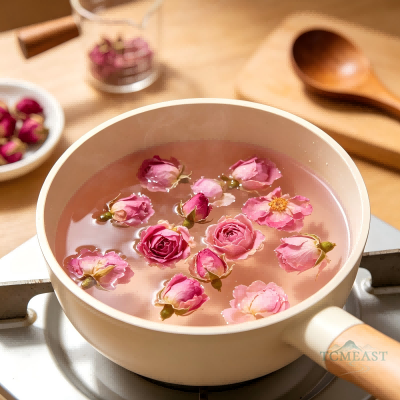
Place rose buds in a pot with about 400-500ml of water. Bring to a boil over high heat, then reduce to low heat and simmer for 3-5 minutes. Note: Prolonged boiling may dissipate the aroma and reduce blood-activating effects.
Strain to remove the rose solids and reserve the liquid.
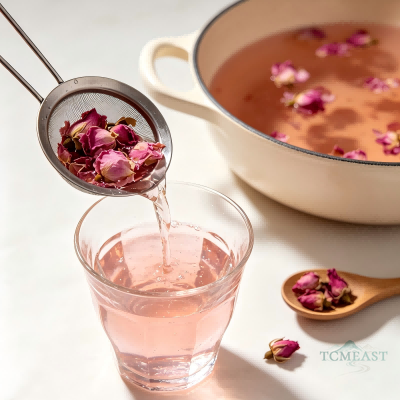
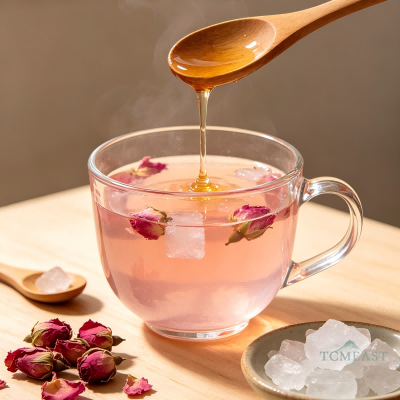
Add rock sugar or honey to taste and consume warm.
TCM Notes
Rose Buds: Sweet and slightly bitter in taste, warm in nature; enter the Liver and Spleen meridians. Known for regulating qi to relieve depression, harmonizing blood, and relieving pain. Used for liver-stomach qi pain, poor appetite with nausea, irregular menstruation, and traumatic injuries. Modern pharmacology shows rose buds contain volatile oils (citronellol, geraniol, phenylethyl alcohol, etc.), flavonoids, polyphenols, and polysaccharides. Citronellol content can reach up to 60%. Rose buds have antioxidant, anti-inflammatory, anti-tumor, anti-diabetic, liver-protective, lipid-regulating, anti-thrombotic, antibacterial, and moisturizing effects. Their vitamin C content is extremely high, up to 700 times that of apples. Rose buds are also rich in vitamin A, B vitamins, amino acids, soluble sugars, alkaloids, and minerals including calcium and iron. Characteristics: The tea contains virtually no calories and is rich in volatile oils, flavonoids, polyphenols, and various vitamins and minerals – a qi-regulating medicinal tea.
Suitable for:Those with liver-stomach qi pain, flank distension, and chest tightness Those with irregular menstruation, dysmenorrhea, and premenstrual breast tenderness Those with depression, irritability, and high stress Those with dull complexion, dry skin, and in need of beauty and skin nourishment Those with poor appetite, nausea, and indigestion General population for daily wellness and mood regulation
Not suitable for:Those with heavy menstrual bleeding – rose tea has strong blood-activating effects; consuming during menstruation may increase menstrual flow Those with constipation – rose tea contains tannins that may cause or worsen constipation Those with yin deficiency with internal heat or excess heat – rose tea is warm in nature; excessive consumption may worsen symptoms Pregnant women – rose tea has blood-activating effects; consult a doctor before consuming Those allergic to roses General population – not suitable for long-term excessive consumption; qi-regulating herbs may deplete qi if overused
