
Herbal Teas
Lotus Leaf Tea (He Ye Cha / He Qian Cha)
Lotus Leaf Tea is a classic heat-clearing medicinal tea originating from the Dictionary of Traditional Chinese Medicine. Lotus leaves were first recorded in the Han Dynasty Shennong Bencao Jing as the dried leaves of the sacred lotus (Nelumbo nucifera). The Ming Dynasty Compendium of Materia Medica records: "Taking lotus leaves makes one lean" – China has long regarded lotus leaves as a remedy for weight loss. Lotus leaves are bitter in taste and neutral in nature, entering the Liver, Spleen, and Stomach meridians, with the effects of clearing summer heat, transforming dampness, raising clear yang, and cooling blood to stop bleeding. Brewed as a tea, they can be used as adjunctive therapy for summer heat with thirst, summer-dampness diarrhea, and edema. Modern research shows that lotus leaves also have lipid-lowering, blood pressure-lowering, and antioxidant effects. This tea is especially suitable for summer heat or for those with phlegm-dampness constitution, making it an ideal daily wellness tea for clearing heat, relieving summer heat, reducing swelling, and lowering lipids.
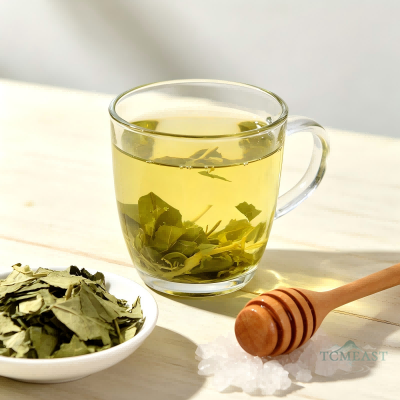
Main Ingredients
- Dried lotus leaves 15g
- Boiling water as needed
- Rock sugar or honey to taste
Steps
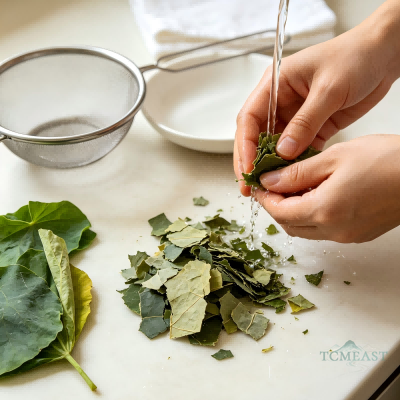
ake 5-10g of dried lotus leaves (fresh leaves can be used up to 30g). Tear into pieces or crumble larger leaves. Rinse quickly with clean water to remove surface dust.
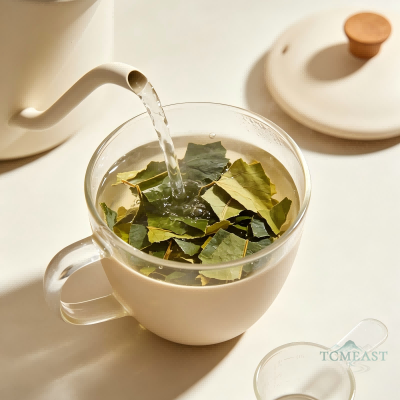
Put the prepared lotus leaves into a teacup or teapot. Pour about 200-300ml of freshly boiled water over the leaves. Cover and steep for 5-10 minutes. Can be re-brewed 3-4 times.
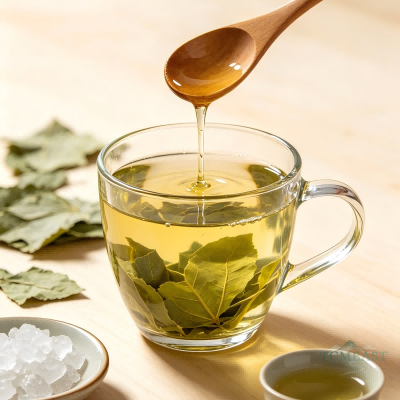
Add a small amount of rock sugar or honey to taste if desired. Consume 1-2 times daily, drinking frequently as tea. Note: The first infusion is the most potent; subsequent infusions have weaker effects.
TCM Notes
Lotus Leaves: Bitter and astringent in taste, neutral in nature; enter the Liver, Spleen, and Stomach meridians. Known for clearing summer heat, transforming dampness, raising clear yang, and cooling blood to stop bleeding. Used for summer heat with thirst, summer-dampness diarrhea, spleen deficiency diarrhea, blood-heat vomiting/nosebleeds, and abnormal uterine bleeding. Modern pharmacology shows lotus leaves contain nuciferine, pronuciferine, and other alkaloids, as well as flavonoids (quercetin, isoquercitrin), organic acids (citric acid, malic acid), and vitamin C. Nuciferine is considered a key active compound for regulating lipid metabolism, with effects including inhibiting lipase activity, regulating lipid metabolism-related gene expression, and promoting energy expenditure. Modern research suggests lotus leaves have lipid-lowering and blood pressure-lowering effects. The Compendium of Materia Medica records that they "generate vitality, support the spleen and stomach, astringe seminal discharge, disperse blood stasis, and reduce edema and swelling". Characteristics: The tea contains virtually no calories and is rich in alkaloids, flavonoids, and various trace elements – a heat-clearing medicinal tea.
Suitable for:Those with obesity and simple obesity Those with hyperlipidemia and high cholesterol Those with summer heat with thirst and summer-dampness diarrhea Those with edema and difficult urination Those with phlegm-dampness or qi-stagnation constitution Those with internal damp-heat, thick greasy tongue coating, and body heaviness Those with hypertension (adjunctive therapy) General population for summer heat relief and wellness
Not suitable for:Those with Spleen-Stomach Cold Deficiency – lotus leaves are cool in nature; long-term or excessive use may worsen abdominal pain, diarrhea, and cold intolerance Pregnant women – absolutely contraindicated; lotus leaves have blood-dispersing effects that may affect pregnancy Those with qi and blood deficiency – lotus leaves have mild blood-dispersing effects; those with severe deficiency should avoid Women during menstruation – lotus leaves are cool in nature and may cause discomfort, worsen menstrual pain, or impede menstrual flow Those with gastric ulcers or hyperacidity – avoid Those with hypotension – lotus leaves may have blood pressure-lowering effects Those with severe yang deficiency – not suitable Breastfeeding women – avoid Children – not recommended Those allergic to lotus leaves – avoid
