
Herbal Teas
Mulberry Leaf Tea (Sangye Cha)
Mulberry Leaf Tea is a classic medicinal tea with a long history in Traditional Chinese Medicine. Mulberry leaves were first recorded in the Han Dynasty Shennong Bencao Jing and listed as a middle-grade herb. They are best harvested after the first frost, and the Compendium of Materia Medica records that they "treat consumptive fever and cough, improve vision, and stop thirst". Known as the "Immortal Leaf" by ancient scholars, they are praised with the saying: "Ginseng tonifies with heat, mulberry leaf tonifies with coolness" . Mulberry leaves are cold in nature, sweet and bitter in taste, and enter the Lung and Liver meridians. They have the effects of dispersing wind-heat, clearing the Lung and moistening dryness, clearing the Liver and improving vision, and calming Liver yang. Brewed as a tea, they can be used as adjunctive therapy for wind-heat colds, lung-heat dry coughs, headaches, dizziness, and red swollen eyes. Modern research shows that mulberry leaves also have blood sugar-lowering, blood pressure-lowering, and lipid-lowering effects. This tea is especially suitable for autumn dryness or spring when Liver fire tends to be excessive.
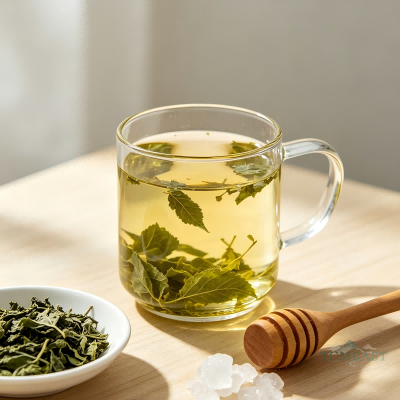
Main Ingredients
- Mulberry leaves (dried) 5-15g
- Boiling water as needed
- Rock sugar or honey to taste
Steps
Take 5-15g of dried mulberry leaves (frosted mulberry leaves are recommended for higher medicinal value). Rinse quickly with clean water to remove surface dust.
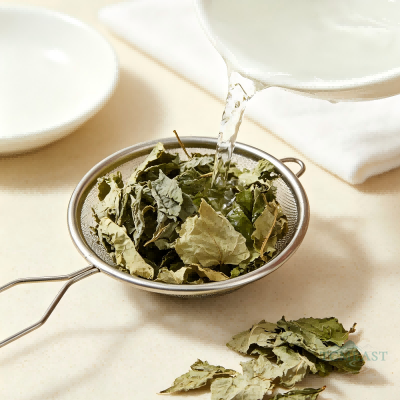
Put the rinsed mulberry leaves into a teacup or teapot. Pour about 200-300ml of freshly boiled water over the leaves. Cover and steep for 10-15 minutes.
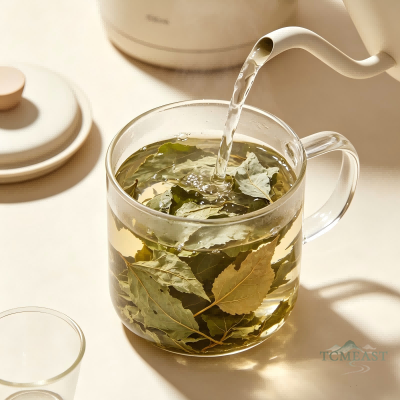
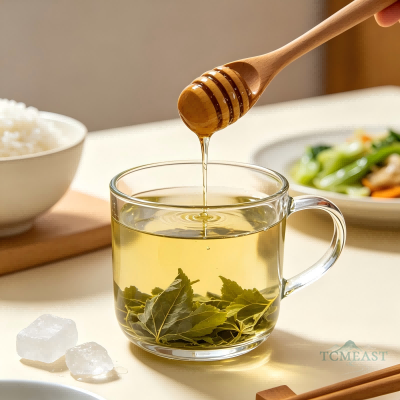
Add a small amount of rock sugar or honey to taste if desired. Consume 1 dose daily, drinking frequently as tea until the flavor fades. Best consumed after meals to reduce stomach irritation.
TCM Notes
Mulberry Leaves: Sweet and bitter in taste, cold in nature; enter the Lung and Liver meridians. Known for dispersing wind-heat, clearing the Lung and moistening dryness, clearing the Liver and improving vision, and calming Liver yang. Used for wind-heat colds or early-stage warm diseases, lung-heat or dry-heat coughs, Liver-yang dizziness, red swollen eyes, and blood-heat bleeding. Modern pharmacology shows they contain rutin, quercetin, isoquercitrin, ecdysterone, and other active compounds, with anti-infective, anti-inflammatory, blood sugar-lowering, lipid-lowering, and blood pressure-lowering effects. They also have cooling-blood and hemostatic properties. As they are caffeine-free, they are a healthy beverage suitable for all ages. Characteristics: The tea contains virtually no calories and is rich in flavonoids, alkaloids, and various trace elements – a purging-type medicinal tea. Mulberry leaf tea is beneficial for those with impaired glucose tolerance, mild diabetes, type 2 diabetes, and those at high risk for diabetes.
Suitable for:Those with wind-heat colds or early-stage warm diseases (fever, itchy throat, cough) Those with lung-heat or dry-heat coughs (scanty yellow phlegm or dry cough, itchy throat) Those with hypertension due to Liver-yang hyperactivity (headache, dizziness, irritability) Those with red, swollen, or painful eyes, excessive tearing, or blurred vision due to Liver fire or wind-heat Diabetes patients (for blood sugar support) Those with hyperlipidemia or obesity Those with eye strain from prolonged screen use General population for autumn wellness
Not suitable for:Those with Spleen-Stomach Cold Deficiency – mulberry leaves are cold in nature and may damage Spleen yang, causing abdominal pain and diarrhea Pregnant women – absolutely contraindicated Those with hypoglycemia – mulberry leaves have blood sugar-lowering effects Women during menstruation – use with caution (cooling nature) Those with wind-cold exterior syndrome – mulberry leaves are for wind-heat, not wind-cold Those with lung-cold cough Those allergic to mulberry leaves – avoid; those with allergies should use with caution Those with damp-cold constitution – avoid excessive consumption General population – not suitable for long-term excessive consumption; may damage yang qi
