
Herbal Teas
Yizhiren (Alpinia Oxyphylla Fruit) Tea
Yizhiren Tea is a classic warming tonic medicinal tea rooted in Traditional Chinese Medicine. Yizhiren is the dried ripe fruit of the ginger family plant Alpinia oxyphylla, first recorded in the Tang Dynasty Bencao Shiyi, also known as Yizhi Zi or “Scholar’s Fruit.” The Compendium of Materia Medica records that it “benefits essence and qi and strengthens the will.” It is pungent in taste, warm in nature, entering the Spleen and Kidney meridians, with the effects of warming the kidneys, astringing essence, reducing urination, warming the spleen, stopping diarrhea, and controlling salivation. Brewed as a tea, the liquid is pale yellow with a distinctive herbal pungency and a warm, slightly pungent taste. It is especially suitable for those with kidney yang deficiency manifesting as frequent urination, enuresis, spleen-cold diarrhea, and excessive salivation.
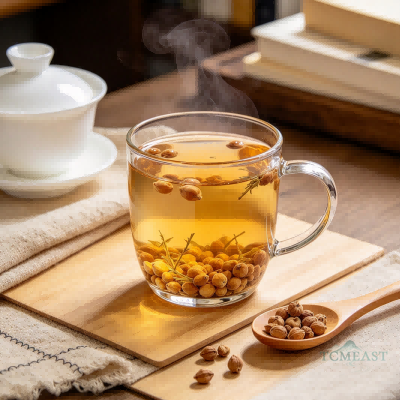
Main Ingredients
- Yizhiren (Alpinia oxyphylla fruit) 5-10g
- Hot water 300-500ml
- Honey or rock sugar to taste
- Goji berries 5-10g
- Red dates 2-3 pieces
Steps
Take 5-10g of salt-fried Yizhiren and rinse quickly to remove surface dust. Lightly crush or slice to release active compounds.
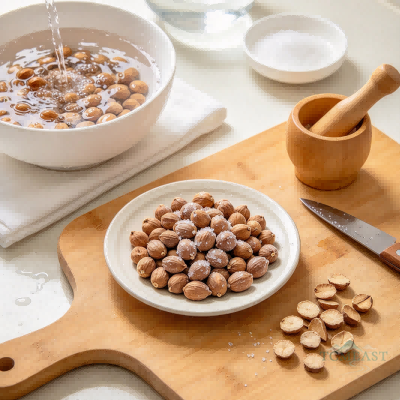
Put the crushed Yizhiren into a teacup or thermos. If using 5-10g goji berries or 2-3 red dates, add them together.
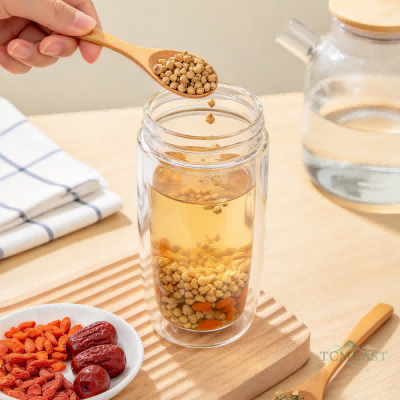
Pour 80-90°C hot water (about 300-500ml) over the ingredients. The active compounds in Yizhiren dissolve well at high temperatures; boiling water helps release its medicinal properties.

Cover and steep for 10-15 minutes until the liquid turns pale yellow and active compounds are fully released. Add honey or rock sugar to taste if desired. Consume 1 dose daily, drinking frequently as tea. Can be re-brewed 2-3 times until the flavor fades.

TCM Notes
Yizhiren (Alpinia Oxyphylla Fruit): Pungent in taste, warm in nature; enters the Spleen and Kidney meridians. Its main effects are warming the kidneys, astringing essence, reducing urination, warming the spleen, stopping diarrhea, and controlling salivation. Used for kidney deficiency enuresis, frequent urination, spermatorrhea, turbid urine, spleen-cold diarrhea, abdominal cold pain, and excessive salivation. Modern research shows it contains volatile oils (cymene, myrtenol, nootkatone, etc.), diphenylheptanoids, and flavonoids. Its volatile oils have neuroprotective, memory-enhancing, and cognitive-improving effects, showing promise in treating neurodegenerative diseases. Modern pharmacology suggests antibacterial, urinary-regulating, kidney-protective, anti-tumor, analgesic, and sedative effects. Its water and alcohol extracts inhibit ileal contraction, regulating gastrointestinal function. Characteristics: The tea contains virtually no calories and is rich in volatile oils and various active compounds—a warming, astringent medicinal tea.
Suitable for:Those with kidney yang deficiency manifesting as enuresis, frequent urination, and nocturia Those with spermatorrhea, turbid urine, or seminal emission Those with spleen-stomach cold deficiency manifesting as diarrhea and abdominal cold pain Those with excessive salivation or drooling Those with memory decline or mild cognitive impairment (adjunctive support) Those with menopausal syndrome due to kidney yang deficiency Those with chronic gastroenteritis or gastroduodenal ulcers due to spleen-stomach cold deficiency General population with kidney yang deficiency constitution for daily warming tonic support
Not suitable for:Those with yin deficiency with internal heat – absolutely avoid. Yizhiren is warm and drying; it will worsen internal heat (hot palms/soles, dry mouth, night sweats, insomnia) Those with constipation – avoid. Yizhiren is warm and drying and may worsen constipation Those with damp-heat accumulation – avoid. Symptoms include yellow greasy tongue coating, bitter mouth, and sticky stools Those with phlegm-fluid qi stagnation or food stagnation – not suitable. Yizhiren is warm and astringent and may worsen stagnation Those with heat-induced seminal emission, abnormal uterine bleeding, or leukorrhea – avoid Those with colds or fever – avoid. Warming tonic foods may affect the expulsion of external pathogens Those allergic to Yizhiren Pregnant women – use with caution. Yizhiren is warm in nature; consult a doctor before consuming Avoid scallion, ginger, garlic, and other pungent foods during consumption Do not take in excessive amounts long-term – may promote internal heat and damage yin