
Pericardium Meridian of Hand-Jueyin (PC)
The Pericardium Meridian of Hand-Jueyin is the protective guardian of the heart. It can take on pathogenic invasions on behalf of the heart and shield the heart from harm. It originates from the thoracic cavity, emerges superficially and pertains to the pericardium, passes through the diaphragm, travels through the chest, upper abdomen and lower abdomen, and spreads to connect with the upper, middle and lower triple energizers. The Lingshu (Spiritual Pivot), in the chapter "Meridians" (Jing Mai), records the disorders of this meridian: "Heat in the palms, spasms and contractures of the arm and elbow, swelling of the armpit; in severe cases, distension and fullness in the chest and hypochondrium, violent throbbing and palpitations in the heart, flushed face, yellow eyes, and incessant laughter."
Active Hours
Xu hour, Pericardium Meridian
Related Conditions
Visceral patterns (Zang-fu symptoms): vexation, palpitations, oppression in the chest, heart pain, and mental disturbances, etc. Meridian patterns (Jing-luo symptoms): When the Pericardium Meridian of Hand-Jueyin is affected by pathological changes, symptoms such as heat in the palms, vexation, flushed face, swelling of the armpit, distension and oppression in the chest and hypochondrium, heart pain, yellow eyes, difficulty in flexing and extending the elbow and arm, and incessant (or inappropriate) laughter may manifest.
Daily Care
The main functions of the Pericardium Meridian are to protect the heart and preserve vital energy (essence). During the Xu hour (7:00–9:00 p.m.), the flourishing of the pericardium can clear away external pathogenic factors surrounding the heart, keeping the heart in a sound state. For those with heart conditions, it is best to tap the Pericardium Meridian at this time, as this yields the best results. It also helps create the conditions for peaceful sleep. It must be remembered that strenuous exercise should be avoided, otherwise it may lead to insomnia. The pericardium is the protective tissue of the heart. After dinner, take a walk, and while walking, gently pat the Pericardium Meridian with your hands until the skin becomes slightly flushed. Use appropriate force, and each session should last about 5 minutes. This can relieve stress and promote sleep.
Acupoints
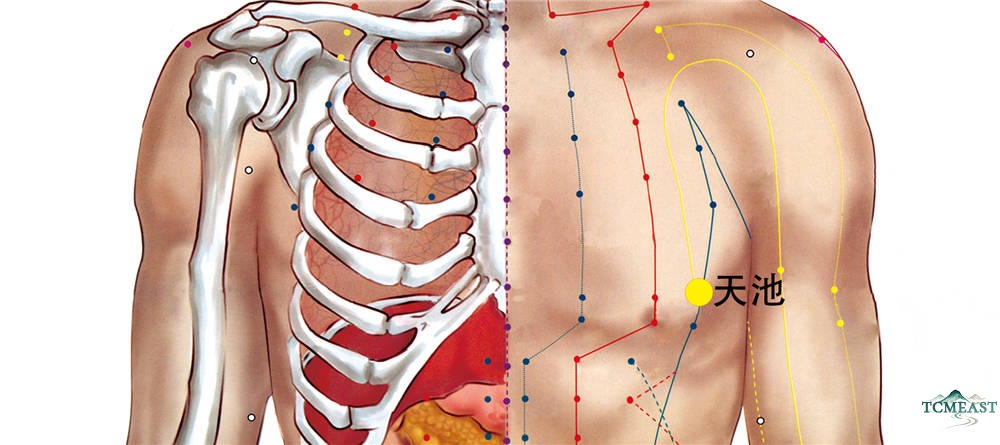
Tianchi Point (PC-1 / Heavenly Pool, also known as Tianhui)
Discover the exact location and acupressure method for Tianchi (PC-1 / Heavenly Pool). Learn its benefits for chest fullness, headache, cough, asthma, and axillary swelling – the meeting point of Pericardium and Gallbladder – plus classic combinations for comprehensive treatment.
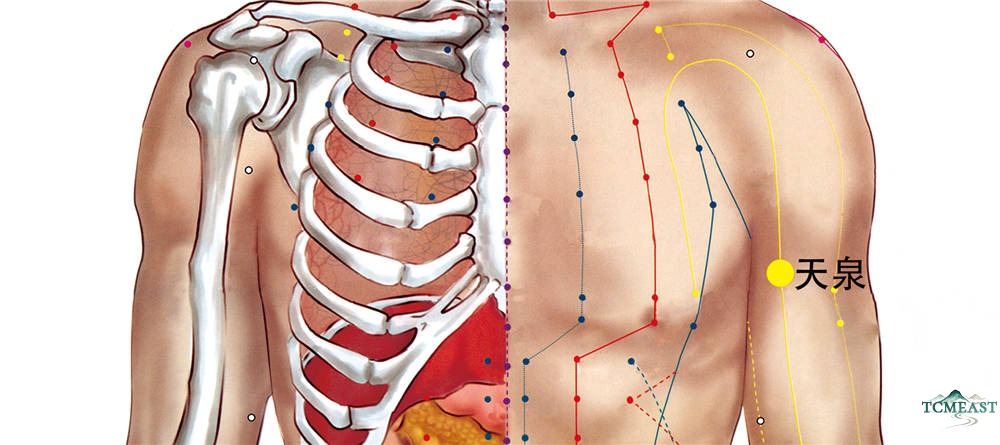
Tianquan Point (PC-2 / Heavenly Spring, also known as Tianwen)
Discover the exact location and acupressure method for Tianquan (PC-2 / Heavenly Spring). Learn its benefits for upper arm pain, chest fullness, cough, and palpitations – the Pericardium meridian point – plus classic combinations for comprehensive treatment.
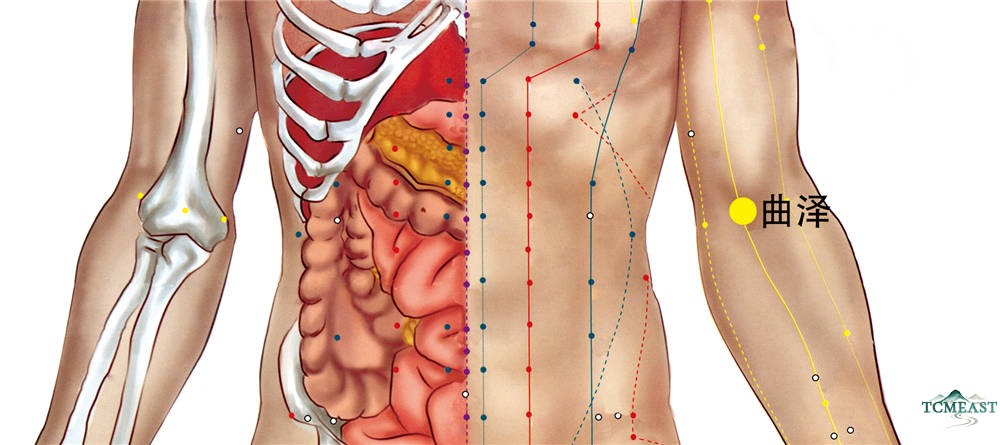
Quze Point (PC-3 / Curved Marsh)
Discover the exact location and acupressure method for Quze (PC-3 / Curved Marsh). Learn its benefits for heart pain, palpitations, vomiting, and upper limb pain – the Pericardium meridian He-Sea point – plus classic combinations for comprehensive treatment.
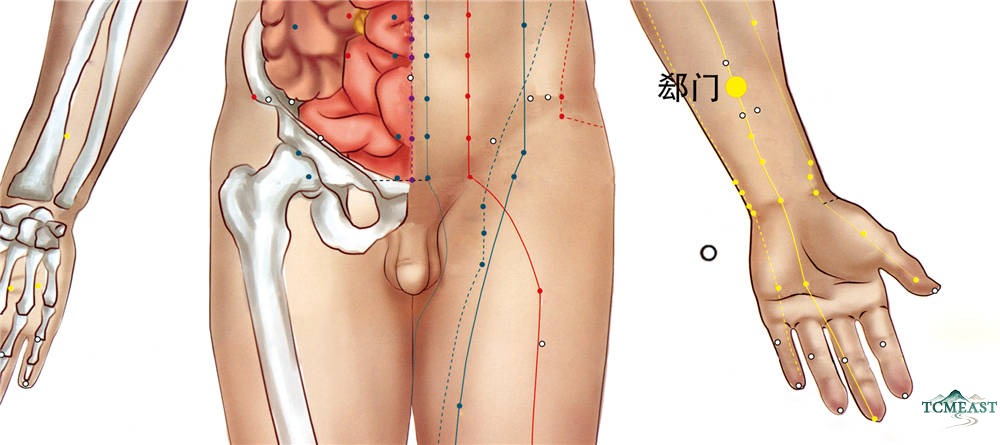
Ximen Point (PC-4 / Cleft Gate)
Discover the exact location and acupressure method for Ximen (PC-4 / Cleft Gate). Learn its benefits for acute heart pain, palpitations, hematemesis, and epilepsy – the Pericardium meridian Xi-Cleft point for emergency cardiac conditions – plus classic combinations for comprehensive treatment.
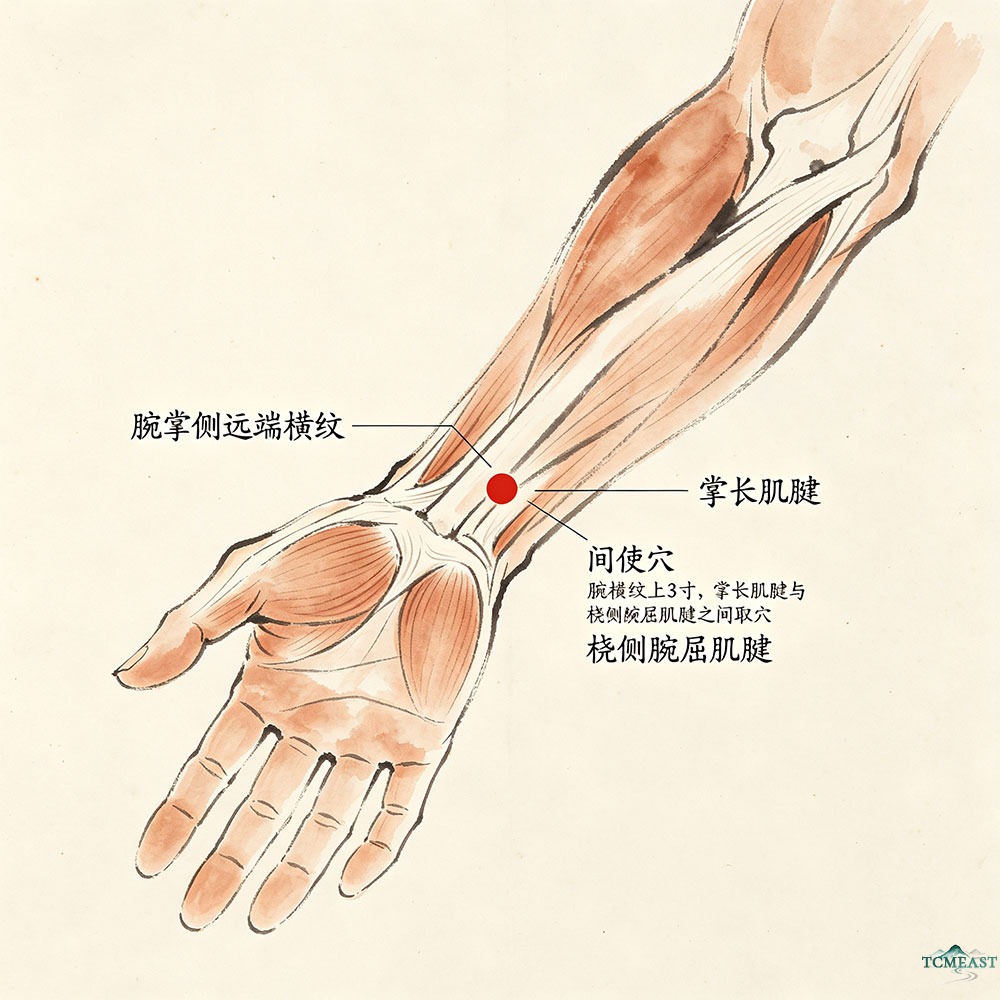
Jianshi Point (PC-5 / Interval Messenger)
Discover the exact location and acupressure method for Jianshi (PC-5 / Interval Messenger). Learn its benefits for malaria, heart pain, vomiting, and palpitations – the Pericardium meridian Jing-River point – plus classic combinations for comprehensive treatment.
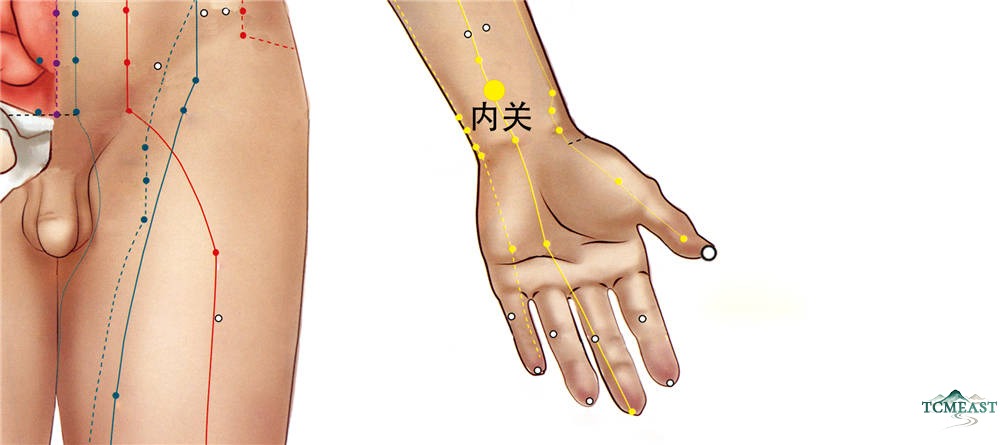
Neiguan Point (PC-6 / Inner Pass, also known as Yinwei)
Discover the exact location and acupressure method for Neiguan (PC-6 / Inner Pass). Learn its benefits for heart disease, stomach disorders, mental conditions, and emergency resuscitation – the Pericardium Luo-Connecting point and Eight Confluent point – plus classic combinations for comprehensive treatment.
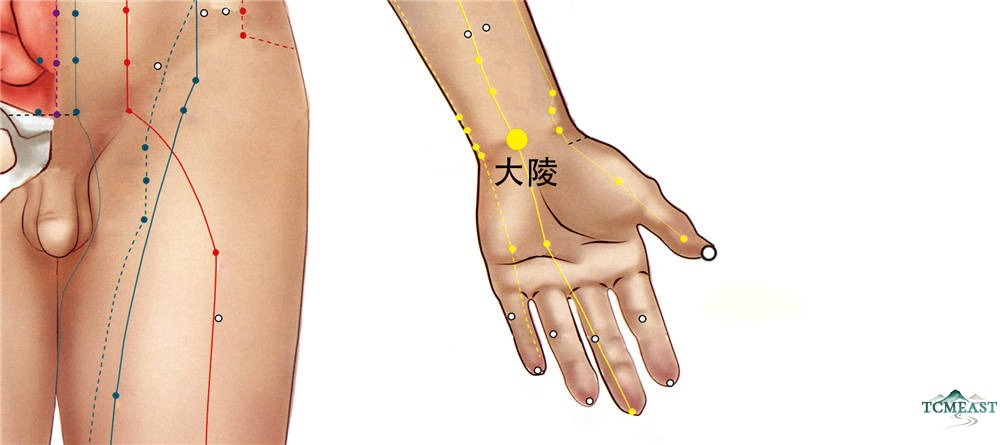
Daling Point (PC-7 / Great Mound, also known as Xinzhu, Guixin)
Discover the exact location and acupressure method for Daling (PC-7 / Great Mound). Learn its benefits for insomnia, heart pain, palpitations, halitosis, and heel pain – the Pericardium meridian Yuan-Source point and one of the Thirteen Ghost Points – plus classic combinations for comprehensive treatment.
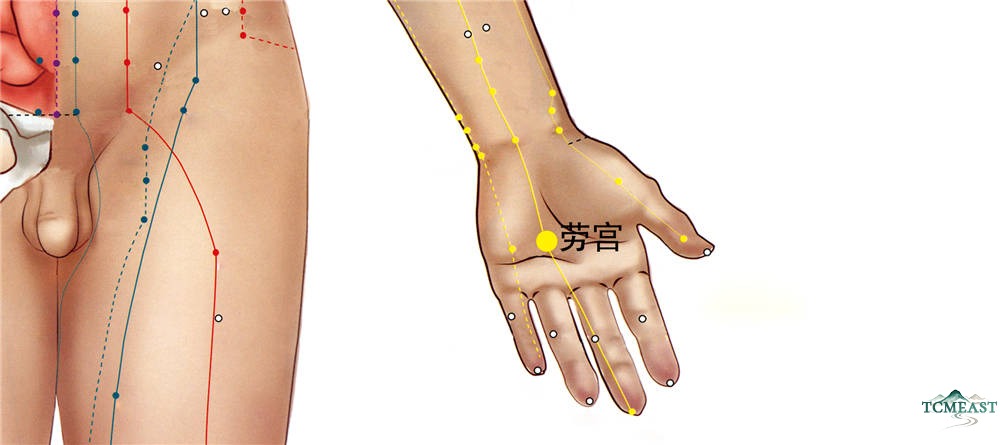
Laogong Point (PC-8 / Palace of Toil, also known as Wuli, Zhangzhong, Guiku, Guiluo)
Discover the exact location and acupressure method for Laogong (PC-8 / Palace of Toil). Learn its benefits for oral ulcers, halitosis, stroke, heatstroke, angina, and skin disorders – the Pericardium meridian Ying-Spring point – plus classic combinations for comprehensive treatment.
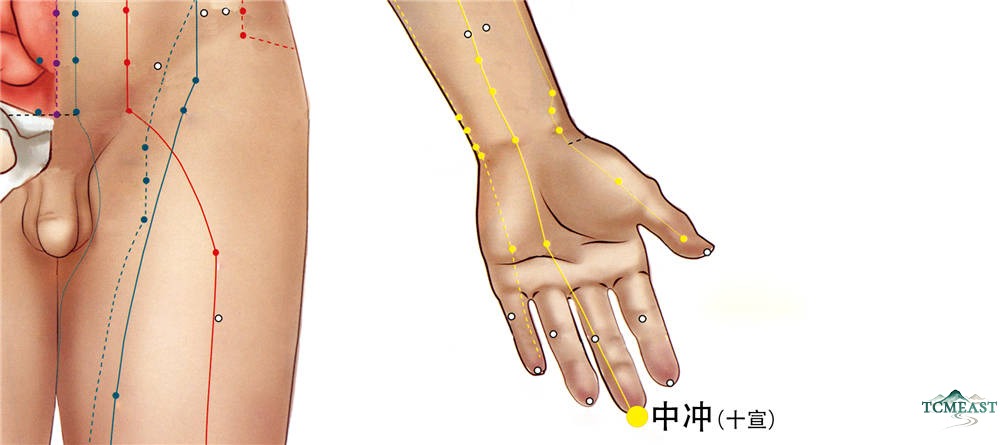
Zhongchong Point (PC-9 / Middle Thoroughfare)
Discover the exact location and acupressure method for Zhongchong (PC-9 / Middle Thoroughfare). Learn its benefits for stroke, heatstroke, angina, and infantile convulsions – the Pericardium meridian Jing-Well point for emergency – plus classic combinations for comprehensive treatment.
