
Body & Nature
TCM for Poor Circulation and Cold Extremities
Cold hands and feet are a common sign of yang deficiency or blood stagnation in TCM. Learn warming herbs that improve circulation, acupressure points that warm the extremities, and dietary changes that build internal warmth.
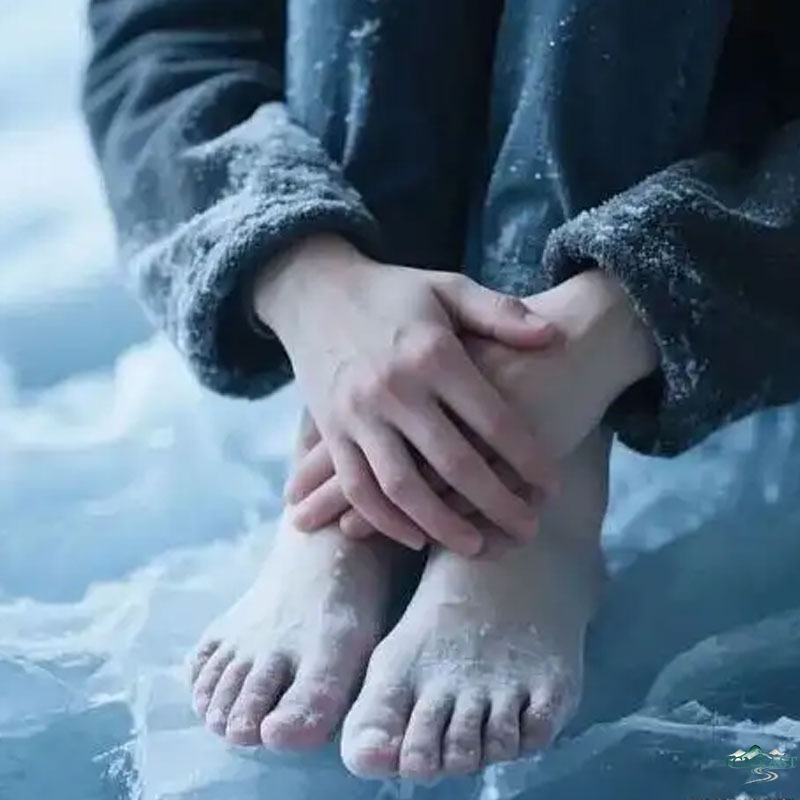
A Personal NoteI used to think cold hands and feet were simply a matter of having a "cold constitution" and there was nothing to be done about it. TCM taught me that cold extremities are a specific clinical sign — they indicate that the body's warming energy (yang qi) is not reaching the ends of the limbs. The solution is not to wear warmer socks but to strengthen the yang energy so it can circulate to the hands and feet naturally.
The TCM View: Yang Deficiency and Blood Stagnation
Cold hands and feet can arise from two main patterns, often combined:
Yang Deficiency (阳虚)
The body has insufficient warming energy. Kidney yang is the source of all warmth in the body. When Kidney yang is weak, the body cannot generate enough heat to warm the extremities. This is the most common cause of persistently cold hands and feet.
Other signs: Feeling cold overall, lower back soreness, frequent urination, low libido, fatigue, pale complexion.
Blood Stagnation (血瘀)
Even when yang is adequate, if the blood cannot circulate freely to the extremities, the hands and feet will feel cold. Blood stagnation patterns are common in those who sit for long hours or have high stress.
Other signs: Cold hands but warm body, achy joints, fixed pain, dark circles under eyes, purple-tinged tongue.
Key Herbs for Warming the Extremities
Gui Zhi (Cinnamon Twig, 桂枝)
Pungent and warm. Gui Zhi is the most important herb for warming the channels and promoting circulation to the extremities. It "reaches the four limbs" and is present in almost every formula for cold hands and feet.
Dose: 6-12g.
Fu Zi (Prepared Aconite, 附子)
Hot and toxic (must be prepared). Fu Zi is the strongest warming herb in Chinese medicine. It rescues collapsed yang and warms the entire body. For severely cold extremities with generalized coldness and weakness.
Dose: 3-15g (processed), decocted first for 30-60 minutes. Use only under professional supervision.
Gan Jiang (Dried Ginger, 干姜)
Hot and pungent. Dried Ginger warms the middle burner and the channels. It supports circulation to the extremities without the systemic intensity of Fu Zi.
Dose: 3-10g.
Dang Gui (Angelica sinensis, 当归)
Sweet, pungent, and warm. Dang Gui both nourishes blood and promotes circulation. When cold hands are due to blood deficiency combined with stagnation, Dang Gui addresses both.
Dose: 6-15g.
Chuan Xiong (Ligusticum, 川芎)
Pungent and warm. Moves blood in the upper body and extremities. Excellent for cold hands and fingers, especially when accompanied by tension or numbness.
Dose: 3-10g.
Acupressure to Warm the Extremities
Yong Quan (KI1, Gushing Spring, 涌泉)
Location: On the sole of the foot, in the depression that forms when the toes curl under.
Action: The most important point for warming the feet. Connects to the Kidney meridian and draws warmth downward.
Technique: Massage the sole of each foot with the thumb for 2-3 minutes daily. Best done before bed.
Lao Gong (PC8, Palace of Labor, 劳宫)
Location: In the center of the palm, where the middle finger meets the palm when making a fist.
Action: Warms the hands. The Pericardium meridian point that brings warmth to the palms.
Technique: Press the palm of one hand with the thumb of the other. Alternate hands.
Zu San Li (ST36, Leg Three Miles, 足三里)
Location: Four finger-widths below the kneecap, one finger-width outside the shinbone.
Action: Builds both qi and blood. Warming this point daily helps send warmth to the lower body.
Qi Hai (CV6, Sea of Qi, 气海)
Location: 1.5 finger-widths below the navel.
Action: Directly tonifies the body's qi reserves. A warm compress on this point is excellent for yang deficiency coldness.
Warming Teas for Cold Extremities
Gui Zhi & Ginger Warming Tea
Gui Zhi 6g, 3 slices fresh ginger, 2 red dates. Simmer in 400ml water for 12 minutes. Drink warm in the morning.
Dang Gui & Red Date Blood-Warming Tea
Dang Gui 6g, 5 red dates, a pinch of cinnamon powder. Simmer in 400ml water for 15 minutes. Drink warm daily.
Dietary Support
Warming Foods
- Lamb and beef (warming meats)
- Ginger, cinnamon, black pepper, garlic (warming spices)
- Leeks, scallions, chives
- Walnuts, chestnuts
- Black beans, black sesame seeds
Foods to Avoid
- Cold drinks and ice water
- Raw salads and cold fruits from the refrigerator
- Dairy products (especially cold milk and yogurt)
- Excessive raw vegetables
Moxibustion (Heat Therapy)
The simplest way to warm cold extremities at home: apply a warm compress or hot water bottle to:
In TCM clinical practice, moxibustion (moxa stick) over these areas is the most direct treatment for yang deficiency coldness.
