
Healing Library
Largehead Atractylodes (Bai Zhu) — The Spleen-Strengthening Workhorse
Bai Zhu (Atractylodes) is the core TCM herb for strengthening the spleen and resolving dampness, targeting digestive qi at its foundation. Explore its traditional uses, classical formulas like Si Jun Zi Tang, modern research, and dietary recipes for digestive wellness.
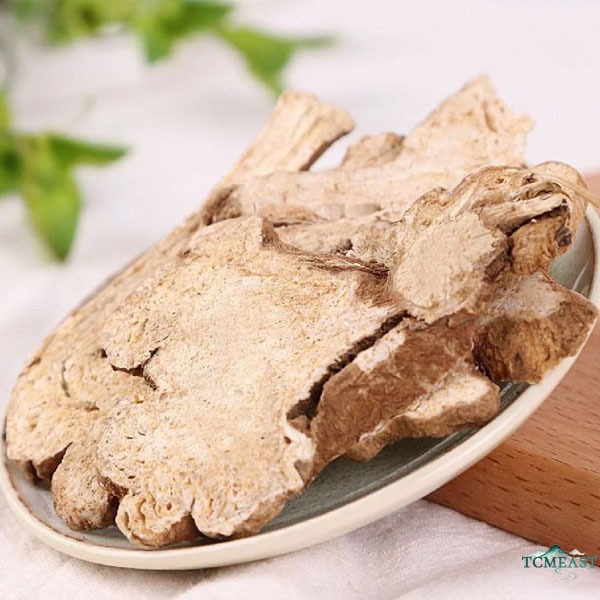
The First Herb for Digestive Qi
Bai Zhu Atractylodes macrocephala is considered the single most important herb for strengthening the Spleen and drying dampness in TCM. While ginseng and astragalus supplement qi at a deeper level Bai Zhu is the herb that specifically targets the Spleen's ability to transport and transform — the foundation of healthy digestion.
What Is Atractylodes macrocephala?
A perennial herb in the Asteraceae family. The rhizome rootstock is the medicinal part. It is cultivated primarily in Zhejiang Province where it is known as Yu Zhu.
- Nature: Warm 温
- Flavor: Bitter, sweet 苦甘
- Meridians: Spleen, Stomach
The bitter flavor dries dampness; the sweet flavor tonifies. The warm nature gently stimulates the Spleen function.
Actions and Indications
1. Strengthen Spleen and Augment Qi 健脾益气
The core indication for Bai Zhu: Spleen qi deficiency with poor appetite, fatigue, loose stools, and abdominal distension.
2. Dry Dampness and Promote Water Metabolism 燥湿利水
When Spleen qi is weak fluids accumulate as dampness. Bai Zhu dries this dampness and promotes urination. Used in edema formulas.
3. Stabilize the Exterior and Stop Sweating 固表止汗
Bai Zhu is combined with Huang Qi and Fang Feng in Yu Ping Feng San to prevent colds and spontaneous sweating.
4. Calm the Fetus 安胎
Used in pregnancy with Spleen deficiency presenting as edema or threatened miscarriage.
Classical Foundation
Shennong Bencao Jing: "Bai Zhu governs wind-cold-damp bi syndrome, dead muscle, and spasms. Long-term use lightens the body and prevents aging."
Modern Research
| Compound | Effects |
|---|---|
| Atractylenolide I/II/III 白术内酯 | Gastroprotective anti-inflammatory promotes GI motility |
| Polysaccharides | Immunomodulatory hepatoprotective |
| Volatile oils | Diuretic digestive stimulant |
Dosage
| Form | Dose | Notes |
|---|---|---|
| Raw 生白术 | 6-15g | Dries dampness promotes urination |
| Bran-fried 麸炒白术 | 6-15g | Strengthens Spleen stops diarrhea |
Key Combinations
| Pair | Formula | Effect |
|---|---|---|
| Bai Zhu + Ren Shen + Fu Ling + Gan Cao | Si Jun Zi Tang | Foundation of Spleen qi tonification |
| Bai Zhu + Gui Zhi | Ling Gui Zhu Gan Tang | Warms yang transforms phlegm |
| Bai Zhu + Fu Ling | — | Strengthens Spleen dries dampness |
| Bai Zhu + Zhi Shi | Zhi Zhu Wan | Strengthens Spleen reduces distension |
Precautions
- Yin deficiency with thirst: Warm drying nature may aggravate
- Qi stagnation with fullness: May worsen if pure excess pattern