
The Path of Qihuang
Legendary Physician of High Antiquity — Qibo
Qibo was the most prestigious medical sage of China's legendary era, honored as the teacher of the Yellow Emperor and titled “Celestial Master.” The Huangdi Neijing (Yellow Emperor's Inner Canon), written in the format of the Yellow Emperor posing questions and Qibo answering them, laid the theoretical foundation of Chinese medicine. From this, later generations coined the term “Qi Huang” (or “the Art of Qi Huang”) to refer to TCM itself. This article details his life, the scholarly debate over his native place, the works attributed to him, and the profound cultural significance of “Qi Huang,” illuminating his supreme status as the primary founding ancestor of Chinese medicine.
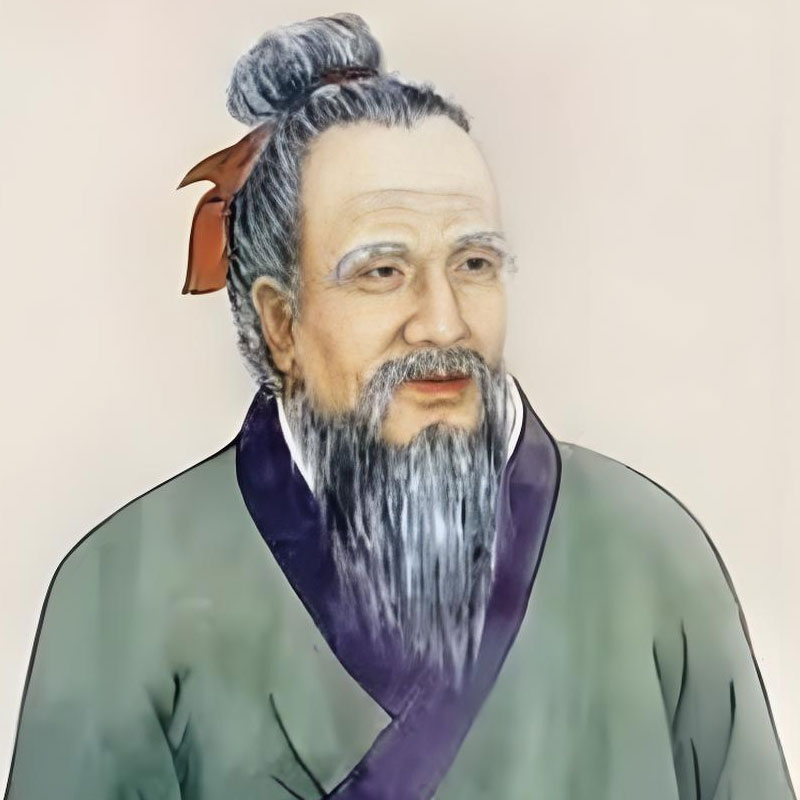
A Brief Introduction to Qibo
Qibo is the most prestigious medical master of China's legendary era. The Diwang Shiji (Annals of the Emperors and Kings) records: “The Yellow Emperor further dispatched Qibo to taste the flavors of the hundred herbs and to oversee medical treatment. The classical formulas and materia medica texts all emerged from this.” Lin Yi, a Song dynasty medical textual scholar, emphasized in the preface to the Chong Guang Bu Zhu Huangdi Neijing Suwen (Further Supplemented and Annotated Basic Questions of the Yellow Emperor's Inner Canon): “To seek out the sufferings of the people and to show compassion for the hidden afflictions of the people — this is the profound benevolence of a sovereign ruler. In antiquity, when the Yellow Emperor ascended the throne, … he joined with Qibo to exhaust the patterns of the heavens above, to plumb the principles of the earth below, to draw analogies from distant things, and to observe closely the body itself. They questioned and challenged one another, thereby bequeathing a standard to benefit ten thousand generations. Thereupon, Lei Gong and his peers received their instruction and transmitted it, and the Neijing (Inner Canon) was composed.” The received Suwen (Basic Questions) as we see it today is essentially structured as questions posed by the Yellow Emperor and answered by Qibo to expound medical theory, demonstrating Qibo's profound medical cultivation. Chinese medicine has long been called “Qi Huang” (Qibo and the Yellow Emperor), or “the Art of Qi Huang,” within which Qibo undoubtedly holds the primary position.
In the Huangdi Neijing, there is always one person who answers the questions posed by the Yellow Emperor — that person is Qibo. Qibo, according to tradition, was both a minister and the imperial physician to the Yellow Emperor. By the Emperor's command, he tasted the flavors of various herbs and presided over the treatment of disease. He also delved into the study of the meridians with Lei Gong. The Huangdi Neijing was composed through discussions on medical theory between the Yellow Emperor and Qibo.
The Native Place of Qibo
Qibo is the most celebrated physician of China's remote antiquity. As he is a legendary figure, differing accounts of his native place exist. It is generally held that Qibo lived in the region of Mount Qi (in present-day Qishan County, Shaanxi Province). However, recent research indicates that Qibo was a native of Qingyang County in Gansu Province. For instance, the Qingyang Xianzhi · Renwu (Annals of Qingyang County: Notable Figures), compiled during the Qianlong reign of the Qing dynasty, records: “Qibo, a man of Beidi, was brilliant from birth and excelled in medical arts and pulse theory. The Yellow Emperor regarded him as a teacher. He authored the Neijing, which has been transmitted through the ages and is the progenitor of all medical texts.” From a young age, Qibo was thoughtful and held high aspirations. He delighted in observing the sun, moon, and stars; the climate, soil, heat, and cold; and the mountains, rivers, plants, and other phenomena of the natural world. He also understood music, could craft musical instruments, and measured the shadows cast by the sun — a man of many talents and surpassing wisdom. Later, witnessing countless common people dying of disease, he resolved to study medicine. He traveled far and wide seeking worthy teachers and friends, became supremely skilled in the medical arts and pulse theory, and earned renown as a physician of his era. In order to relieve and heal the people's diseases, the Yellow Emperor honored him as his teacher, and together they investigated medical questions. The greater part of the content of the Huangdi Neijing is written in the format of dialogues between him and the Yellow Emperor. Therefore, the earliest text to record “Qibo” is the Huangdi Neijing itself. To commemorate their contributions, later generations constructed Qibo temples. As the Qingyang Xianzhi · Tan Miao (Annals of Qingyang County: Altars and Temples) records: “The Qibo Temple is located south of the county seat.” According to the Cihai encyclopedia: “Beidi — the name of a commandery established by the State of Qin during the Warring States period. Its seat was originally at Yiqu; during the Western Han it was relocated to Maling (northwest of present-day Qingyang, Gansu).”
The Works of Qibo
According to records in various historical and bibliographical catalogues, approximately eight works were attributed to Qibo:
- The Hanshu · Yiwen Zhi (Book of Han: Treatise on Literature) records the Huangdi Qibo Anmo (Yellow Emperor and Qibo on Massage) in ten fascicles.
- The Suishu · Jingji Zhi (Book of Sui: Treatise on Classics and Literature) records the Qibo Jing (Classic of Qibo) in ten fascicles.
- The Xin Tangshu · Yiwen Zhi (New Book of Tang: Treatise on Literature) records the Qibo Jiu Jing (Qibo's Classic of Moxibustion) in one fascicle (the Songshi · Yiwen Zhi records it as Huangdi Wen Qibo Jiu Jing, or The Yellow Emperor Questions Qibo on Moxibustion).
- The Songshi · Yiwen Zhi records the Qibo Zhen Jing (Qibo's Classic of Acupuncture) in one fascicle.
- The Tongzhi · Yiwen Lüe (Comprehensive Monographs: Summary of Literature) records the Huangdi Qibo Zhen Lun (Yellow Emperor and Qibo's Discourse on Acupuncture) in two fascicles.
- The Tongzhi · Yiwen Lüe records the Qibo Jing Zang Lun (Qibo's Discourse on the Essence of the Viscera) in one fascicle.
- The Chongwen Zongmu (General Catalogue of the Chongwen Library) records the Huangdi Qibo Lun Zhenjiu Yao Jue (Essential Secrets of Acupuncture and Moxibustion as Discussed by the Yellow Emperor and Qibo) in one fascicle (the Songshi · Yiwen Zhi records it as Qibo Lun Zhenjiu Yao Jue).
- The Zhutang Shumu (Catalogue of the Bamboo Hall) records the Qibo Wu Zang Lun (Qibo's Discourse on the Five Zang Organs).
All of the above texts have been lost, with only their titles preserved. Thus, we can only know from their titles that they are related to Qibo, and that their content primarily concerned acupuncture and moxibustion, along with massage and visceral manifestation theory. However, they cannot be definitively attributed to Qibo, for in antiquity, “the common people mostly revere the ancient and look down upon the contemporary; therefore, those who wished to propound a doctrine had first to attribute it to Shennong or the Yellow Emperor before it could enter into discourse” (Huainanzi · Xiuwu Xun). This phenomenon can be seen in texts such as the Huangdi Neijing and the Shennong Bencao Jing. Thus, medical texts attributed to Qibo were likely influenced by this same cultural convention.
The Synonym of Chinese Medicine — Qi Huang
“Qi Huang” is the combined appellation of Qibo and the Yellow Emperor, who are traditionally revered as the founding fathers of medicine. The main content of the Huangdi Neijing, the seminal work of Chinese medicine, is written in the form of dialogues between the Yellow Emperor and Qibo. Later generations thus used “Qi Huang” as a shorthand for the Neijing. By extension, it came to refer specifically to orthodox Chinese medicine and the field of TCM as a whole, ultimately becoming a widely used synonym for Chinese medicine. Various compound terms formed from “Qi Huang” also carry their own specific meanings: “the Art of Qi Huang” or “the Dao of Qi Huang” refers to TCM scholarship, medical skills, or TCM theory; “a Qi Huang practitioner” denotes a TCM physician or scholar; “a Qi Huang book” refers to a TCM text; “the Qi Huang profession” designates the field of Chinese medicine, and so forth. Research into Qibo and the concept of Qi Huang reveals an atmosphere richly imbued with traditional Chinese culture, thereby demonstrating the intimate connection between Chinese medicine and its parent culture.
