
The Path of Qihuang
Wu Fang: Ancient Physician & Founder of Infant Cranial Fontanel Diagnosis
Wu Fang, minister to Emperor Yao, was an ancient physician and shamanic healer who authored the Luxin Jing on infant fontanel diagnosis to predict child longevity and disease.
Tong Jun: Legendary Pharmacologist & Pioneer of Chinese Materia Medica
Tong Jun was a minister to the Yellow Emperor and an ancient pharmacologist famed for his expertise in herbal medicine. Tao Hongjing records his works on herb identification and formula pairing.
Legendary Physician of High Antiquity — Guiyuqu
Guiyuqu, also known as Guirongqu and styled Da Hong, was a legendary minister to the Yellow Emperor in high antiquity. He assisted the Yellow Emperor in developing the theory of the five elements and expounded in detail on the pulse and meridian theory, delving deeply into the principles of the Nanjing (Classic of Difficult Issues). The Tang dynasty scholar Wang Bing, in his annotations to the Suwen, quoted Guiyuqu's references to the Taishi Tianyuan Ce (Great Beginning Celestial Origin Register), noting that Guiyuqu's lineage had practiced medicine for ten generations since Shennong and had preserved these ancient divination texts. He stands as a pioneering figure in the integration of TCM theory with astronomical and calendrical studies.
Legendary Physician of High Antiquity — Shaoshi
Shaoshi was a legendary medical minister to the Yellow Emperor in high antiquity, renowned for his expertise in human constitutional theory. In answering the Yellow Emperor's questions about yin and yang in the human body, he stated: “Within heaven and earth, within the six directions, nothing departs from the five; humans likewise correspond to them.” He provided detailed descriptions of the constitutional types, personalities, and behavioral characteristics of five kinds of people. Shaoshi's constitutional theory was later developed by Korean medical scholars into “Sasang (Four-Image) Constitutional Medicine,” making him one of the early founders of constitutional classification in Chinese medicine.
Legendary Physician of High Antiquity — Lei Gong
Lei Gong was a legendary medical minister to the Yellow Emperor in high antiquity, particularly skilled in acupuncture, moxibustion, and complexion diagnosis. In the Huangdi Neijing (Yellow Emperor's Inner Canon), the Yellow Emperor and Lei Gong discuss medicine in a question-and-answer format, emphasizing the tradition of "reciting and understanding, understanding and distinguishing, distinguishing and clarifying." The Lei Gong Yao Dui (Lei Gong's Drug Pairings) is attributed to him. His discussions with the Yellow Emperor in the Suwen and Lingshu on meridians and needling laid an important theoretical foundation for Chinese medicine.
Legendary Physician of High Antiquity — Jiudaiji
Jiudaiji was a legendary medical master of high antiquity, revered by Qibo as the “Former Teacher” and regarded as Qibo's own instructor. The Suwen · Yi Jing Bian Qi Lun records that he “regulated the complexion and pulse to communicate with the divine intelligence,” integrating the inspection of complexion and pulse diagnosis with the five elements, the four seasons, the eight winds, and the six directions to perceive their subtleties and grasp their essentials. He is the founding figure of the “combined assessment of complexion and pulse” theory in TCM diagnostics, exerting a profound influence on the formation of the diagnostic system of the Neijing.
Legendary Physician of High Antiquity — Bogao
Bogao was a minister to the Yellow Emperor and a legendary physician renowned for his expertise in meridian theory and acupuncture. As recorded in Huangfu Mi's Huangdi Zhenjiu Jiayi Jing (The Yellow Emperor's Systematic Classic of Acupuncture and Moxibustion), the Yellow Emperor consulted disciples such as Qibo, Bogao, and Shaoyu, who examined the five zang and six fu organs internally and synthesized the study of meridians, qi, blood, and complexion externally, referencing the patterns of heaven and earth and verifying them through human experience — probing the subtlest mysteries to give birth to the way of acupuncture. Bogao was particularly skilled in acupuncture theory and external therapeutic methods such as ironing therapy, and also contributed significantly to pulse theory, making him one of the founding figures of Chinese acupuncture and moxibustion.
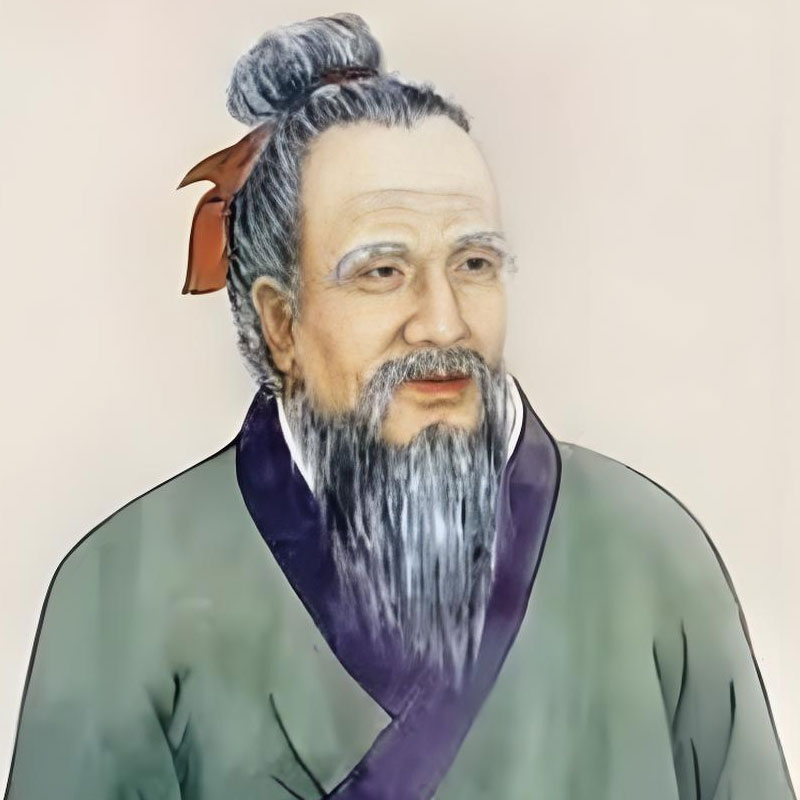
Legendary Physician of High Antiquity — Qibo
Qibo was the most prestigious medical sage of China's legendary era, honored as the teacher of the Yellow Emperor and titled “Celestial Master.” The Huangdi Neijing (Yellow Emperor's Inner Canon), written in the format of the Yellow Emperor posing questions and Qibo answering them, laid the theoretical foundation of Chinese medicine. From this, later generations coined the term “Qi Huang” (or “the Art of Qi Huang”) to refer to TCM itself. This article details his life, the scholarly debate over his native place, the works attributed to him, and the profound cultural significance of “Qi Huang,” illuminating his supreme status as the primary founding ancestor of Chinese medicine.
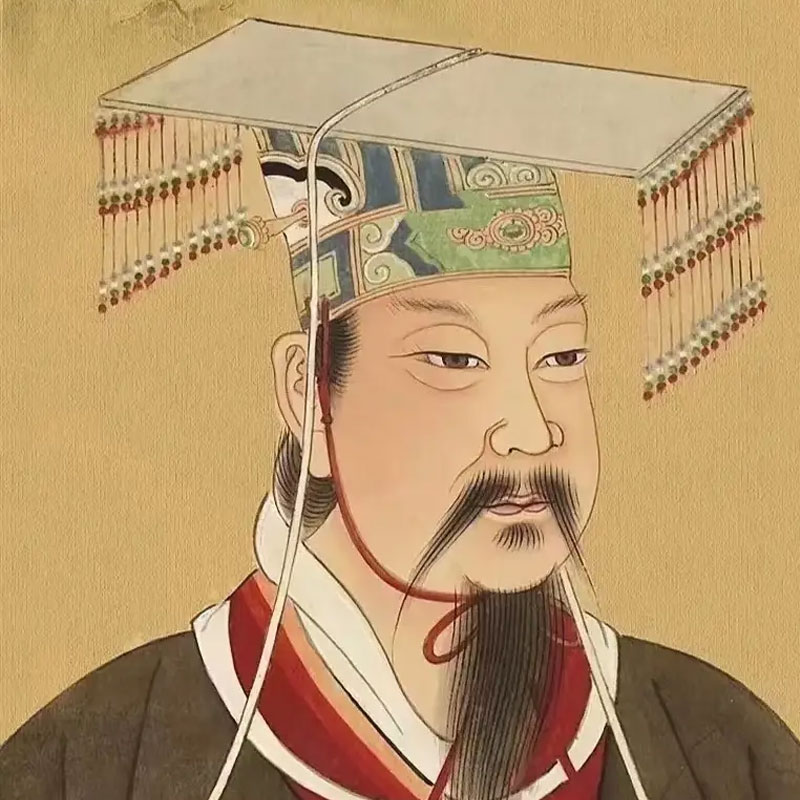
Legendary Physician of High Antiquity — The Yellow Emperor (Huangdi)
The Yellow Emperor (Huangdi), also known as Xuanyuan Shi and Youxiong Shi, was the legendary sovereign of the ancient Chinese nation and the first of the Five Emperors. Named for the yellow earth by whose virtue he ruled, he unified the Central Plains, invented writing, the sexagenary calendar, music, boats, and chariots, and is revered as the founding father of Chinese medicine. Together with Qibo, Lei Gong, and others, he discussed pathology and compiled the Huangdi Neijing (Yellow Emperor's Inner Canon), laying the theoretical foundation of TCM. This article details his political, technological, and medical achievements, illuminating the cultural roots of the “descendants of Yan and Huang” and the sacred origins of Chinese medicine.
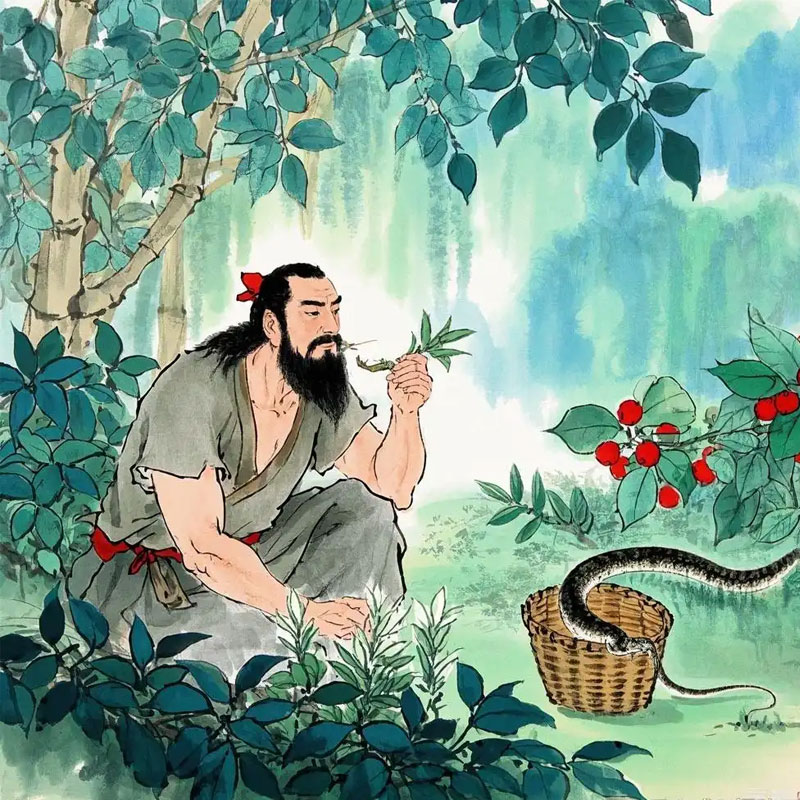
Legendary Physician of High Antiquity — Shennong (the Divine Farmer)
Shennong (the Divine Farmer), also known as the Yan Emperor, is the legendary progenitor of Chinese agriculture and medicine. Following Fuxi, he made monumental contributions to Chinese civilization by inventing the plow and tillage tools, teaching the people to cultivate the land, tasting hundreds of herbs, and founding Chinese medicine. This article details the legend of his “crystal belly” that allowed him to observe the effects of herbs, the scholarly debate over his identity with the Yan Emperor, the origins of Chinese materia medica, the establishment of the first marketplaces, and the invention of pottery — all illuminating the great transition from hunting and gathering to agricultural civilization and the dawn of Chinese medical practice.
Legendary Physician of High Antiquity — Fuxi
Fuxi (Fu Xi), also known as Paoxi and Fuxi Shi, is the mythological progenitor of humankind in Chinese tradition and a collective representation of clan communities of the mid-to-late Paleolithic era. Legend holds that he was one of the founding fathers of Chinese medicine and acupuncture — he “tasted hundreds of herbs and created the nine needles,” and was the first to devise the Eight Trigrams (Bagua) to comprehend the virtues of the divine and to categorize the nature of all things. For over a millennium, he has been revered by the medical community as the pioneering sage of TCM theory.
