
Desserts
Purple Sweet Potato, Snow Fungus & Lotus Seed Soup
A dreamy, gentle dessert soup. Snow fungus simmers into a silky, gelatin-rich broth dyed a soft lavender by purple sweet potato, with lotus seeds adding a tender bite. Finished with the mellow sweetness of rock sugar, every spoonful is smooth, comforting, and kind to both body and skin. Enjoy it warm or chilled.
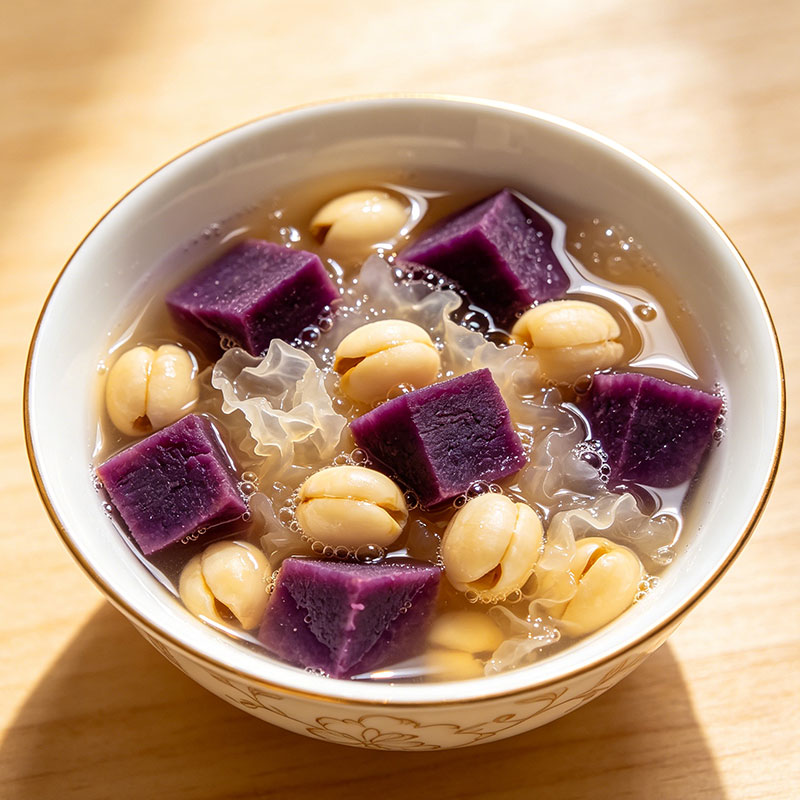
Main Ingredients
- Purple sweet potato as needed
- Snow fungus (tremella) as needed
- Lotus seeds as needed
- Rock sugar as needed
Steps
Pre-soak the snow fungus, then rinse off any dust or impurities. Pre-soak the lotus seeds, remove the bitter green cores, and wash clean.
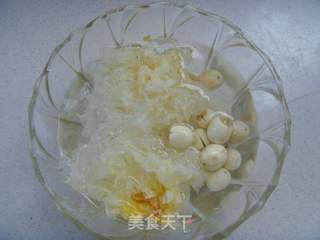
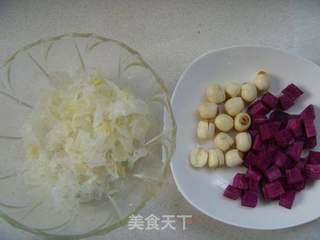
Remove the hard stems from the soaked snow fungus and tear it into small pieces by hand. Wash the purple sweet potato, peel it, and cut into small dice.
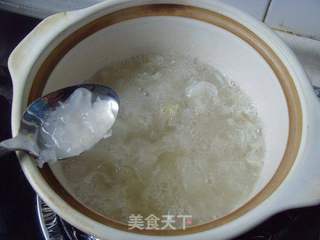
Place the snow fungus into a pot with an appropriate amount of water. Bring to a boil over medium heat, then reduce to low heat and simmer slowly.
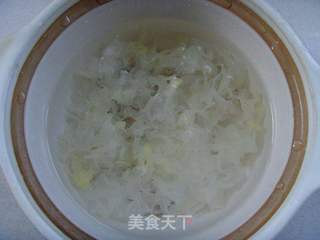
After half an hour, the snow fungus will soften and the soup will start to thicken.
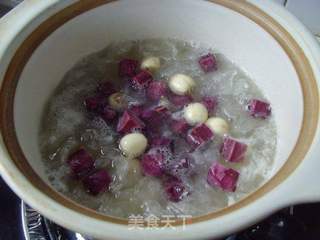
Add the purple sweet potato and lotus seeds, and bring back to a boil over medium heat.
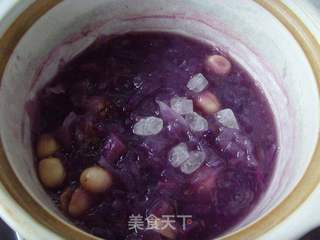
Reduce to low heat and continue simmering for about 30 minutes, until the soup is rich and thick and the purple sweet potato is tender. Add rock sugar, then turn off the heat.
TCM Notes
Snow fungus provides natural plant gelatin and polysaccharides known to moisturize the lungs and skin. Purple sweet potato is rich in anthocyanins and fiber, supporting antioxidant activity and digestion. Lotus seeds nourish the spleen, kidneys, and calm the mind. This is a low-fat, deeply hydrating dessert.
Suitable for:The general population can enjoy this soup. It is particularly suitable for people with yin deficiency and lung dryness (dry mouth, dry throat, dry cough), those with dry or rough skin, eye strain, irritability or insomnia, constipation due to dry intestines, and anyone seeking skin-nourishing, beautifying foods.
Not suitable for:People with diabetes should enjoy this without the rock sugar. Those in the early stages of a wind-cold cough (with abundant clear phlegm) should avoid it, as should those with loose stools, diarrhea, or abdominal bloating and fullness.
