
Heart Meridian of Hand-Shaoyin (HT)
The Heart Meridian of Hand-Shaoyin pertains to the heart and therefore has a close relationship with this organ. It is an important meridian that governs the human body. This meridian originates from the heart, emerges at the tip of the little finger, and links with the Small Intestine Meridian of Hand-Taiyang. It mainly travels along the posterior border of the medial aspect of the upper limb. It is indicated for conditions such as cold reversal (cold extremities) of the upper limbs and heat in the palms.
Active Hours
Wu hour, Heart Meridian
Functions
The Lingshu (Spiritual Pivot), in the chapter "Meridians" (Jing Mai), records: "The Heart Meridian of Hand-Shaoyin governs disorders of the heart: yellow eyes, pain in the hypochondriac region, pain and coldness along the posterior border of the medial aspect of the upper arm and forearm, and heat and pain in the palm."
Related Conditions
Visceral patterns (Zang-fu symptoms): When the Heart Meridian is affected, symptoms such as heat and pain in the palms, vexation, heart pain, palpitations, insomnia, and mental disturbances may occur. Meridian patterns (Jing-luo symptoms): When the Heart Meridian is disordered, it may easily give rise to dry throat, thirst with desire to drink, hypochondriac pain, excessive dreaming, forgetfulness, and along the pathway of the Heart Meridian, symptoms such as pain, numbness, coldness (cold reversal), and unstable blood pressure, among others.
Daily Care
This is the time of day when drowsiness and fatigue are most likely to set in. The heart propels the blood circulation, nourishing the spirit, nourishing the qi, and nourishing the sinews. If you can take a short nap during the Wu hour (11:00 a.m. – 1:00 p.m.), it greatly benefits the nourishment of the heart, and can even make you feel energetic throughout the afternoon and evening. However, the nap should not exceed one hour, as it may otherwise easily lead to insomnia at night. After the nap, moderate exercise helps dredge the qi and blood throughout the entire body and strengthen the functions of the zang-fu organs. Every day during the Wu hour when the Heart Meridian is in command, and also before bedtime, bring the five fingers together and slightly bend them to tap the acupoints along the pathway of the Heart Meridian. The force should be comfortable, and each session only needs to last about 5 minutes. This can relieve vexation and excessive dreaming, and promote sleep.
Acupoints
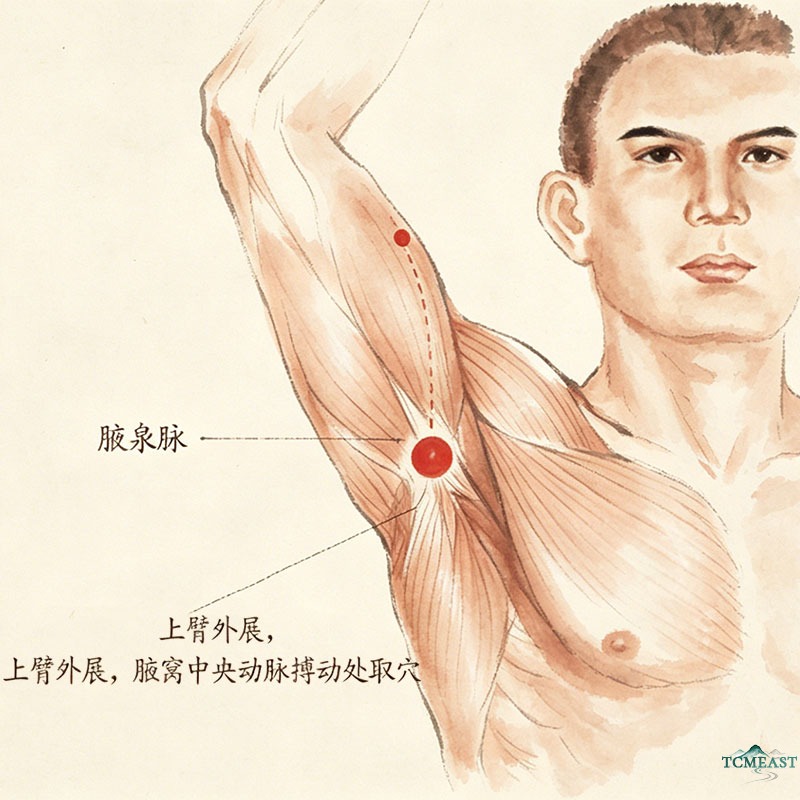
Jiquan Point (HT-1 / Supreme Spring)
Discover the exact location and acupressure method for Jiquan (HT-1 / Supreme Spring). Learn its benefits for heart pain, palpitations, shoulder pain, and coronary heart disease – the starting point of the Heart Meridian – plus classic combinations for comprehensive treatment.
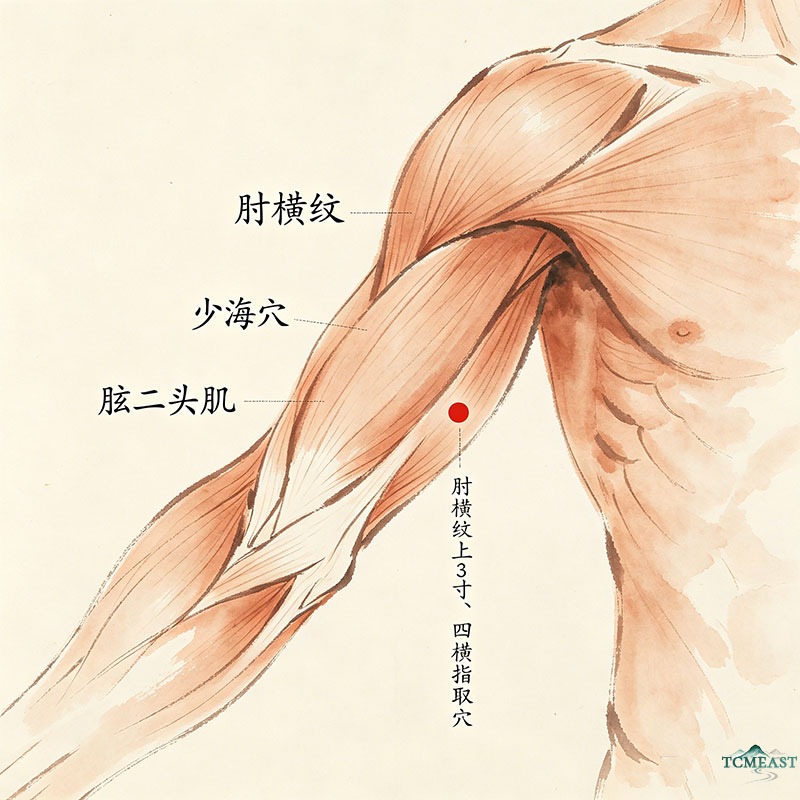
Qingling Point (HT-2 / Azure Spirit)
Discover the exact location and acupressure method for Qingling (HT-2 / Azure Spirit). Learn its benefits for angina, headache, hypochondriac pain, and shoulder-arm pain, plus classic combinations for comprehensive treatment.
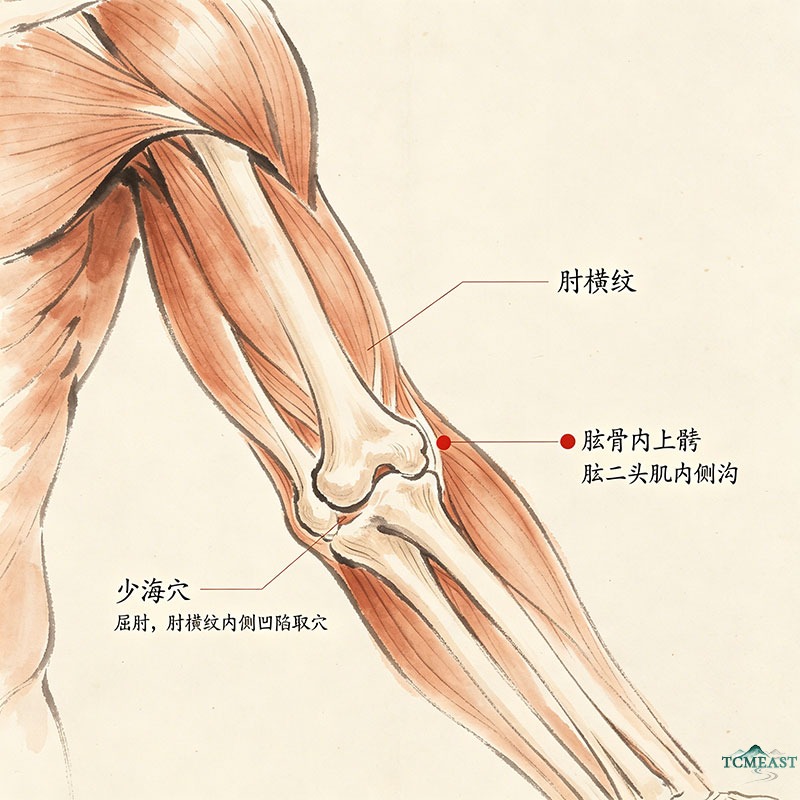
Shaohai Point (HT-3 / Lesser Sea, also known as Qujie)
Discover the exact location and acupressure method for Shaohai (HT-3 / Lesser Sea). Learn its benefits for heart pain, toothache, elbow-arm pain, and mental disorders – the He-Sea point of the Heart Meridian – plus classic combinations for comprehensive treatment.
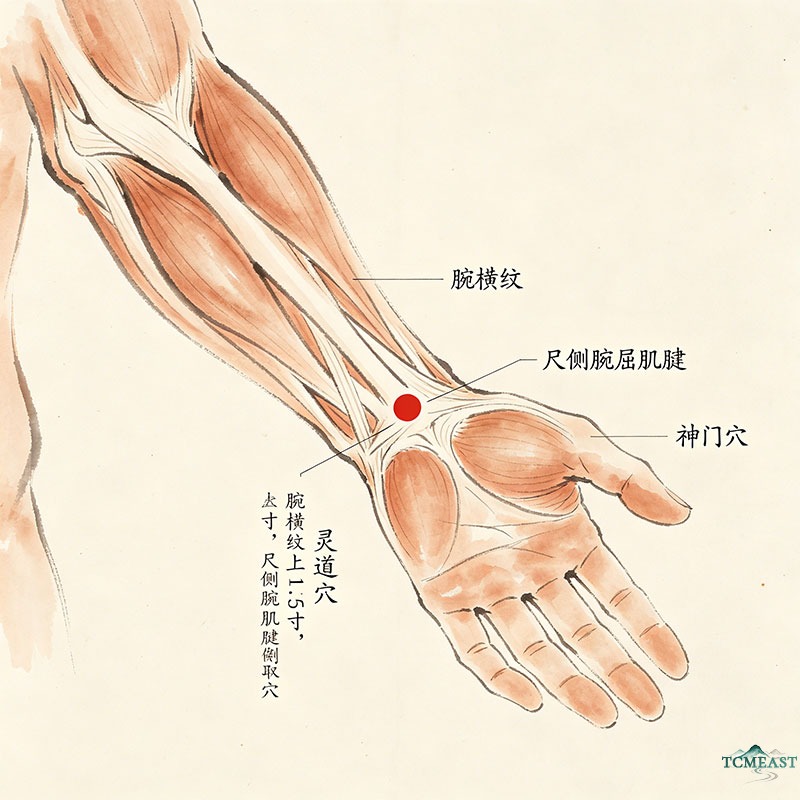
Lingdao Point (HT-4 / Spirit Path)
Discover the exact location and acupressure method for Lingdao (HT-4 / Spirit Path). Learn its benefits for heart pain, hand numbness, and wrist-arm pain, plus classic combinations for comprehensive treatment.
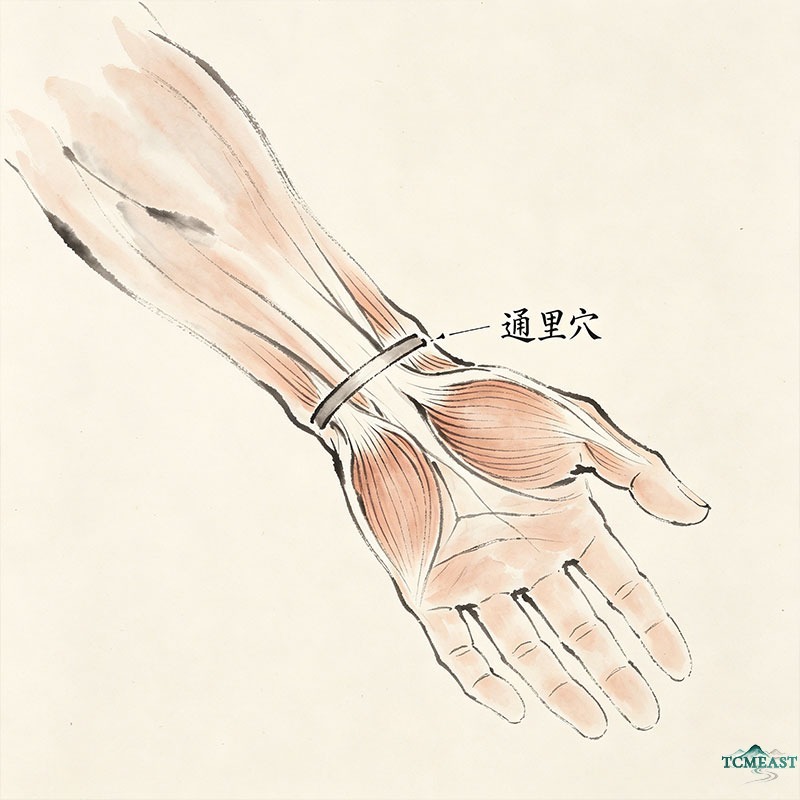
Tongli Point (HT-5 / Connecting Interior)
Discover the exact location and acupressure method for Tongli (HT-5 / Connecting Interior). Learn its benefits for calming the spirit, restoring voice, treating palpitations, insomnia, and aphasia – the Heart meridian Luo-Connecting point – plus classic combinations for comprehensive treatment.
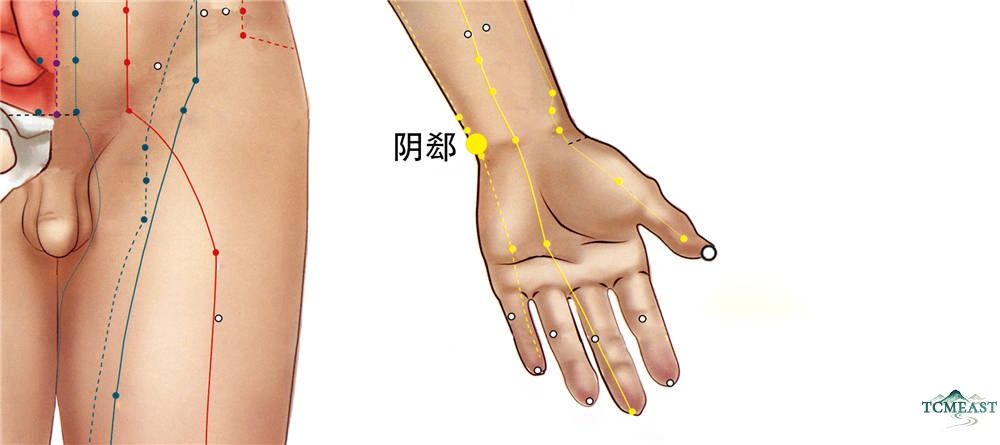
Yinxi Point (HT-6 / Yin Cleft)
Discover the exact location and acupressure method for Yinxi (HT-6 / Yin Cleft). Learn its benefits for heart pain, palpitations, night sweats, and aphonia – the Heart meridian Xi-Cleft point – plus classic combinations for coronary heart disease.
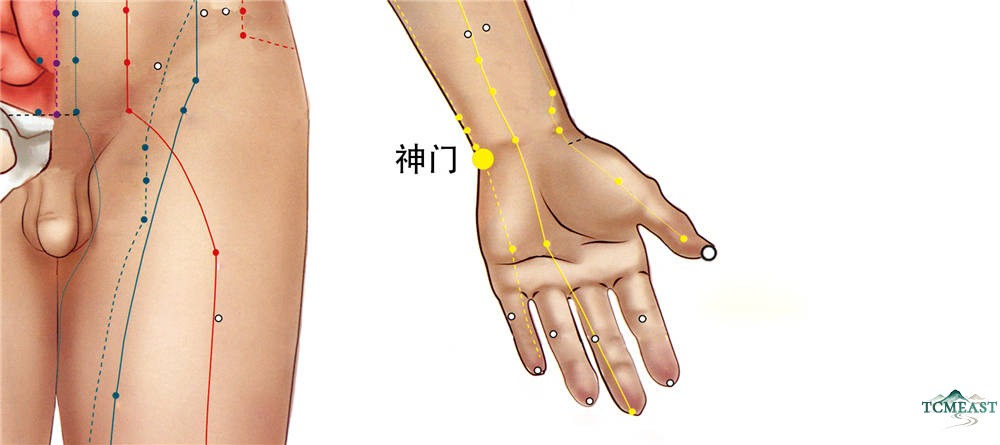
Shenmen Point (HT-7 / Spirit Gate, also known as Duichong, Zhongdu, Duigu, Ruizhong, Duhou)
Discover the exact location and acupressure method for Shenmen (HT-7 / Spirit Gate). Learn its benefits for insomnia, forgetfulness, dementia, manic disorders, and palpitations – the Heart meridian Yuan-Source point for calming the spirit – plus classic combinations for comprehensive treatment.
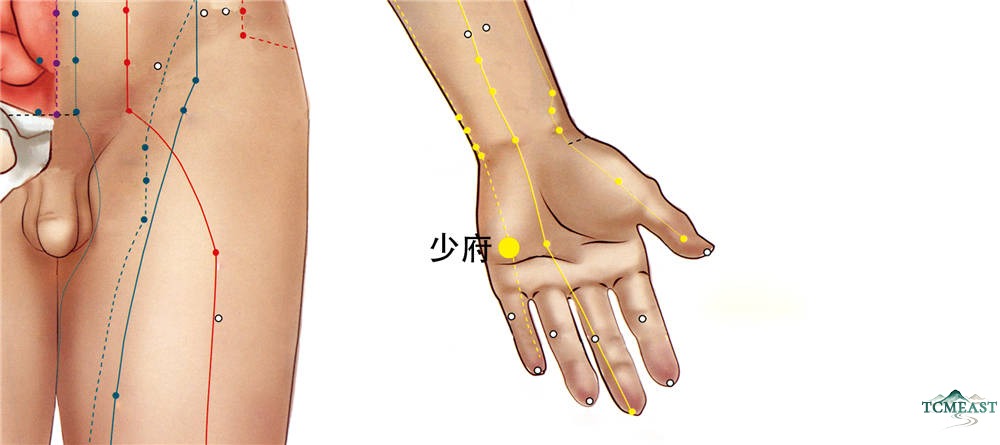
Shaofu Point (HT-8 / Lesser Mansion)
Discover the exact location and acupressure method for Shaofu (HT-8 / Lesser Mansion). Learn its benefits for chest pain, palpitations, insomnia, and heart conditions – the Heart meridian Ying-Spring point – plus classic combinations for comprehensive treatment.
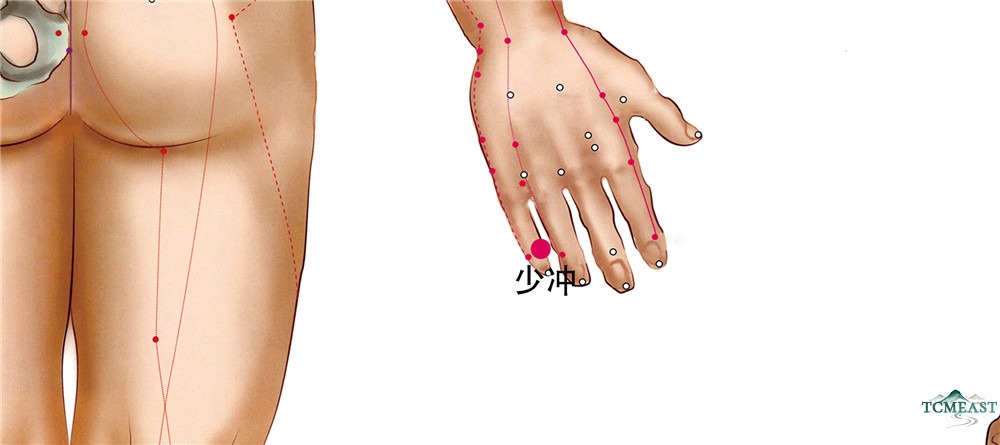
Shaochong Point (HT-9 / Lesser Thoroughfare, also known as Jingshi)
Discover the exact location and acupressure method for Shaochong (HT-9 / Lesser Thoroughfare). Learn its benefits for chest pain, palpitations, stroke, coma, and emergency resuscitation – the Heart meridian Jing-Well point for acute conditions – plus classic combinations for comprehensive treatment.
