
Wisdom of TCM
The Meaning and Composition of the Basic Theory of Traditional Chinese Medicine
Basic Theory of Traditional Chinese Medicine is the cornerstone of the TCM discipline. It systematically expounds the philosophical foundations including qi essence, yin-yang, and five elements theories, delves into the visceral manifestation, meridian, and essence-qi-blood-body-fluids systems, and covers core principles of disease causation, pathogenesis, health preservation, and treatment. This overview provides an essential guide for understanding life activities, disease prevention, and clinical practice.
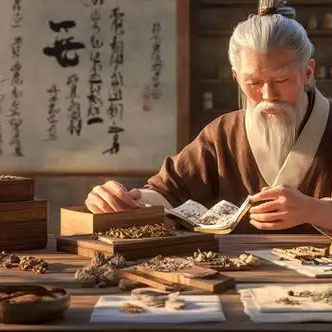
The Basic Theory of Traditional Chinese Medicine is a discipline that studies the fundamental concepts, laws, principles, and tenets of TCM, serving as the foundation of the entire modern TCM academic system. With its unique research approaches and methods, it objectively summarizes the basic laws of human physiological activities, pathological changes, health preservation, and disease prevention and treatment, thereby playing a guiding role in clinical practice. Its content primarily includes the philosophical and methodological foundations of TCM, TCM's understanding of the normal human body and disease, and the principles of health preservation and treatment.
Every discipline is guided by certain philosophical ideas. With traditional Chinese culture as its matrix, ancient Chinese philosophy and its modes of thinking have exerted an all-encompassing and enduring influence on the theoretical system of TCM. It not only serves as the guiding ideology of TCM theory but also constitutes the basic content of the TCM theoretical system. First, the theory of qi essence (also known as "Yuan Qi theory" or "Qi theory"), as the dominant view of nature, provides a representative exposition of the "noumenon" of the world in ancient Chinese philosophy. It determines the research approaches, methods, and characteristics of traditional Chinese sciences, including TCM, and is the cornerstone upon which the entire TCM theory is built. Second, the yin-yang and five elements theories possess the dual nature of a worldview and methodology. The yin-yang theory reveals the most universal connections and the most profound essence of all things in the universe, representing the most general laws of world motion. The five elements theory reveals and proves that all things in the universe possess a certain structure with a unified structural model, attempting to concretely delineate the general mechanisms of intricate structural relationships in systematic phenomena. TCM practitioners borrowed these theories to understand life and related issues, analyze and summarize relevant data and information, and construct the TCM theoretical system. Additionally, the modes of thinking and methods accompanying the qi essence, yin-yang, and five elements theories are also important components of the Basic Theory of TCM.
The theories concerning TCM's understanding of the normal human body mainly encompass three major doctrines: visceral manifestation theory, meridian and collateral theory, and the theory of essence, qi, blood, and body fluids.
Visceral manifestation theory, employing the method of "inspecting the exterior to infer the interior" by using external manifestations to gauge visceral states, focuses on studying the physiological functions, pathological changes, and interrelationships of the zang-fu organs, combined with examining their relationships with the body, orifices, emotions, fluids, and the external environment. Together with the meridian and collateral theory, it forms the core of TCM theory. The theory of essence, qi, blood, and body fluids primarily discusses the material composition of life and the material basis of its functional activities, expounding on their generation, circulation and distribution, functions, metabolism, interrelationships, and connections with the zang-fu organs. The meridian and collateral theory mainly elucidates the structure, distribution, functions, and pathological changes of the body's communication channels. These three theories are mutually inclusive, interpenetrating, and complementary, constituting TCM's unique and incisive understanding of human life. Furthermore, constitution and personality reflect the physiological and psychological characteristics of different individuals, influencing their ability to adapt to natural and social environments, their resistance to disease, susceptibility to certain pathogenic factors during disease onset, and the tendency of disease development during pathological processes—these also form major parts of the Basic Theory of TCM.
The theories concerning TCM's understanding of disease include the theory of disease causes and the theory of pathogenesis. The theory of disease causes explores the various causes of disease, their nature, pathogenic characteristics, and patterns. The theory of pathogenesis primarily studies the principles of disease occurrence, the common factors influencing or inducing disease, the pathways and types of disease onset, and the basic mechanisms and general laws of disease development, changes, and outcomes.
TCM health preservation and treatment principles are also integral components of the Basic Theory of TCM. Health preservation theory studies the laws of human life, explores the mechanisms of aging, and seeks principles and methods to enhance life activities, prevent disease, and prolong life. The Basic Theory of TCM mainly introduces the fundamental principles and major methods of health preservation. The theory of TCM treatment principles, based on the level of abstraction of its research subjects and differences in their guiding role in treatment behavior, can be divided into two parts: the therapeutic viewpoint and the basic treatment principles. The therapeutic viewpoint focuses on the highest-level principles in disease treatment processes, embodying the fundamental thinking to be implemented in clinical treatment. The basic treatment principles primarily study some fundamental rules guiding the treatment of specific diseases and patterns—these principles are the concrete implementation of the therapeutic viewpoint and also play an important guiding role in the selection and determination of specific treatment plans and methods. As for the specific methods of treating diseases, these belong to the content of disciplines such as Chinese materia medica, formula studies, and various clinical specialties.
