
Lifestyle
TCM for Chronic Fatigue & Energy: Herbs, Acupressure & Natural Vitality
Restore your energy naturally with Traditional Chinese Medicine. Discover the best herbs for vitality — from Ginseng to Astragalus — plus acupressure points that fight fatigue and dietary changes that rebuild your Qi.
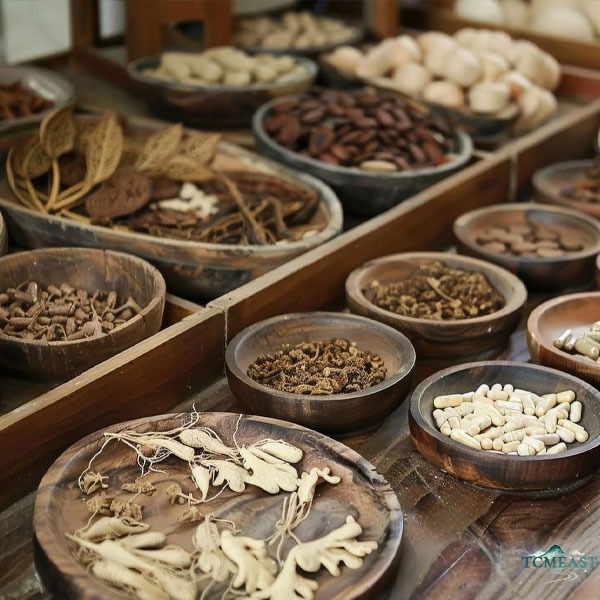
The TCM View: Fatigue as Qi Deficiency
In Traditional Chinese Medicine, energy is understood as qi — the vital force that animates all life processes. When you have abundant qi, you wake up refreshed, move through the day with steady energy, and recover quickly from exertion. When qi is deficient, every action feels like an effort.
Chronic fatigue is rarely a single cause in TCM. It typically involves multiple layers of deficiency:
| Pattern | Key Feeling | Other Signs |
|---|---|---|
| Spleen qi deficiency | Heavy limbs, weakness after eating | Poor appetite, loose stools, brain fog |
| Lung qi deficiency | Shortness of breath, weak voice | Frequent colds, spontaneous sweating |
| Kidney qi deficiency | Deep exhaustion, lower back weakness | Frequent urination, low libido, cold knees |
| Liver qi stagnation | Fatigue with irritability | Stress makes it worse, PMS, mood swings |
| Qi and blood deficiency | Dizziness, pale complexion | Poor memory, palpitations, scanty periods |
Key Herbs for Energy Restoration
Ren Shen (Panax Ginseng, 人参)
Sweet, slightly bitter, and warm. Ginseng is the supreme qi tonic — the most famous herb in all of Chinese medicine. It tonifies the primordial qi — the deepest source of vitality. For chronic fatigue syndrome, it can be used in small doses over weeks to rebuild energy at the root.
Dose: 3-9g in decoction (decoct separately). 1-3g in powder form. Best taken in the morning.
Caution: Ginseng is warming and may aggravate high blood pressure or insomnia in sensitive individuals.
Huang Qi (Astragalus, 黄芪)
Sweet and warm. Astragalus strengthens the Spleen and Lung qi — the two organ systems most responsible for generating qi from food and distributing it through the body. It is gentler than ginseng and better suited for long-term use.
Dose: 9-30g. Ideal for daily tea.
Dang Gui (Angelica sinensis, 当归)
Sweet, pungent, and warm. When fatigue is accompanied by pale complexion, poor memory, and dizziness, the issue is likely blood deficiency as well as qi deficiency. Dang Gui builds blood and moves it — restoring both energy and color to the face.
Dose: 6-15g.
Shan Yao (Chinese Yam, 山药)
Sweet and neutral. Chinese yam gently tonifies the Spleen, Lung, and Kidney — all three of the qi-producing organs. It is safe for all ages and can be taken as a daily food.
Dose: 10-30g.
Bai Zhu (Atractylodes, 白术)
Bitter, sweet, and warm. Bai Zhu is the specific herb for fatigue that accompanies digestive weakness — the "heavy limbs, weak after eating" pattern.
Dose: 6-15g.
The Energy-Building Formula: Bu Zhong Yi Qi Tang
Bu Zhong Yi Qi Tang (Tonify the Middle and Augment the Qi Decoction) was created by the great physician Li Dongyuan in the 13th century. It is the classic formula for qi deficiency fatigue:
- Huang Qi — Emperor, strongly tonifies qi
- Ren Shen — Supports qi
- Bai Zhu — Strengthens Spleen
- Gan Cao — Harmonizes
- Dang Gui — Nourishes blood (because qi and blood are interdependent)
- Chen Pi — Moves qi (prevents stagnation)
- Sheng Ma — Raises sunken qi
- Chai Hu — Raises sunken qi
This formula is available in pill form and is widely used for chronic fatigue, particularly when accompanied by a sensation of heaviness or sinking.
Acupressure Points for Energy
Zu San Li (ST36, Leg Three Miles, 足三里)
Location: Four finger-widths below the kneecap, one finger-width outside the shinbone.
Action: The most important point for building qi and blood. Ancient texts say it can treat all deficiency patterns. Regular stimulation increases energy, strengthens immunity, and improves digestion.
Technique: Press firmly for 1-2 minutes on each leg daily. Best done before noon.
Guan Yuan (CV4, Pass Head, 关元)
Location: Four finger-widths below the navel on the midline.
Action: Tonifies the Kidney qi and the original qi (yuan qi). It is the most important point for deep, day-after-day fatigue that rest does not relieve.
Technique: Gentle circular pressure with the palm for 2-3 minutes. A warm compress or moxa on this point is highly beneficial for Kidney deficiency fatigue.
Qi Hai (CV6, Sea of Qi, 气海)
Location: 1.5 finger-widths below the navel on the midline.
Action: As the name says — the Sea of Qi. This point directly strengthens the body's qi reserves.
Technique: Warm palm pressure for 2 minutes.
Da Zhui (DU14, Great Vertebra, 大椎)
Location: Below the 7th cervical vertebra (the most prominent bone when you nod your head).
Action: Meeting point of all yang meridians. Excellent for boosting energy and strengthening immunity. Ideal for the pattern of fatigue with frequent colds.
Technique: Gentle pressure or apply a warm compress. Have a partner massage this point if possible.
Energy-Building Recipes
Astragalus & Ginseng Morning Tea
Ingredients:
Method: Simmer for 25 minutes. Strain and drink in the morning. This is the simplest daily qi-building tea.
Four Gentlemen Energy Soup (Si Jun Zi Tang Soup)
Ingredients:
- Ren Shen 6g
- Bai Zhu 10g
- Fu Ling 10g
- Gan Cao 3g
- 200g chicken thigh
- 3 slices ginger
- 800ml water
Method: Simmer for 1.5 hours. This soup is based on the classic formula and is excellent for gradual energy restoration.
Chinese Yam & Goji Energy Congee
Ingredients:
Method: Simmer for 30 minutes until thick. Eat warm as breakfast. Suitable for daily long-term use.
TCM Lifestyle for Sustainable Energy
- Eat a warm, cooked breakfast — Breakfast is when the Spleen needs support. Congee, oatmeal, or soup provides energy for the day. Cold cereal and milk weaken Spleen qi.
- Rest between 11 PM and 1 AM — This is the Liver and Gallbladder hours, when the body's deepest restoration occurs. Waking during this time depletes qi long-term.
- Avoid over-exercise when fatigued — In TCM, excessive exercise when qi is already low depletes even more. Gentle movement (walking, qigong, tai chi) builds qi. Intense workouts deplete it.
- Breathe deeply — Shallow breathing deprives the body of qi from the air. Take 5-10 deep breaths several times a day, focusing on filling the lower abdomen (dan tian breathing).
- Sit less — Prolonged sitting damages the Spleen and creates stagnation. Stand and walk briefly every hour.
