
Nutrition & Diet Tips
Chinese Beauty Herbs and Soup Recipes: TCM Skincare from the Inside Out
Beauty from the inside out — discover how Traditional Chinese Medicine approaches skincare through herbs that nourish the blood, cool the skin, and brighten the complexion. Includes beauty soup recipes and acupressure for glowing skin.
The TCM View: Beauty Begins Within
In Traditional Chinese Medicine, true beauty is not something that can be applied to the surface of the skin. It must be cultivated from the inside — through balanced qi, sufficient blood, and well-functioning internal organs. When the Lungs are strong, the skin is radiant. When the Liver stores enough blood, the complexion is rosy. When the Spleen transports nutrients efficiently, the skin is supple and hydrated.
This principle — known as "external application of beauty begins with internal nourishment" — is the foundation of TCM beauty philosophy.
The Five Organs and Your Skin
| Organ | TCM Function | Effect on Skin |
|---|---|---|
| Lung | Governs skin and body hair | Strong Lung qi = radiant, firm skin |
| Liver | Stores blood | Sufficient Liver blood = rosy, glowing complexion |
| Spleen | Transports nutrients | Healthy Spleen = moist, plump skin |
| Heart | Governs blood vessels | Heart qi sufficient = vibrant, flushed skin |
| Kidney | Stores essence | Abundant Kidney essence = youthful, elastic skin |
When any of these organs is imbalanced, it shows on the skin: dullness, dryness, acne, pigmentation, or prematurely wrinkled.
Key Beauty Herbs in TCM
Bai Ji (Bletilla, 白及)
Bitter, sweet, astringent, and cool. Bai Ji is the classic Chinese beauty herb. It is used both internally and externally for skin whitening, reducing pigmentation, and promoting wound healing. Traditionally combined with Bai Zhu and Fu Ling as a "three whites" face powder.
Dose: 6-10g in decoction for internal use. Also available as external rinse or mask.
Bai Zhu (Atractylodes, 白术)
Bitter, sweet, and warm. In addition to strengthening the Spleen, Bai Zhu is known for its skin-brightening effect. It is a component of many traditional Chinese beauty formulas and is said to "moisten the complexion."
Dose: 6-15g.
Fu Ling (Poria, 茯苓)
Sweet and neutral. Fu Ling's skin benefits come from its ability to drain dampness — when dampness accumulates under the skin, it manifests as puffiness, poor skin tone, and sallow complexion. Fu Ling brightens the complexion by removing this dampness.
Dose: 10-15g.
Bai He (Lily Bulb, 百合)
Sweet and slightly cold. Bai He moistens the Lungs, and because the Lungs govern the skin, it directly hydrates the skin from within. It is used for dry, rough, or prematurely aged skin.
Dose: 10-30g.
Gou Qi Zi (Goji Berry, 枸杞子)
Sweet and neutral. Goji nourishes Liver blood, which in turn nourishes the complexion. It is particularly valued for skin glow and brightness. Rich in antioxidants that protect skin from aging.
Dose: 6-15g daily.
Dang Gui (Angelica sinensis, 当归)
Sweet, pungent, and warm. Dang Gui nourishes blood — and when blood is sufficient, the skin takes on a natural rosy glow. It is used for pale, dull, dry skin.
Dose: 6-15g.
Beauty Soup Recipes
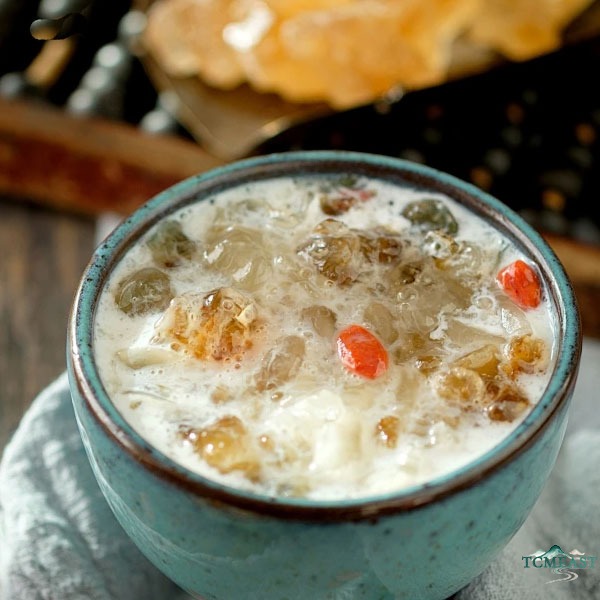
Bai He Yin-Nourishing Beauty Soup
Ingredients:
Method: Simmer all ingredients (except honey) for 25 minutes. Add honey, drink warm. Best in the morning.
Dang Gui & Goji Glow Soup
Ingredients:
- Dang Gui 6g
- Gou Qi Zi 10g
- Shan Yao (Chinese yam) 15g
- 8 red dates
- 200g chicken breast
- 3 slices ginger
- 700ml water
Method: Simmer for 1 hour. This soup nourishes blood, brightens the complexion, and hydrates the skin.
Three Whites Beauty Tea
Ingredients:
- Bai Zhu 6g
- Bai Ji 6g
- Fu Ling 10g
- 400ml water
Method: Simmer for 20 minutes. Traditionally for skin brightening. Drink once daily.
Acupressure for Glowing Skin
An Introduction: Why Acupressure Works for Skin
Acupressure points on the face and body stimulate blood circulation to the skin, move stagnant qi that causes dullness, and balance the internal organs that govern skin health.
He Gu (LI4, Joining Valley, 合谷)
Location: On the back of the hand, in the webbing between thumb and index finger.
Action: A key point for the face and head. In Chinese medicine, "face and mouth conditions seek He Gu." Stimulating this point increases blood flow to the face.
Technique: Press firmly with the opposite thumb for 1 minute on each hand.
Qu Chi (LI11, Crooked Pond, 曲池)
Location: At the outer end of the elbow crease when the elbow is bent.
Action: Clears heat from the skin. Effective for acne, rashes, and inflammatory skin conditions.
Technique: Press for 1 minute on each arm.
Di Cang (ST4, Earth Granary, 地仓)
Location: At the corner of the mouth, directly below the pupil.
Action: Local point that firms the skin around the mouth and improves facial circulation.
Technique: Gently press and massage in small circles for 1 minute both sides.
Tai Yang (Extra, 太阳)
Location: One finger-width behind the midpoint between the eye and the end of the eyebrow.
Action: Improves circulation to the cheeks, reduces puffiness around the eyes.
Technique: Gentle circular massage for 30 seconds on each side.
Traditional Chinese Beauty Food Principles
- Eat foods that nourish blood — Red dates, goji berries, longan, beets, dark leafy greens, and black sesame seeds build blood that gives the skin color and glow.
- Stay hydrated with warm fluids — Cold drinks shock the digestive system and cause fluid stagnation. Warm water, herbal teas, and soups hydrate the skin more effectively.
- Avoid excess sugar and dairy — Both create dampness and heat that manifest as acne, puffiness, and dull skin.
- Include collagen-building foods — Bone broth, chicken feet, fish maw, and sea cucumber are valued in Chinese beauty culture for skin elasticity.
- Consume seasonal fruits — In summer, cooling fruits like watermelon, pear, and cucumber hydrate and cool the skin from within.
A Daily TCM Beauty Routine
Morning:
- Drink warm water with goji berries (steeped overnight)
- Light facial massage focusing on He Gu (LI4) and Di Cang (ST4)
- Apply light moisturizer — in TCM, facial massage should always be followed by moisturizer while the skin pores are open
Afternoon:
- Drink a cup of white tea or chrysanthemum tea — both clear heat and protect the skin from environmental stress
- Brief facial acupressure during breaks
Evening:
