
Spleen Meridian of Foot-Taiyin (SP)
The Spleen Meridian of Foot-Taiyin is a yin meridian. It is most closely connected with the zang-fu organs, especially the spleen, stomach, and heart. It is also the preferred meridian for treating gynecological disorders. This meridian begins at the tip of the big toe. A branch then splits off from the stomach, passes through the diaphragm, flows into the heart, and links with the Heart Meridian of Hand-Shaoyin. It mainly travels through the chest and abdomen and along the medial aspect of the lower limb.
Active Hours
Si hour, Spleen Meridian
Functions
The Lingshu (Spiritual Pivot), in the chapter "Meridians" (Jing Mai), states: "The Spleen Meridian of Foot-Taiyin governs disorders of the spleen: pain in the root of the tongue, stiffness of the body with inability to move, inability to take food, vexation, acute pain in the epigastric region (below the heart), loose stools with abdominal masses and diarrhea, water retention and urinary blockage, jaundice, inability to lie flat, difficulty standing due to stiffness, swelling and coldness of the medial thigh and knee, and loss of function of the big toe."
Related Conditions
Visceral patterns (Zang-fu symptoms): When the Spleen Meridian is affected, it may lead to generalized fatigue, epigastric pain, belching, loose stools, vexation and oppression in the chest, and acute pain below the heart (epigastric region), among other symptoms. If the spleen qi is exhausted, the muscles will become flaccid and soft, and emaciation will occur. Meridian patterns (Jing-luo symptoms): If the Spleen Meridian is disordered, there may be stiffness and pain in the root of the tongue, swelling in the medial aspect of the lower limb, and sensations of coldness, soreness, distension and pain, and numbness along the pathway of the meridian.
Daily Care
The spleen is the chief coordinator of digestion, absorption, and excretion, and it also governs the blood in the human body. When the spleen functions well, digestion and absorption are efficient, and the quality of the blood is good; hence, the lips appear rosy. During the Si hour (9:00–11:00 a.m.), you should drink at least three glasses of water, sipping slowly, to keep the spleen at its most active level. Never wait until you feel thirsty to drink; instead, drink water at regular intervals throughout the day. Feeling thirsty indicates that the body is already dehydrated. As the chief coordinator of digestion, absorption, and excretion, the spleen can be maintained daily during the Si hour. By patting and stimulating the Spleen Meridian pathway (along the medial aspect of the lower limbs and the abdomen) for about 10 minutes each time with moderate force, digestive function can be enhanced.
Acupoints
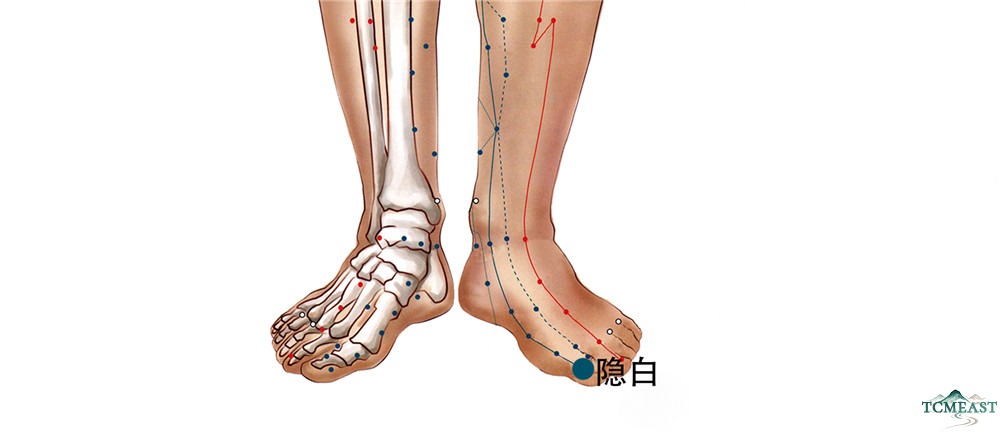
Yinbai Point (SP-1 / Hidden White, also known as Guilei, Guiyan, Yinbai)
Discover the exact location and acupressure method for Yinbai (SP-1 / Hidden White). Learn its benefits for stopping gynecological bleeding, treating metrorrhagia, menorrhagia, and digestive disorders, plus classic combinations for comprehensive treatment.
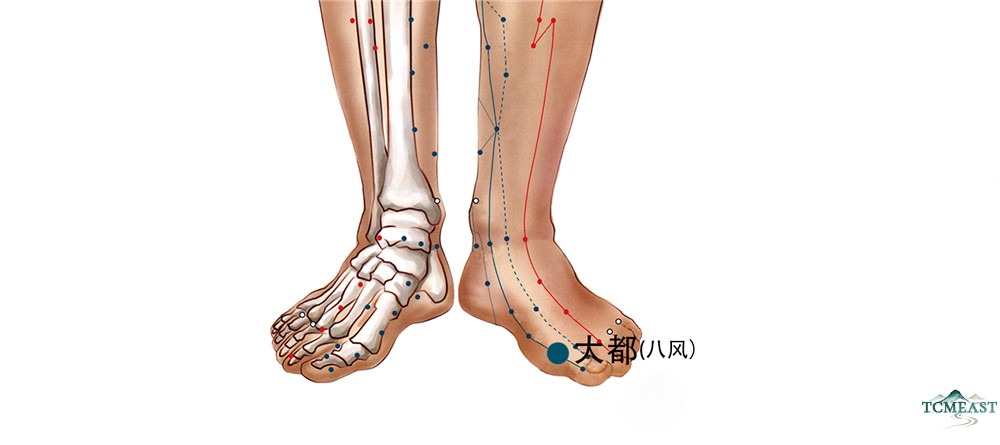
Dadu Point (SP-2 / Great Metropolis)
Discover the exact location and acupressure method for Dadu (SP-2 / Great Metropolis). Learn its benefits for abdominal distension, abdominal pain, and stomach pain, plus classic combinations for digestive disorders.
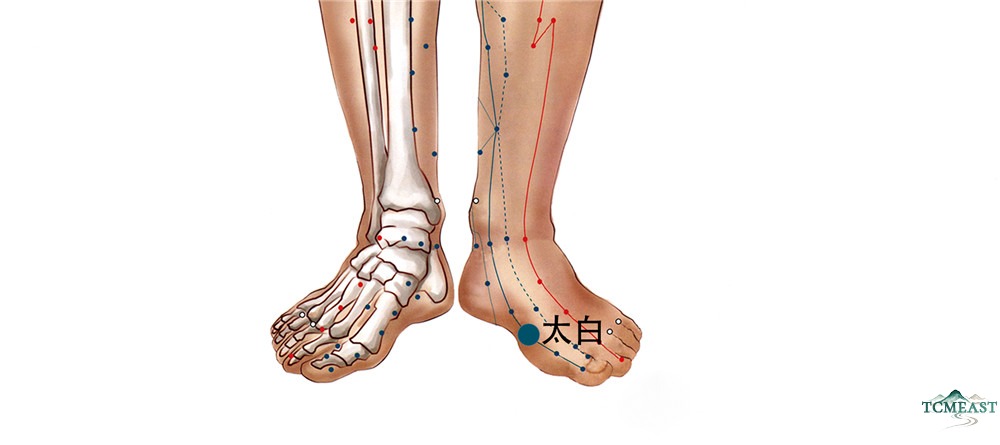
Taibai Point (SP-3 / Supreme Brightness)
Discover the exact location and acupressure method for Taibai (SP-3 / Supreme Brightness). Learn its benefits for stomach pain, abdominal distension, vomiting, diarrhea, and eczema – the Spleen meridian Yuan-Source point for strengthening the spleen.
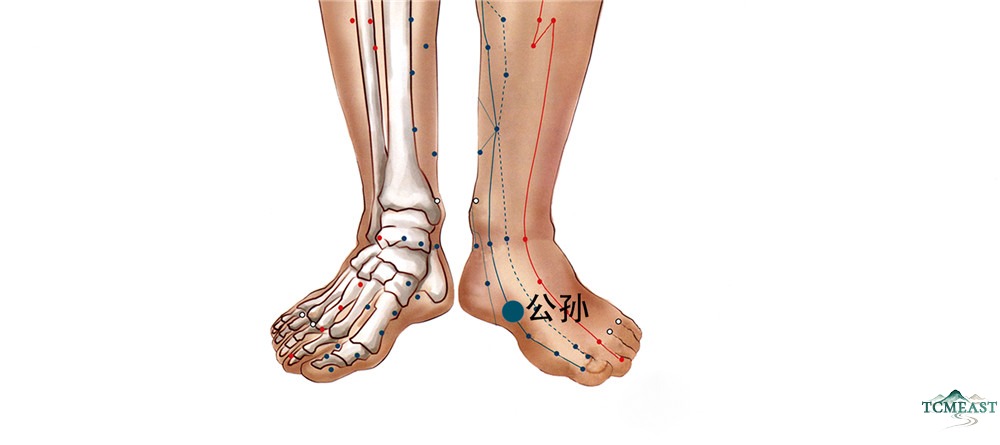
Gongsun Point (SP-4 / Grandfather Grandson)
Discover the exact location and acupressure method for Gongsun (SP-4 / Grandfather Grandson). Learn its benefits for strengthening the spleen, treating stomach pain, vomiting, diarrhea, and chest tightness, plus classic combinations for digestive and heart disorders.
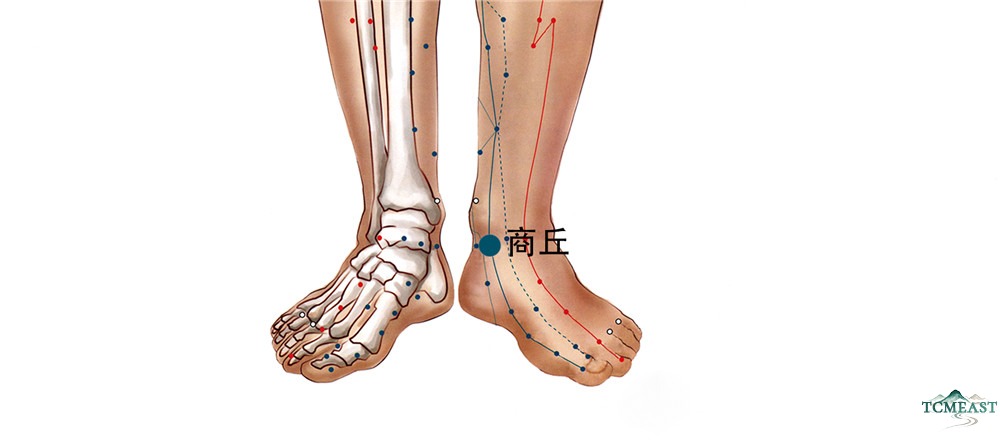
Shangqiu Point (SP-5 / Shang Mound)
Discover the exact location and acupressure method for Shangqiu (SP-5 / Shang Mound). Learn its benefits for foot weakness, ankle pain, and abdominal distension, plus classic combinations for comprehensive treatment.
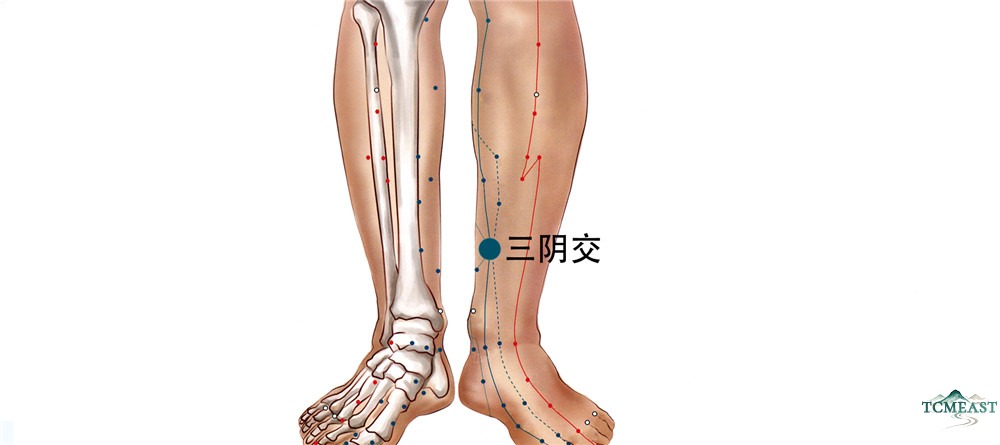
Sanyinjiao Point (SP-6 / Three Yin Intersection, also known as Chengming, Taiyin, Xiazhi Sanli)
Discover the exact location and acupressure method for Sanyinjiao (SP-6 / Three Yin Intersection). Learn its benefits for gynecological, urogenital, digestive, and skin disorders – the "First Point for Gynecology" – plus classic combinations for comprehensive treatment.
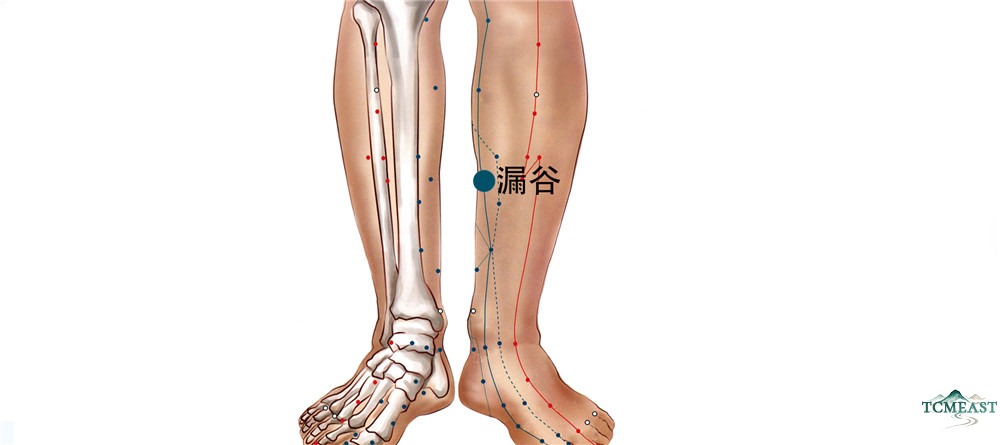
Lougu Point (SP-7 / Leaking Valley, also known as Taiyin Luo)
Discover the exact location and acupressure method for Lougu (SP-7 / Leaking Valley). Learn its benefits for borborygmus, abdominal distension, edema, and difficult urination.
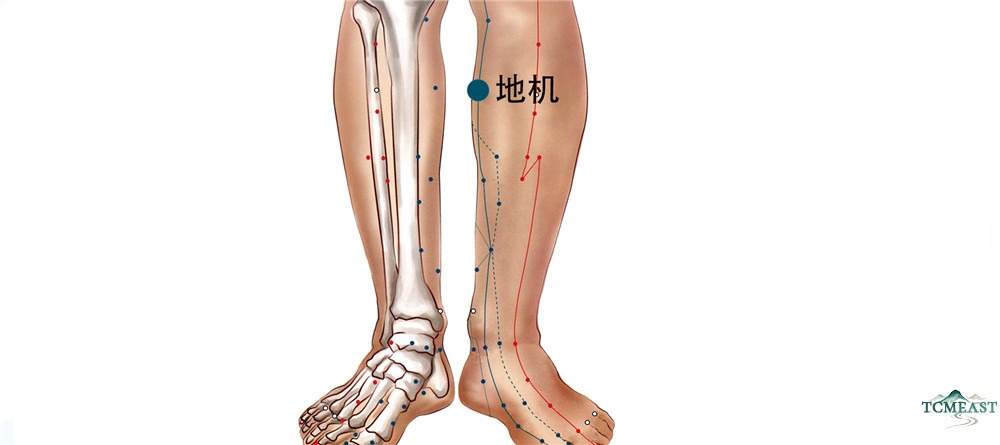
Diji Point (SP-8 / Earth Pivot, also known as Pishe, Diji)
Discover the exact location and acupressure method for Diji (SP-8 / Earth Pivot). Learn its benefits for regulating blood, treating dysmenorrhea, metrorrhagia, and bleeding disorders, plus classic combinations for gynecological and digestive conditions.
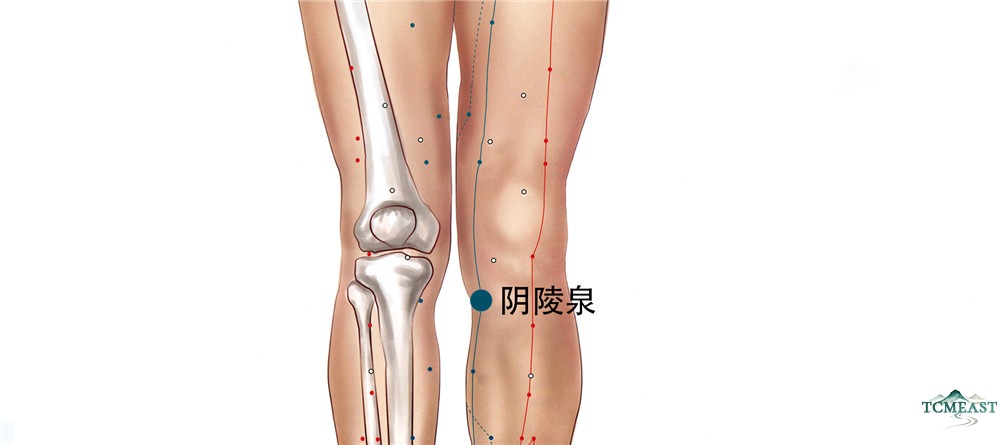
Yinlingquan Point (SP-9 / Yin Mound Spring, also known as Yinling, Yinzhilingquan)
Discover the exact location and acupressure method for Yinlingquan (SP-9 / Yin Mound Spring). Learn its benefits for draining dampness, treating edema, urinary disorders, abdominal distension, and knee pain – the "First Point for Strengthening the Spleen and Draining Dampness."
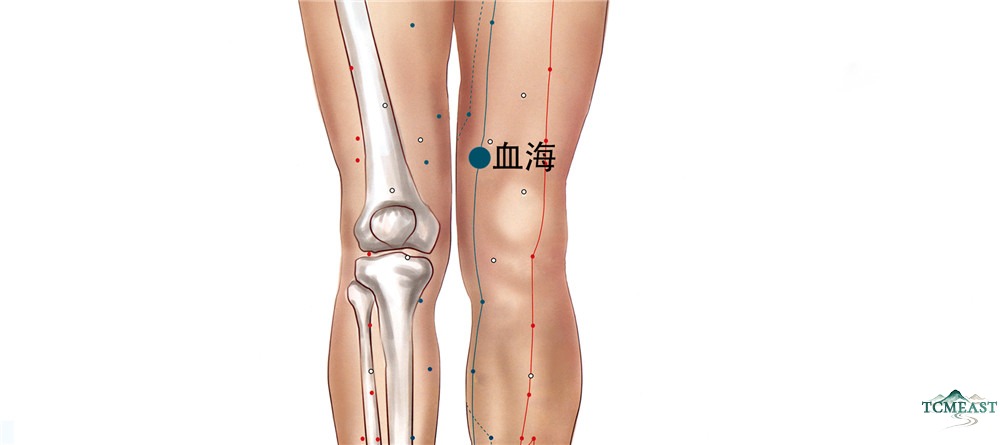
Xuehai Point (SP-10 / Sea of Blood, also known as Baichongke)
Discover the exact location and acupressure method for Xuehai (SP-10 / Sea of Blood). Learn its benefits for regulating blood, treating gynecological disorders, skin diseases, and knee pain – a key point for blood-related conditions.
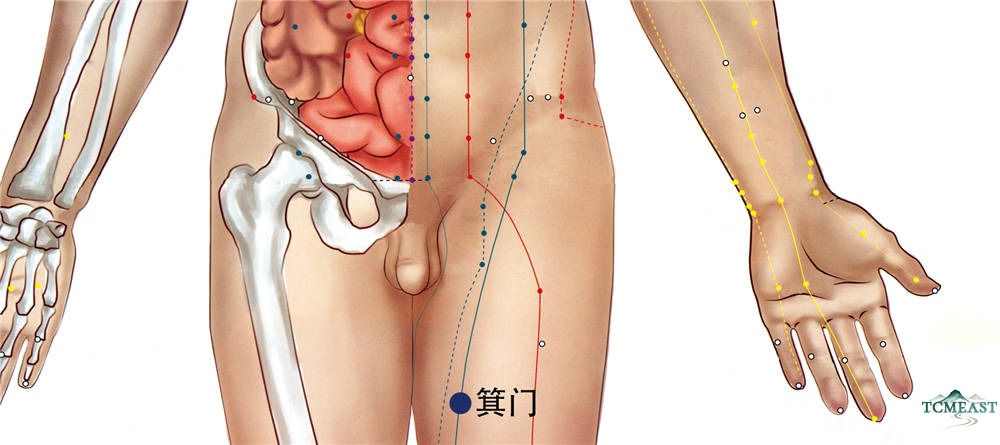
Jimen Point (SP-11 / Winnowing Basket Gate)
Discover the exact location and acupressure method for Jimen (SP-11 / Winnowing Basket Gate). Learn its benefits for urinary retention, enuresis, and inguinal pain, plus classic combinations for urinary disorders.
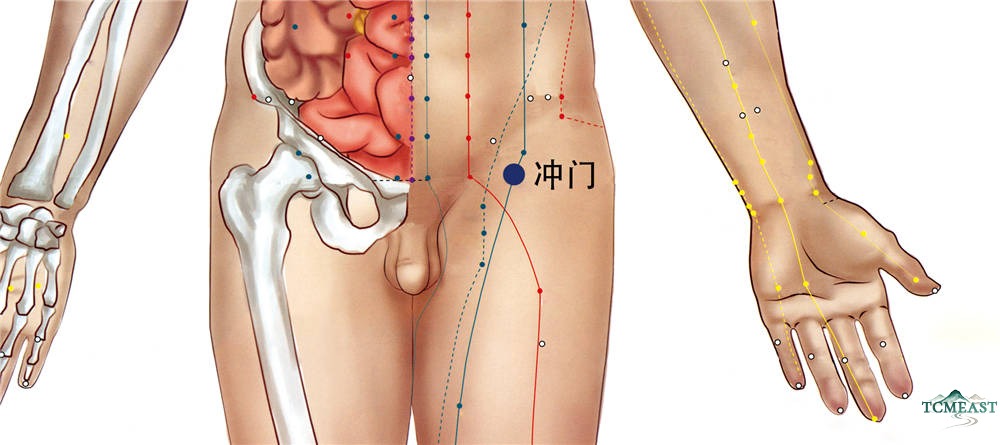
Chongmen Point (SP-12 / Thoroughfare Gate, also known as Shangcigong)
Discover the exact location and acupressure method for Chongmen (SP-12 / Thoroughfare Gate). Learn its benefits for abdominal pain, distension, and difficult urination, plus classic combinations for hernia.
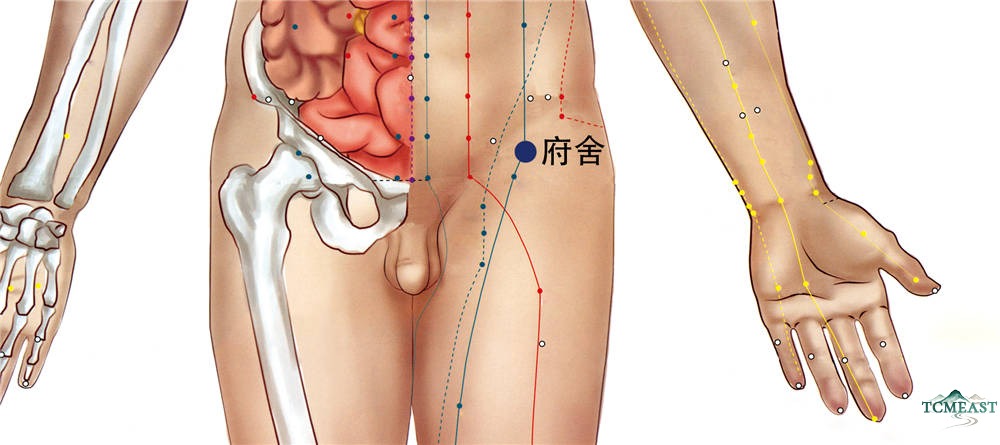
Fushe Point (SP-13 / Mansion Dwelling)
Discover the exact location and acupressure method for Fushe (SP-13 / Mansion Dwelling). Learn its benefits for abdominal pain, hernia, cholera, and uterine prolapse, plus classic combinations for comprehensive treatment.
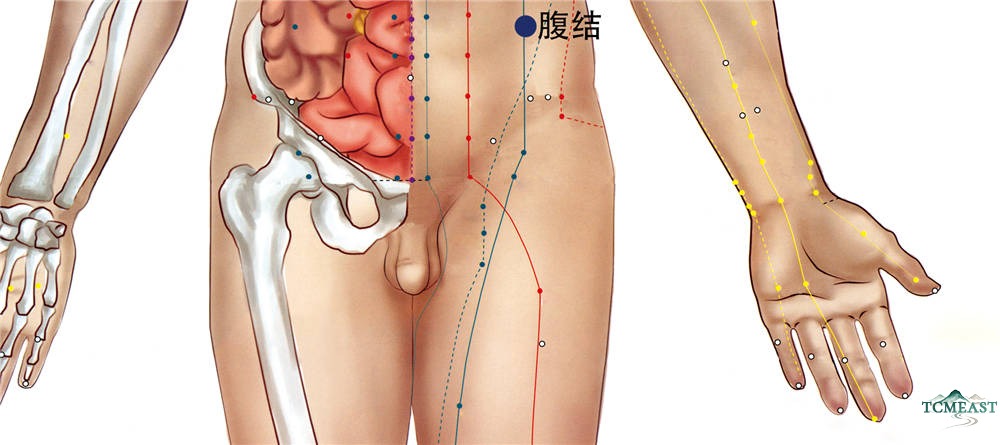
Fujie Point (SP-14 / Abdominal Knot, also known as Fuqu, Changjie, Changku)
Discover the exact location and acupressure method for Fujie (SP-14 / Abdominal Knot). Learn its benefits for periumbilical pain, diarrhea, and hernia, plus classic combinations for abdominal disorders.
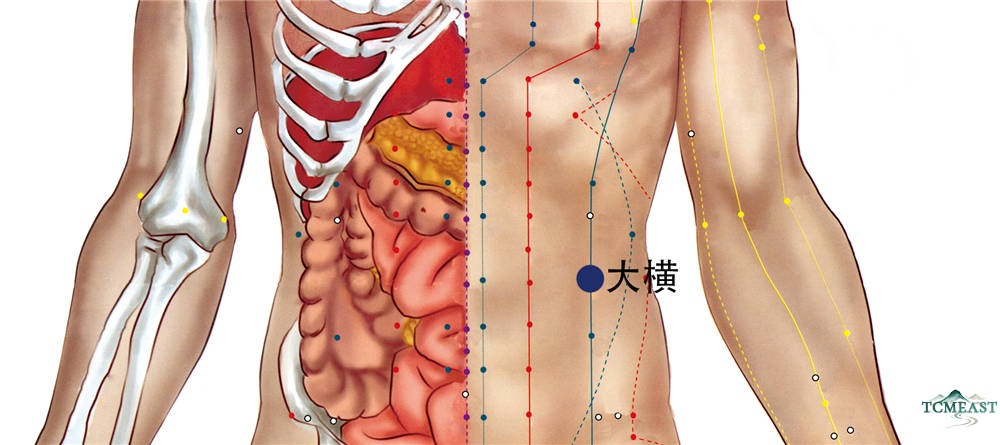
Daheng Point (SP-15 / Great Horizontal, also known as Shenqi)
Discover the exact location and acupressure method for Daheng (SP-15 / Great Horizontal). Learn its benefits for constipation, abdominal pain, diarrhea, intestinal paralysis, and abdominal obesity, plus classic combinations for comprehensive treatment.
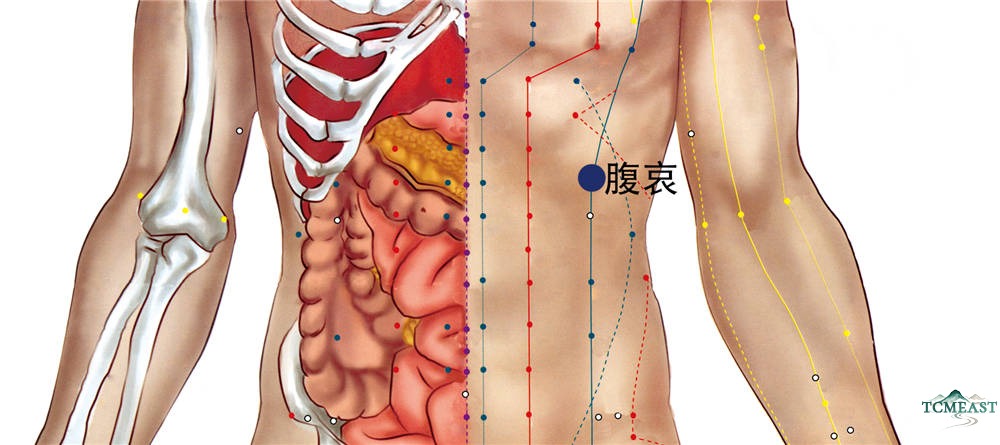
Fu'ai Point (SP-16 / Abdominal Lament, also known as Chang'ai)
Discover the exact location and acupressure method for Fu'ai (SP-16 / Abdominal Lament). Learn its benefits for periumbilical pain, indigestion, constipation, and dysentery, plus classic combinations for digestive disorders.
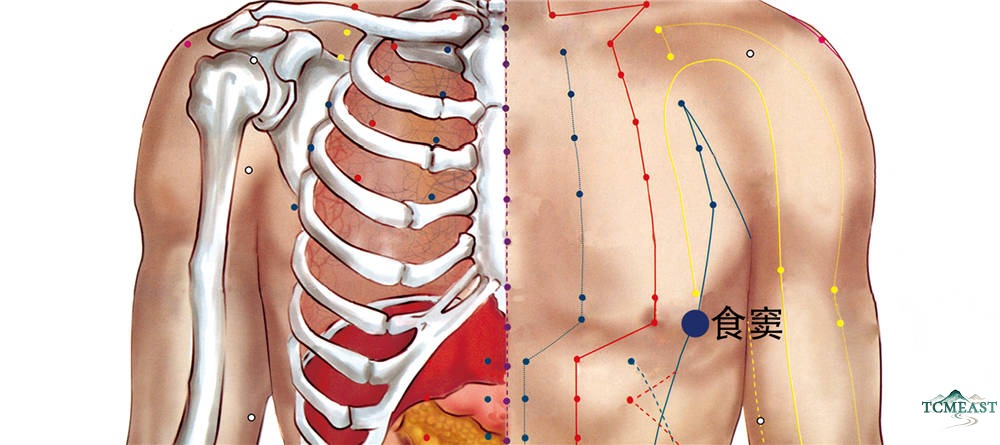
Shidou Point (SP-17 / Food Pore, also known as Mingguan)
Discover the exact location and acupressure method for Shidou (SP-17 / Food Pore). Learn its benefits for chest and hypochondriac pain, chest and back pain, and food stagnation, plus classic combinations for comprehensive treatment.
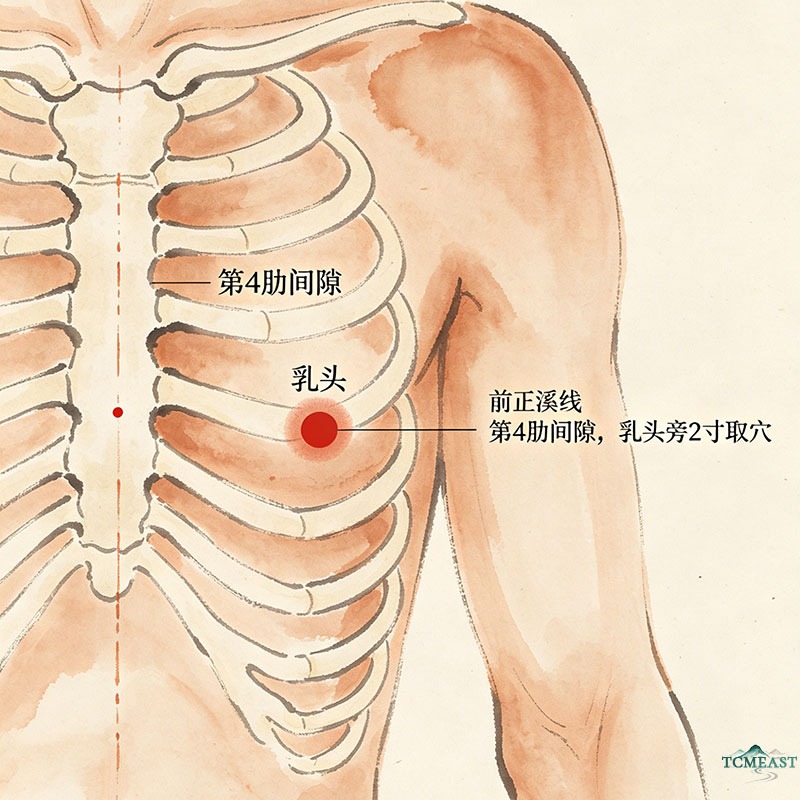
Tianxi Point (SP-18 / Heavenly Stream)
Discover the exact location and acupressure method for Tianxi (SP-18 / Heavenly Stream). Learn its benefits for chest pain, cough, and hypochondriac pain, plus classic combinations for comprehensive treatment.
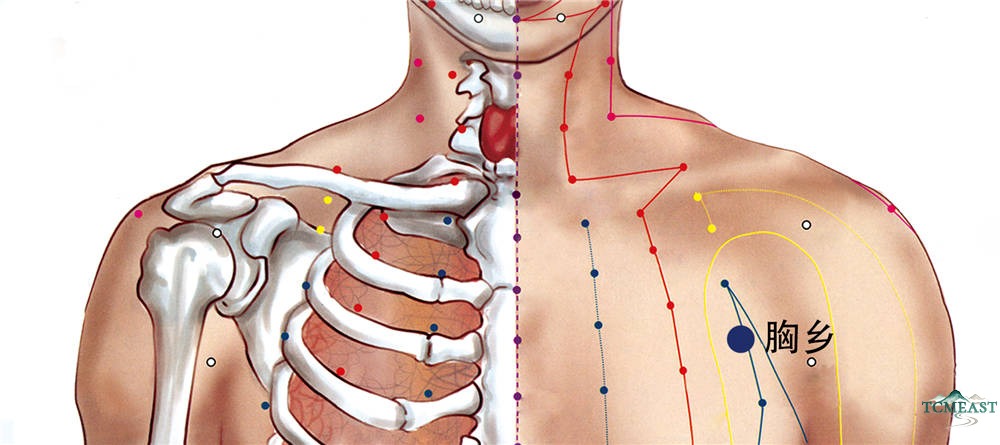
Xiongxiang Point (SP-19 / Chest Village)
Discover the exact location and acupressure method for Xiongxiang (SP-19 / Chest Village). Learn its benefits for chest pain, cough, and hypochondriac pain, plus classic combinations for comprehensive treatment.
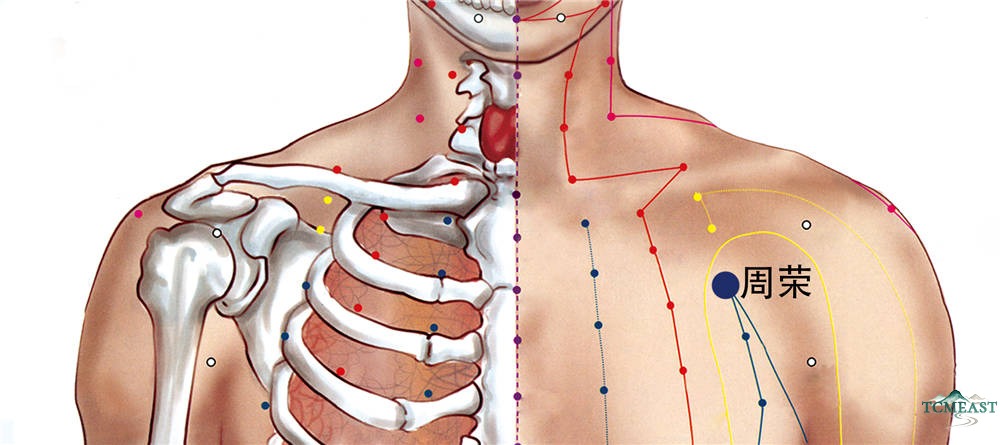
Zhourong Point (SP-20 / Surrounding Nourishment)
Discover the exact location and acupressure method for Zhourong (SP-20 / Surrounding Nourishment). Learn its benefits for cough, qi counterflow, and chest distension, plus classic combinations for respiratory and hypochondriac conditions.
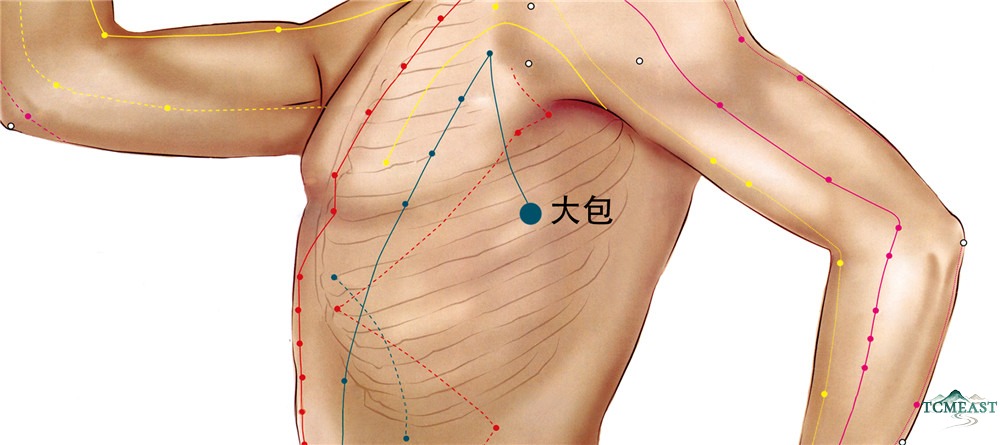
Dabao Point (SP-21 / Great Embrace)
Discover the exact location and acupressure method for Dabao (SP-21 / Great Embrace). Learn its benefits for chest pain, wheezing, indigestion, and limb weakness – the Great Luo-Connecting point of the Spleen – plus classic combinations for comprehensive treatment.
